



Geoffrey Bawa’s Bentota estate highlights his architectural ethos
Modest in scale but rich in narrative, Sri Lankan master architect Geoffrey Bawa’s former weekend home in Bentota showcases his evolving design sensibilities.

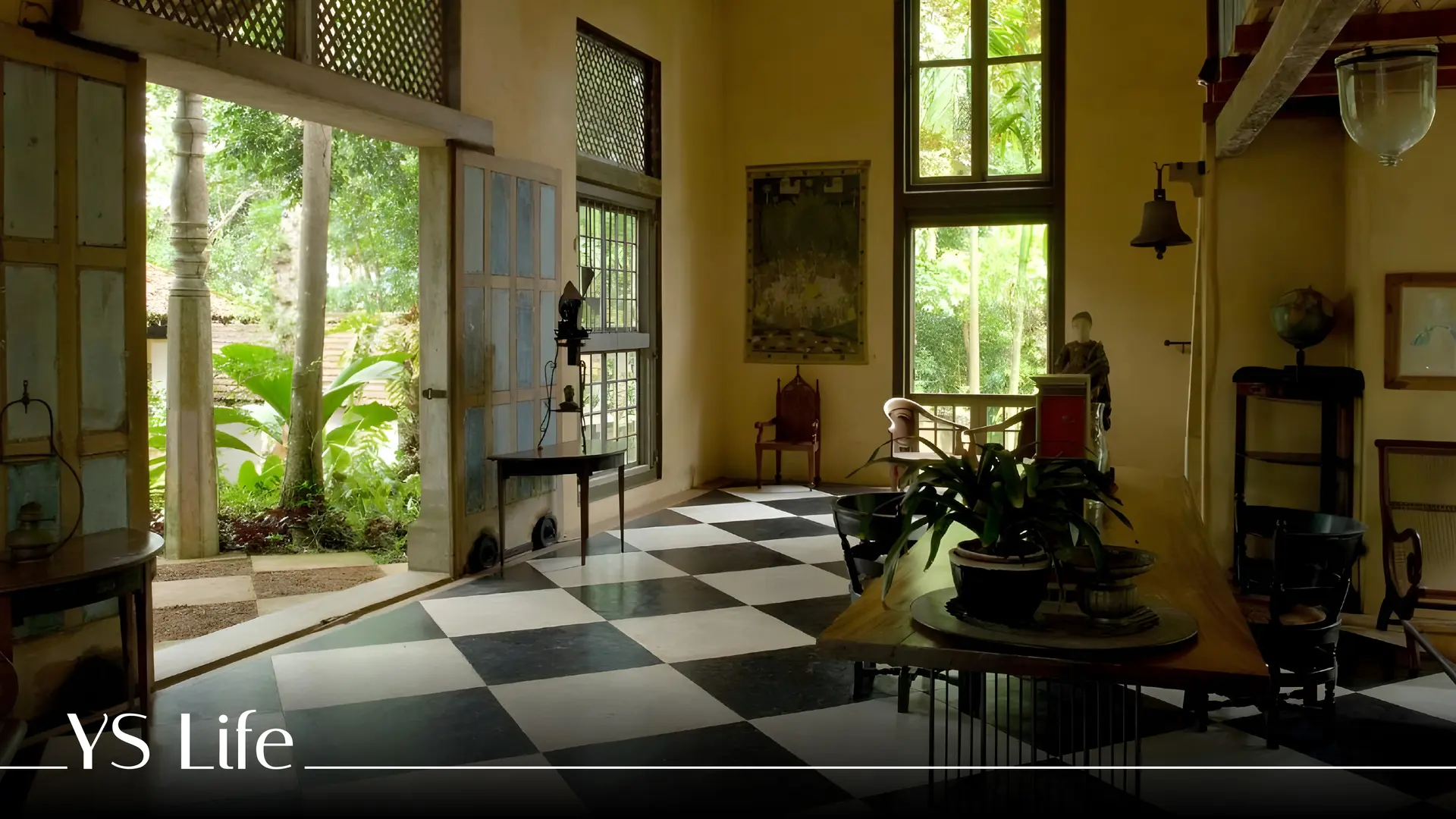

We reach Geoffrey Bawa’s “garden within a larger garden” half an hour before opening time, but I manage to sneak a peek through the gates. Tall trees lead into the former country house of the Sri Lankan master architect, set amid verdant green grounds. .
One of the most influential architects of the 20th century, Bawa is renowned as the father of the tropical modernist movement. He created a new vernacular style of architecture, suited to the hot, humid climate of Sri Lanka (and most of Asia), and was awarded the title of Deshamanya, the second highest civilian honour in Sri Lanka.
Lunuganga, which translates to “salt river” in Sinhala, was a personal retreat and a laboratory of ideas, designed, shaped, and reshaped for almost five decades by Bawa.
Located on the banks of Dedduwa Lake in Bentota, Sri Lanka, the tropical, timeless site began as a cinnamon estate during the Dutch era; and was transformed into a rubber plantation under British rule.
As we begin our walk of the country estate, Rohana, Bawa’s personal butler, tells us that the architect bought the 25-acre property decades later to create a weekend home amid a tropical version of a European renaissance garden.
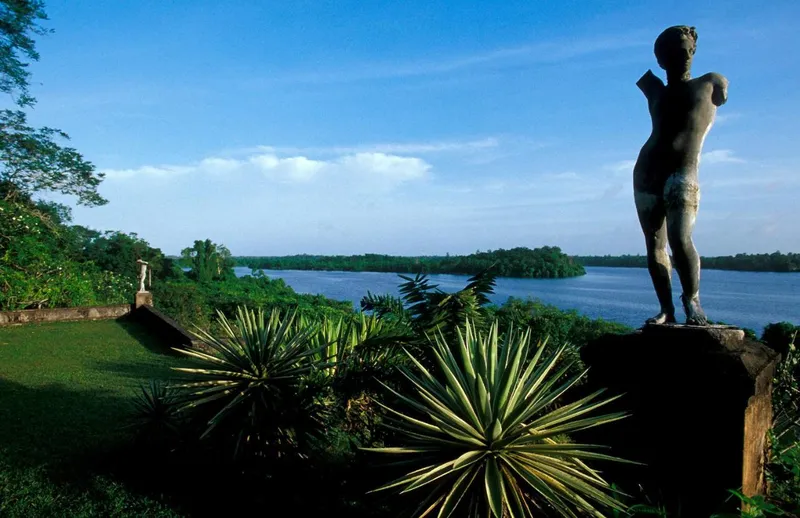
The many pathways and pavilions in Lunuganga are an invitation to pause and ponder.
“Bawa acquired the estate in 1948, on the cusp of his 30th birthday and Sri Lanka’s independence from Britain,” Rohana tells us, adding that the master architect was keen to create “something that would be shaped by my present and future dreams and imaginary”.
Bawa’s influences were mixed and varied: his mother was of German, Scottish, and Sinhalese descent while his father came from Sri Lankan, Muslim, and French stock. Like his father and grandfather, he studied law at Cambridge. However, he quit his job and travelled across Asia, Europe, and the United States after his parents' early demise.
Sanjaya, a tour guide leading a motley group on a walking tour, says, buying the estate had led to a desire to design, but Bawa was well aware that he wasn’t technically qualified.
“He apprenticed himself to HH Reid, an architecture firm in Colombo, but soon returned to England to study at the Architectural Association. He graduated in 1957, at 38 years. When he came home, he became a partner at Edwards, Reid, and Begg, and soon took charge of the practice,” Sanjaya says.
There was no looking back for the former lawyer, who soon started work on his labour of love, in an “about twenty-five acres but with its surrounding lakes the land beyond seems to go on forever”.
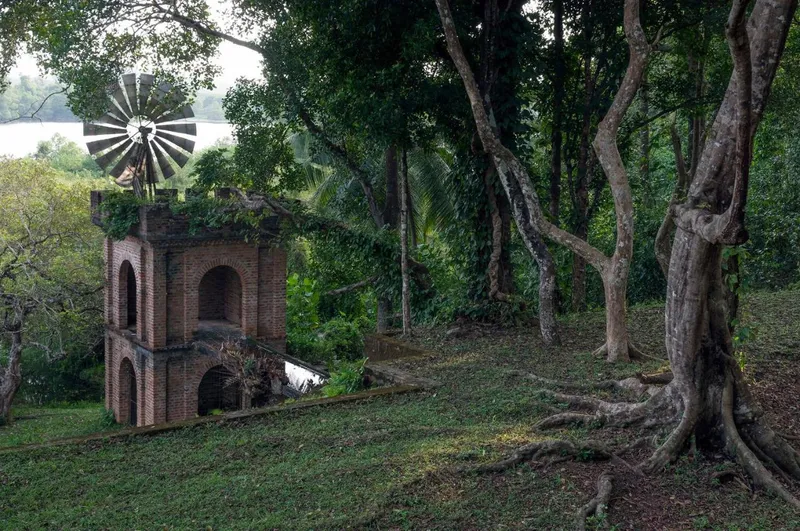
At Lunuganga, Geoffrey Bawa explored the relationship between built structures and the landscape,
Over the years, Bawa retreated to Lunuganga every weekend to slowly but steadily create his own version of paradise. For the first 10 years, he focused on creating the verdant garden, with pathways and pavilions that invite one to pause. Over the next 40 years, he focused on nurturing the estate.
“More than a home, Lunuganga became a canvas—a space where Bawa explored the fluid relationship between built structures and the landscape, between inside and outside, between architecture and the senses,” Rohana says.
Lunuganga stands tall as the best example of Bawa’s pioneering Tropical Modernism style, which focuses on the integration of buildings with their natural surroundings, the use of local materials, and climate-responsive design. In his estate, this has led to a seamless connection between the built environment and the lush landscape.
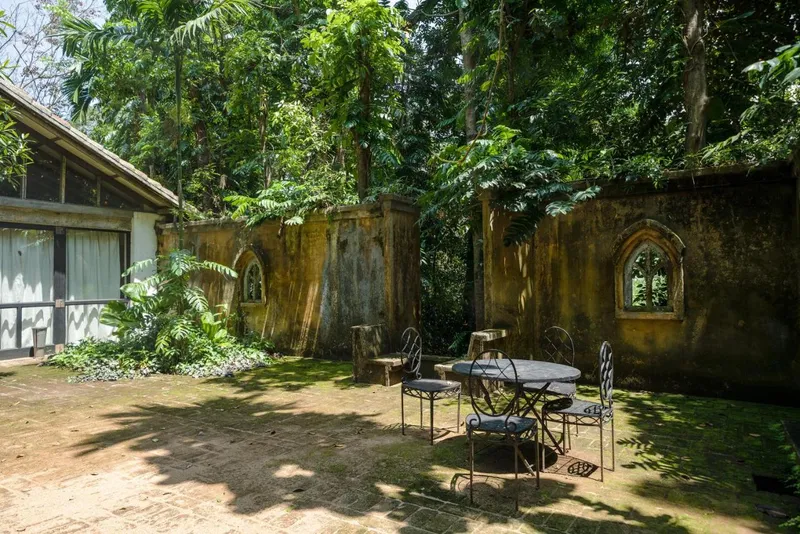
It’s the spaces in between, the places that invite one to linger that make Lunuganga so inviting.
Modest in scale but rich in texture and narrative, the estate unfolds gradually—a series of additions over time that reflect Bawa’s changing moods and evolving design sensibilities. In the architect’s own words, “...it seems to me to be almost inevitable that it should be there”.
The built forms—Bawa’s home on Cinnamon Hill (and now a boutique hotel); Sandella Pavilion, which served as his office and afforded him a view of anyone arriving at the gate; and Cinnamon Hill House, his studio and accommodation for guests—take into account local conditions. The whitewashed walls, terracotta roofs, tall columns, and many pavilions echo colonial-era forms and traditional Sri Lankan vernacular.
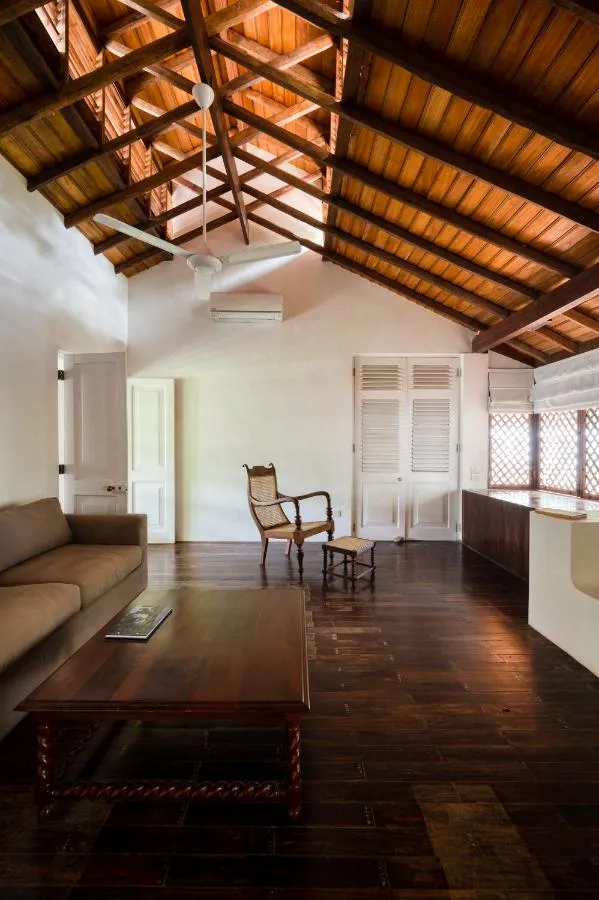
Lunuganga showcases Geoffrey Bawa's climate-responsive design.
The rooms seem almost porous, with wide verandas, large windows, and garden views expanding the sense of space and blurring the distinction between indoor and outdoor. The central courtyard anchors the house with a serene, inward-facing garden. The house and gardens contain many works from artists such as Donald Friend and Laki Senanayake along with artefacts from Asia and Europe, Rohana says.
But I think it’s the landscaped grounds that bring Lunuganga alive. Inspired by Italian Renaissance gardens, English landscaping traditions, and Japanese minimalism, the landscape seems etched out into a seamless series of sections, vistas, and framed experiences.
As I walk around, I realise that Bawa chose not to use imposing buildings or fancy materials to define his estate—and style. It’s the spaces in between, the places that invite me to linger that make this estate so personal—the way moss-clad stairs lead from one level to another, the forested paths that lead to sudden clearings, and water features that reflect the clouds in the sky.
Over the years, Bawa transformed the gardens into a rich ecosystem of endemic flora and fauna, an oasis for Sri Lanka’s diverse wildlife. The architect continued to develop the estate until his death in May 2003. His ashes were buried on Cinnamon Hill, and it’s said that his spirit still lingers in the weekend home he created. It certainly seems so every time a visitor rings one of the 14 bells—each with a distinct sound—strewn across Lunuganga and used by Bawa to indicate where he was in the garden.
The retreat now functions as a boutique hotel with 10 rooms, an infinity pool, and myriad locations that serve as pockets of inspiration – and offers the most enchanting getaway for travellers. Apparently, a stay isn’t complete without meals at the very locations Bawa did, or sipping sundowners at his favourite G&T spot overlooking the Dedduwa Lake.
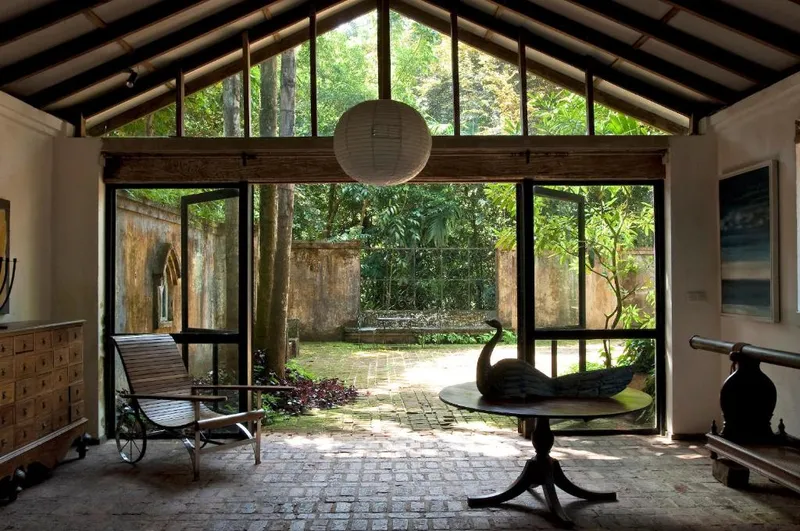
A boutique hotel on the estate offers 10 rooms and suites, with stunning garden views.
Sri Lanka’s master architect strongly believed that architecture “cannot be totally explained, but must be experienced. It should play to all the senses—the smell of vegetation after rain, the sound of birds and the wind in trees”.
I see his words play out at Lunuganga. In an age where architecture tends to be fast, showy, and disconnected from its environment, Lunuganga offers a crash course in Bawa’s architectural ethos. It reveals that the most meaningful spaces are those that listen to the land, speak to the soul, and invite us to inhabit our corner between the earth and the sky.
Edited by Megha Reddy