



Makaibari is a heartfelt ode to tea traditions in the heart of Darjeeling
At the Makaibari tea estate in Darjeeling, tea is equal parts ritual and tradition, steeped in decades of history that drives everything from farming techniques to the processing of blends.

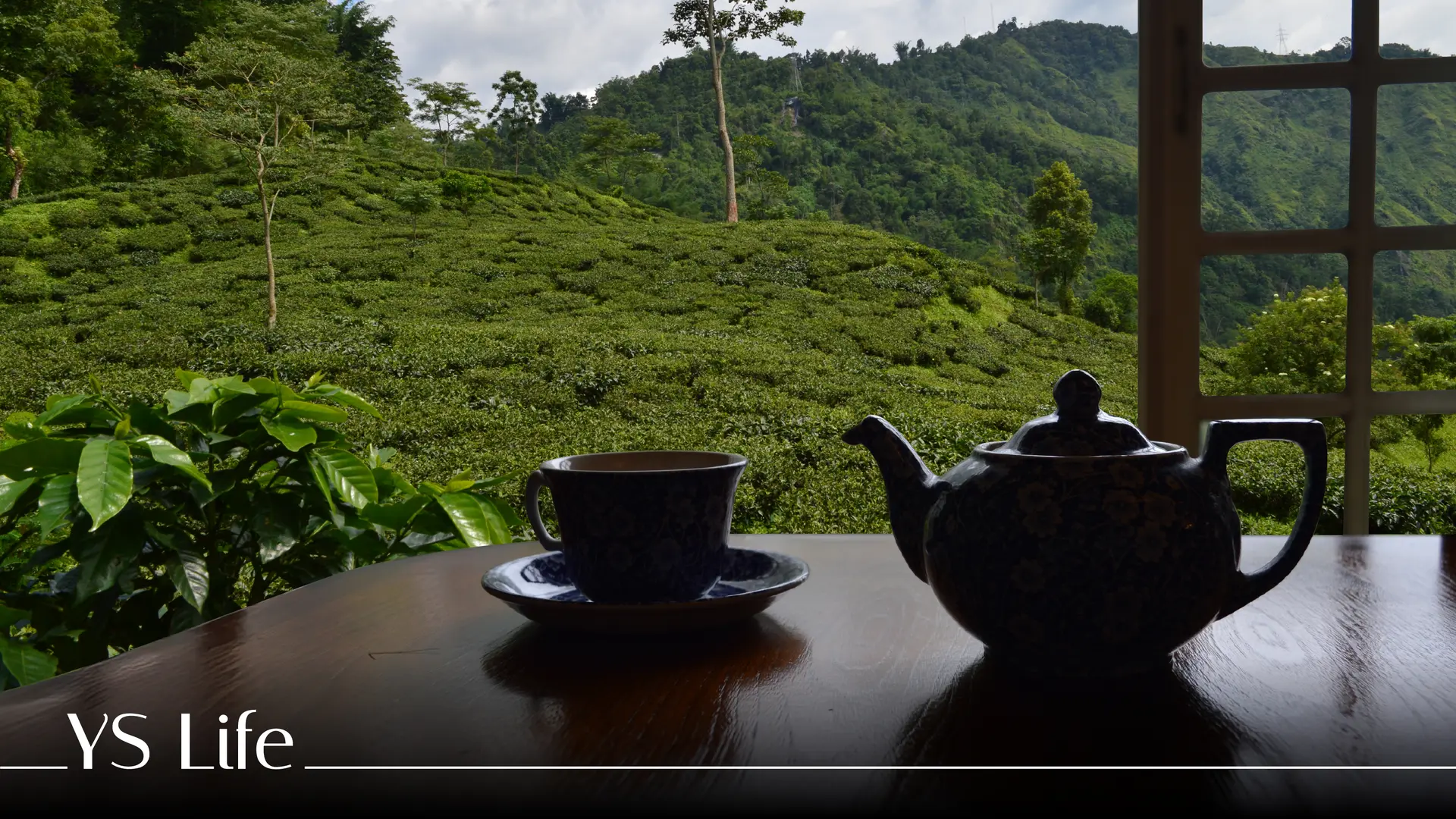

Sight, smell, taste, touch—a cup of Darjeeling tea, they say, is a complete experience for the senses. Each step in the brewing process is crucial: from the type and temperature of the water to the amount of time the leaves are infused.
But the most integral part of tea-making begins even before it reaches the kitchen shelves: the plucking and processing of the leaves in the tea estates of Darjeeling. The techniques matter, and so does experience.
The Makaibari tea estate, in particular, has had over a century and a half to perfect the techniques behind what makes a good Darjeeling.
Nestled in Kurseong, Darjeeling, the Makaibari estate was established in 1859, making it one of the oldest tea gardens in the country. Much like the cup of the famed tea it produces, the estate fully takes over the senses as you make the trip up through the winding mountain roads.
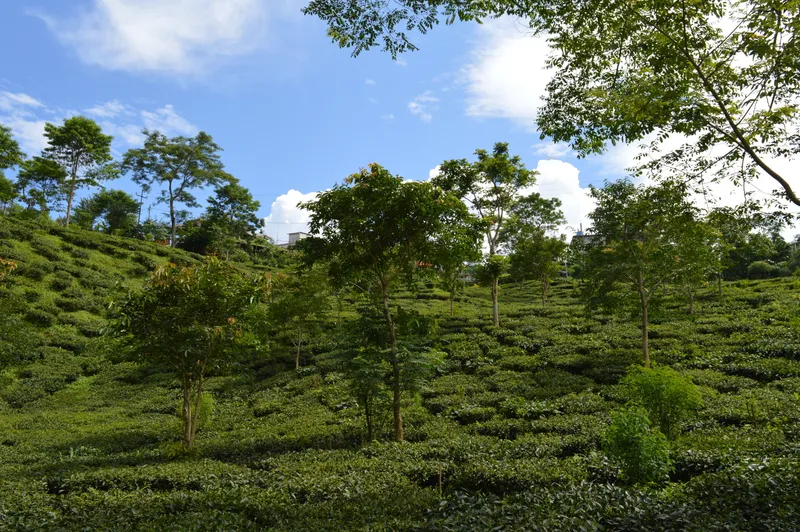
The Makaibari Tea Estate. | Image: Jyoti Narayan
The sound hits first—a symphony of cicadas and birdsong welcomes us from the forested area surrounding the plantation, followed by unexpected heat.
Located nearly 1,500 metres above sea level, the estate spans six ridges, with 248 hectares being utilised for cultivation and 240 hectares under forest cover. But in the warm month of July, it hardly feels like you’re in the mountains—with the air muggy and thick with the petrichor of an impending monsoon and the all-pervasive scent of fresh tea leaves.
Tea in India is synonymous with hospitality. In nearly every Indian household, one of the first things a guest is greeted with is, “Aao, chai peelo (Come in, drink some tea).”
Tea is a ‘hello’ and a ‘welcome to my home’ all at once, and an excuse to linger and savour good company.
And the same care is evident at the Makaibari Bungalow, where we’re welcomed with warm hellos and traditional Tibetan khada scarves, followed by the offer of a cup of the estate’s first flush champagne tea.
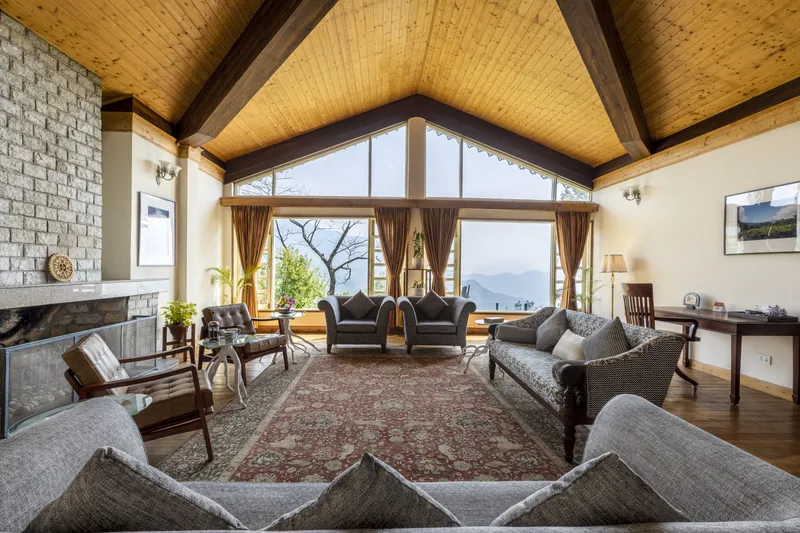
Colonial influences in the Makaibari bungalow. | Image: Makaibari Tea Estate
The bungalow itself is just as much a part of the estate’s history as the plantation is, having been built shortly after the establishment of Makaibari. The colonial influences are still visible in the wood panelling, vintage exposed brick fireplaces, and antique decor and furniture across the property. The bungalow has sat overlooking the estate for generations, initially as the residence of the planter family overseeing the estate, and now as a cultural hub hosting visitors from around the world.
Tea fit for royalty
The next day brings us to the raison d’être of this excursion: the making of Makaibari teas.
The estate’s claim to fame lies in its Silver Tips Imperial tea, a semi-fermented oolong tea with a light ‘liquor’, or liquid yield after the brewing process. This particular tea, the estate manager tells us, as he sits us down with tea and snacks, has its own ritual woven into the plucking process.
The name ‘silver tips’ comes from the fine, silvery white down covering the leaf buds, which are handpicked only during full-moon nights—a technique seemingly unique to Makaibari. Not just any full moon night will do. The estate follows a process of ‘biodynamic farming’, which allows this particular plucking to happen only in five full moon cycles around the summer solstice.
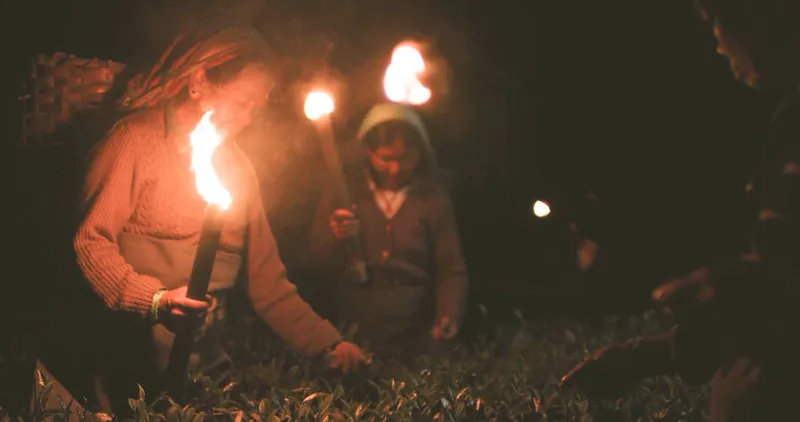
Silver Tips tea is plucked only on certain full moon nights in the year. | Image: Makaibari Tea Estate
There is something almost ceremonial about the process. The manager details the precise care required while plucking buds by torchlight under a full moon. Nearly 200 kilograms of leaves go into producing 50 kilos of processed Silver Tips tea.
The exclusivity around the tea has garnered it some impressive patronage—it found its way into Buckingham Palace as a gift during an official visit to the United Kingdom by Prime Minister Narendra Modi, and was reportedly favoured by the former Queen Elizabeth.
Currently, it’s one of the most expensive offerings from the estate, priced at Rs 1,950 for a 50-gram caddy.
All teas start out the same way at harvest—two green leaves and a bud. What makes all the difference is the processing methods they undergo at the factory.
Makaibari’s white and green teas are processed the least, mostly with pan-frying and drying methods. Oolong and black teas, on the other hand, go through degrees of oxidation, withering, and rolling, which take several hours. There’s no set formula for how long to ferment the leaves—workers keep careful watch to gauge the ‘nose’, or aroma of the leaves.
A calling
As I stand amid the heady, yet familiar scent of processed tea, I realise that precise care and passion are shared traits for every worker on the estate.
There’s a quiet intensity about the planters at Makaibari—it’s evident that this way of life is a calling for many of them. Many of them are fourth or even fifth-generation workers at the plantation, nearly following along the four generations of ownership for Makaibari under the Banerjee family.
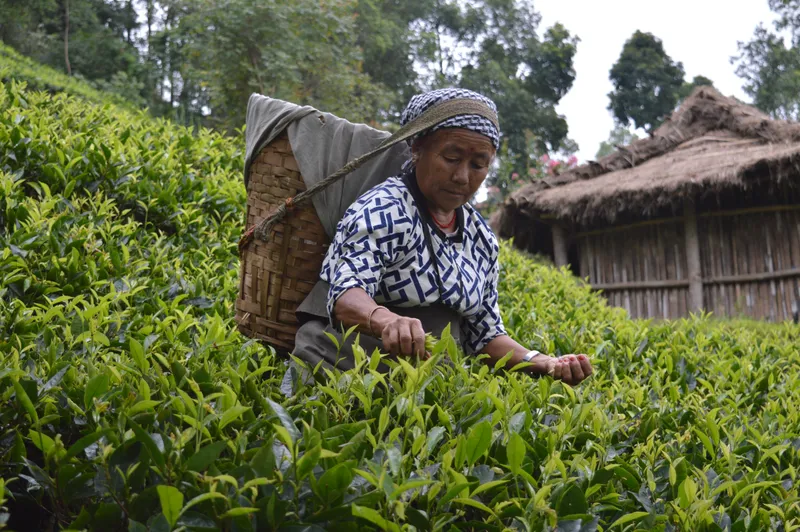
Workers at Makaibari carefully handpick the two leaves and a bud that go into making the finished tea. | Image: Jyoti Narayan
That passion was evident that morning as I knelt amid 150-year-old China tea bushes, following along as one of the planters directed me to pluck specific sets of two leaves and a bud with precision I could only hope to emulate.
Tea isn’t just a job here. The planters have built a legacy and a community for themselves around the estate. There’s a creche and a library for children while parents are away. Many of them are eager to share their lives and experiences with visitors and offer homestay experiences at their own houses, inviting guests to sit down and slow their day down with conversation, home-cooked meals, and tea.
A surprising amount of tea lingo and tasting rituals are shared with those of wine—in fact, the Taj Chia Kutir property nearby hosts regular tasting sessions with a master tea sommelier.
Each brew has its signature—the delicate, champagne colour and floral aroma of the spring harvest, the amber tint of the second flush muscatel, and the bolder flavours of the monsoon and autumn harvests, blended with flavours such as jasmine and lavender.
Everything here—the crop, the farming methods passed down through centuries, the passing of the seasons, and the tea—holds history, and a deep appreciation for tradition.
As I made my way to the airport along the winding descent, I sensed the lingering aftertaste of the pride and passion that goes into each piping cup, even from hundreds of kilometres away.
(The author was in Kurseong on invitation by Makaibari.)
Edited by Swetha Kannan