



Fusion without the confusion: Masala Synergy in Gurugram bets on good taste and flavour
This restaurant in Gurugram serves up playful, purposeful Indian food that bridges generations without losing the plot.


Let’s be honest—‘fusion’ in the world of food and beverage has been overused, misused, and on occasions taken too far as well. After one too many wasabi momos and truffle-infused dal makhani, most of us have developed a healthy suspicion of menus that try too hard. Fusion food today often feels like it’s trying to impress your Instagram feed more than your taste buds.
In contrast, Masala Synergy resists the urge to chase novelty just to stand out—instead it lets the flavour do the talking.
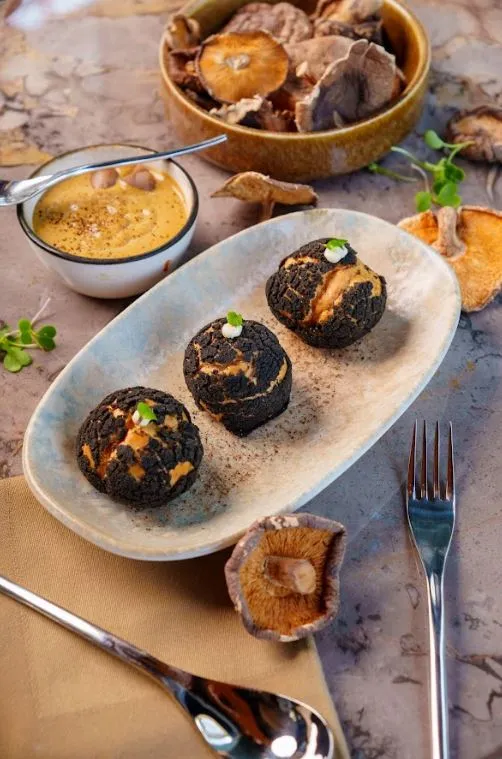
Mushroom Galouti à choux
The restaurant in Gurugram’s upscale M3M International Financial Centre is the perfect answer to these eternal questions: Can Indian food evolve without losing the warmth and familiarity we crave? Can the same menu draw Gen Z foodies, who are more experimentative, and also comfort their more traditionally-inclined parents?
The response, it turns out, is a resounding ‘yes’ when you don’t settle for a mish-mish.
Co-founders Yash Dogra and Shreya Kapoor have built a place where butter chicken meets blue cheese samosa, and no one bats an eye—because their heart is in the right place.
“We have wanted to be the bridge between Punjabi by Nature (a restaurant chain specialising in North Indian and Punjabi cuisine) and Indian Accent (a fine dining restaurant with inventive Indian cuisine),” says Dogra. “Our idea is not to intimidate anyone. We just wanted to serve food that sparks conversation without needing explanation.”
Two menus, one table
The name says it all: Masala for the classics, and Synergy for the playful side.
The Masala menu reads like a love letter to Indian comfort food. There’s beetroot tikki, mushroom galouti, malai chicken tikka, followed by rich, slow-cooked classics like dal makhani, butter chicken, and rogan josh.
“Someone like my dad is a purist. He will go to Indian Accent and still just want regular stuff like the butter chicken kulcha. That’s why Masala matters. It’s for people who know what they like,” shares Dogra, whose father was involved in catering for Indian Railways for over two decades.
But not everyone wants to play it safe, and that’s where Synergy comes in. This side of the menu was crafted in collaboration with celebrated chef Sabyasachi Gorai (popularly known as Chef Saby), who not only co-developed the dishes but also trained the kitchen team to bring them to life with consistency and flair.
Here you will find experimental pairings like a delicate thukpa served with miso and button mushroom–stuffed ravioli, or burrata nestled atop a Banarasi-style tamatar chaat, a dish that’s equal parts creaminess and chaos.
There's also Amritsari chholupa, a mini bhatura filled with Amritsari chole, pickled onions, and ginger, and blue cheese samosas balanced with a sweet date and tomato chutney.
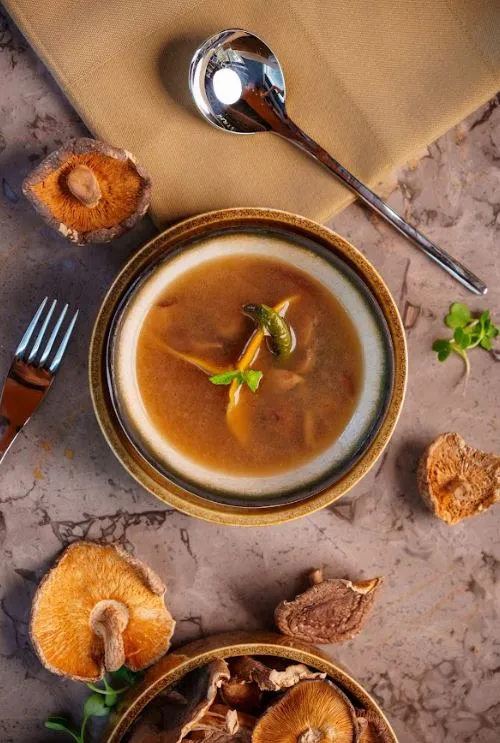
Thukpa Ravioli
Haleem Pot Pie and Ghee Roast Irani Pilaf, among the mains, have already become favourites. Both draw from tradition but are reimagined in ways that surprise without straying too far from the soul of the dish.
But this isn’t fusion for the sake of it. It’s not clever wordplay or culinary drama—it’s a thoughtful reflection of how Indian food can evolve without losing its soul.
“While the Masala section caters to legacy and brings comfort and nostalgia, some people want to experiment,” says Kapoor. “We kept the warmth and familiarity of Indian food but have woven in flavours from across the world, still tying them back to different parts of India and not just the north.”
The result is a menu that doesn’t just blend ingredients, but also balances the tastes and preferences of people.
“Our whole idea was to bridge the gap,” says Dogra. “A family under one roof should be able to enjoy their meal together. Older people can have the classics. Younger people can explore. Nobody feels left out.”
Comfort first
At Masala Synergy, comfort isn’t an afterthought, it’s the core ingredient. Every dish, no matter how inventive, is designed to feel familiar on the palate and warm in the heart.
“We always say comfort is what brings people back,” shares Dogra. “Unless you have comfort in the menu, the restaurant won’t work. And comfort doesn’t mean boring, it just means the food hits home.”
Even Synergy’s most inventive dishes are grounded in balance: with respect to spice, texture, and memory. For instance, the Queso Keema Pav may be elevated but the flavours are similar to the classic preparation available at Parsi joints in Mumbai. At Masala Synergy, it is served in an easy-to-eat format and features a soft, house-baked pav with a layer of queso. This ‘twist’ adds just the right amount of moisture and creaminess to round out the spice.
This kind of attention to detail is carried through to the desserts as well. For Kapoor, restaurant desserts have long been a pet peeve: “There are barely any options, and most of them don’t align with the rest of the menu,” she says.
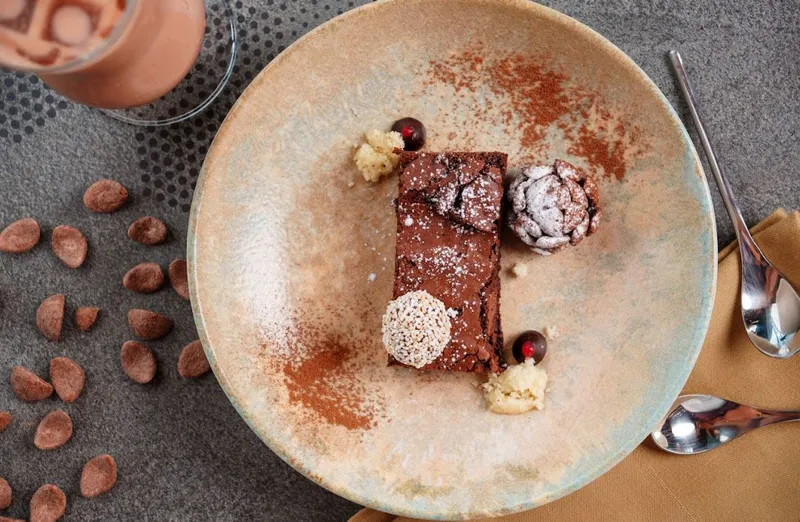
Bal Mithai Fondant
At Masala Synergy, the dessert menu has been carefully planned. Each of the six offerings spans a distinct flavour spectrum—chocolate, coffee, strawberry, crème brûlée—and is crafted with care, not just creativity. From the Irani Chai Crème Brûlée to the Bal Mithai Fondant, and the Basque-Chenna Poda Cheesecake, the sweet section of the menu speaks the same language as the savoury: inventive, familiar and balanced.
The same philosophy extends to the smallest details like the humble pav or even the dips served with the small plates. “Most restaurants outsource their bread, but we didn’t want to do that,” says Kapoor. “Our pav is made in-house; it’s soft, fresh and buttery. It makes a huge difference, and guests notice.”
Storytelling throughout the space
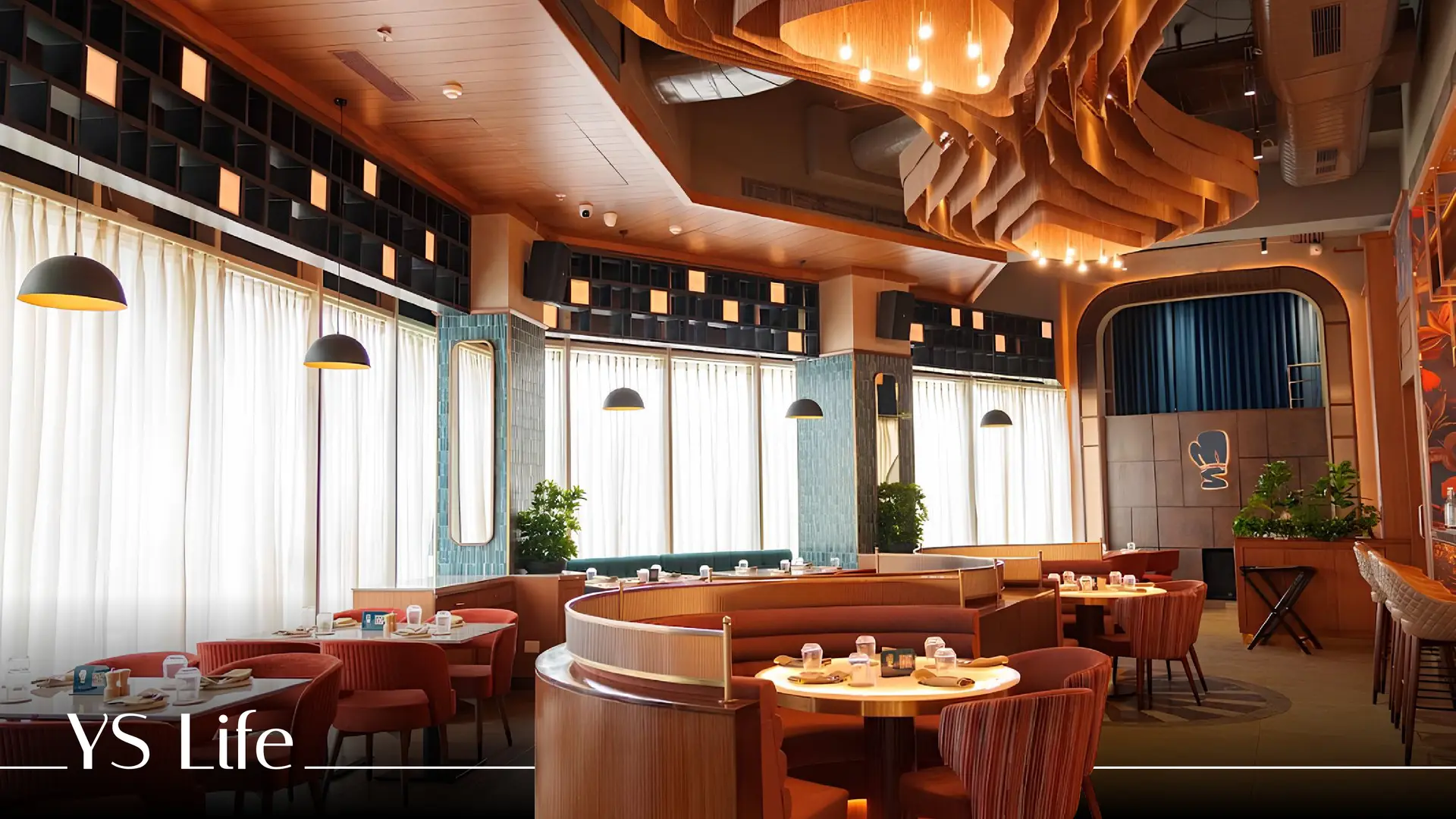
Much like the food, the space at Masala Synergy doesn’t try to impress through opulence. The interiors, which are designed by Studio Praxis, reflect a quiet confidence that’s warm, minimal, and anchored in texture and tone.
“We wanted it to feel Indian, but not in an overt or predictable way,” explains Dogra. “It should feel lived-in and welcoming, not formal or stiff.”
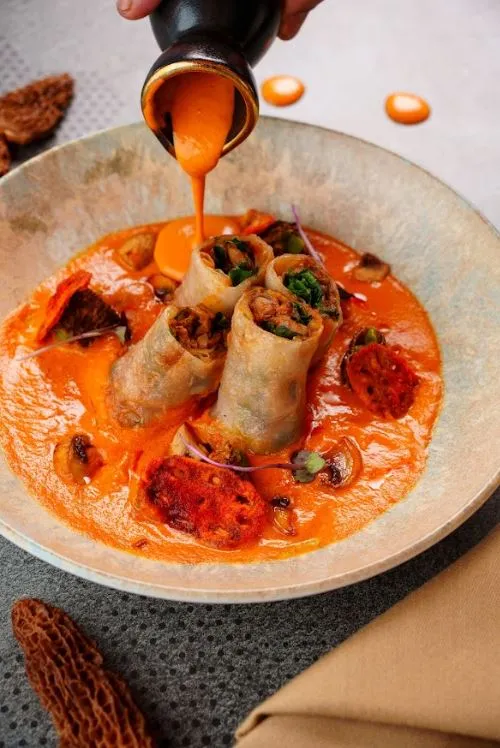
Truffled Gucchi Yakhni
Natural light floods the space, making it perfect for brunches and early dinners. The layout is open enough for guests to feel connected but intimate enough to offer a sense of privacy.
Music plays a key role too. “We are not trying to be Bukhara or Gulati (fine-dining Indian restaurants in Delhi). You know, places where the music is generic. Here, there's a mix of Bollywood and techno, which caters to all age groups,” highlights Dogra.
The playlist flows from nostalgic Bollywood to soft techno, blending the familiar with the now—just like the menu.
The idea going forward is to have thoughtfully planned events, like a weekend Bollywood brunch with a themed playlist or live music.
“We don’t want to rush into it just for hype,” says Kapoor. “Every event should have a story behind it, be it the artists, the time slot, and the mood—it all has to make sense.”
From a cloud kitchen to a large cultural canvas
Ironically, Masala Synergy didn’t start as a restaurant. In fact, its roots lie in a much humbler, delivery-only operation: first in DLF Phase 1 in Gurugram, and then expanding to Greater Kailash 1 in Delhi. The menu at the time was strictly ‘Masala’: dependable, flavourful and comforting North Indian fare.
“We started with dal makhani and butter chicken. In a market saturated with Indian delivery, we knew we had to get the basics absolutely right,” recalls Dogra. “We tried so many versions of dal makhani from across Delhi—some were too watery, too salty, not smoky enough—until we found our own perfect balance.”
The brand may have expanded, but the Masala menu still outsells Synergy. “That’s the thing about Indian food, it’s deeply emotional,” explains Dogra. “And if you’re consistent, people will come back. No matter how young your brand is or how much competition there is.”
While the restaurant gives their fusion ideas a home, they have resisted forcing Synergy into delivery (the cloud kitchen model continues to operate). “A lot of those dishes don’t travel well. There are delicate elements that just won’t survive the journey. And we would rather protect the experience than dilute it,” says Kapoor.
What's next?
While food is the hero, Masala Synergy is also looking at beverages keenly. It already offers classic cocktails such as Moscow Mule, Margarita and Cosmopolitan, and mocktails including Aam Panna Cooler, Ginger Tulsi Lemonade, and Jamun Ginger Fizz, on the menu, and there’s more in the works.
From Smoky Peanut-infused Whiskey to Aam Papad Picante, each drink will be crafted to mirror the food philosophy—balanced, bold, and culturally grounded.
“It’s not about throwing in Indian ingredients for novelty,” says Kapoor. “Everything has to tie back to flavour. It has to make sense.”
And perhaps that’s the unassuming success of Masala Synergy: every decision—across design, dish, or drink—is rooted in purpose, not performance.
Cost for two: Rs 1,800 + taxes (excluding drinks)
Timings: noon–11.30 PM
Edited by Swetha Kannan