



‘Music can heal’: Sid Sriram on spirituality of sound, Carnatic roots, and the AR Rahman factor
Ahead of his multi-city India tour, Sid Sriram opens up about that one ‘cold email’ and the following moments that helped shape his career as a music artist.

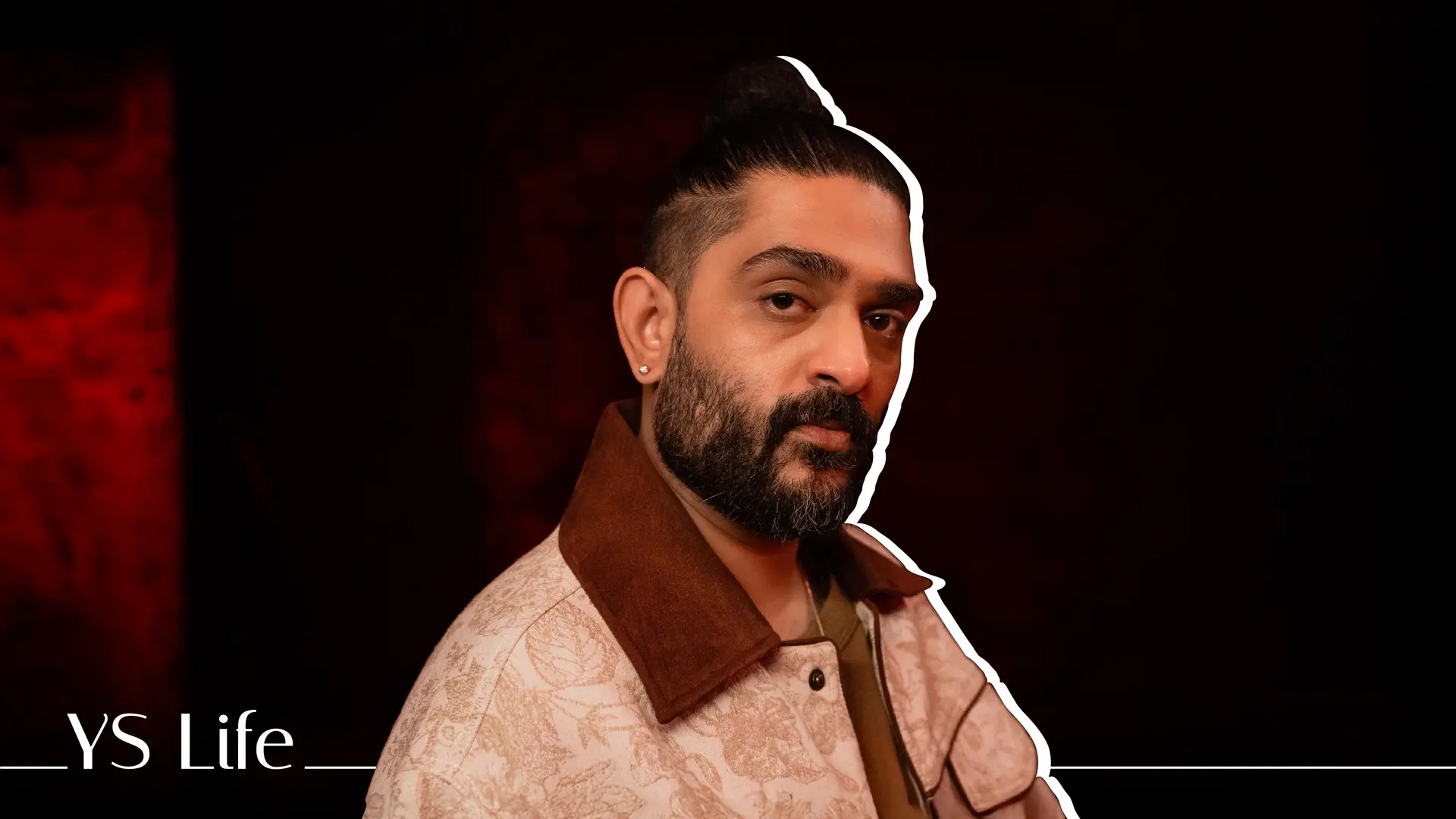

Just like how his music blends emotional intensity and classical intricacy with serenity, music artist Sidharth (Sid) Sriram’s personality also exudes a calm demeanour. Even in the bustling Paper and Pie cafe in Indiranagar, Bengaluru, Sid stands out with his unassuming yet magnetic presence, as he recalls stepping on the very first ladder of his career, without much hope.
“It was a cold email,” Sid says bluntly when asked how he got to work with AR Rahman.
In 2009, Rahman had just made history by becoming the first Indian to win two Oscars, for the film Slumdog Millionaire. Sid watched the winning speech on his laptop from his dorm room at Berklee College of Music in Boston.

Music artist Sid Sriram
Two weeks later, after a lot of pestering, he managed to get Rahman’s email address from a friend who had interned with the maestro. He then sent a cold email introducing himself, and to his surprise, he received a response from Rahman within ten days, eventually meeting him in December 2011.
Sid’s big break came in 2013 when he lent his voice to the song Adiye from the movie Kadal under AR Rahman’s direction.
“None of this felt like it was supposed to happen. It was like true serendipity and like divine intervention in so many ways,” Sid tells YS Life.
Divine intervention or not, Sid’s journey with music was inevitable.
He was born into a family where music was intertwined with everyday life. “It felt like an element in my life, like water, air and food. Something I could not exist without, either listening or singing,” he reflects.
A sought-after voice in the South Indian film industry today, Sid has chart-topping hits in Tamil, Telugu, Malayalam, and Kannada languages, and over 175 film songs under his name.
Outside the film industry, he is also an acclaimed independent artist, known for albums Entropy (2019) and Sidharth (2023).
A star is born
Born in Chennai in 1990, Sid moved with his family to the United States a year later. His mother, a Carnatic musician, started a music school near San Francisco, and his childhood was immersed in sound.
The first time he performed on stage, he was only three years old. “Music was always surrounding me. It felt like home.”
By the time Sid was eight, his talent was already being recognised. “I entered a competition and won a prize. For a kid, that kind of validation was big. It helped solidify—‘Oh, this is something I can do and get appreciated for’,” he recalls.
Still, he describes his connection to music as deeper than recognition. “Possibly something handed down from a past life,” he ponders.
For him, spirituality is inseparable from music. “Sound is mysterious—it shakes things molecularly. I saw its impact young, when my singing made someone tear up. That responsibility of energy transfer, that’s spiritual. Carnatic music, being inherently spiritual, built my foundation.”
Bridging tradition with contemporary
Carnatic music was Sid’s first foundation, but R&B (Rhythm and Blues) arrived when he was seven years old.
“The vocal embellishments in soul and gospel reminded me of gamakas (ornamentations) in Carnatic music. That connection built a bridge between the two worlds. For the first time, I felt I could be Indian and American at once,” he says.
Even then, as an Indian child in the West, the world often felt isolating. “I grew up seeing no one who looked like me in popular culture, or being the only kid obsessed with music at school. Over time, I leaned into it, treating it like a secret.”
Then came AR Rahman.
“Growing up in the ’90s with Roja and all those cassette tapes in the car, his melodies felt timeless and new, his rhythms fresh, and the way he merged Indian music with global influences really set a trajectory for me,” he remembers.
Expanding outwards
The real turning point for the music composer, singer, and producer came in 2016, after Thalli Pogathey from the 2016 movie Achcham Yenbadhu Madamaiyada became a breakout hit. “My career took off, and splitting time between India and the US helped me ground myself in who I was.”
On stage, Sid is unrestrained. His concerts are known for their raw intensity and have consistently sold out across North America, Southeast Asia, and the Middle East.
Last year, he became the first South Indian artist to perform at Coachella Valley Music and Arts Festival.
“Recording is controlled—spiritual in its own way, but refined and documented forever. The stage is uninhibited, spontaneous. That’s where primal energy leaps out. Whether 200 or 20,000 people, you create a continuum of energy with the audience. When it clicks, it feels like magic, like everyone is transcending,” Sid says.
Now, he is thinking about the next phase.
“Till now, a lot has been movie music plus some original work like Sidharth (2023). Now, it’s about taking this foundation, staying rooted in India, and spreading my music globally. Music can heal, open people up. I’ve seen it happen. The next phase is about doing that on a larger scale, both here and abroad,” he explains as he prepares his first-ever multicity India tour this November and December.
Sid refuses to choose between roles—singer, producer and composer.
“They’re all tentacles of the same organism. Singing is the nucleus; I’m always humming. But production, writing, collaboration—they feed the centre, keeping it alive.”
Even when it comes to music made for reels, Sid remains measured. “I never want to be cynical. There’s great creativity out there. The issue isn’t format; it’s intention. If something is made just to go viral, it won’t last. But if it’s honest, it will cut through, even if slower. My own songs like Idhazhin Oram (2012) still resonate. That longevity comes from conviction. So yes, reels are fine, trends are fine, but authenticity is what matters.”
At 35, Sid has already lived many musical lives—of a Carnatic prodigy, R&B experimenter, and chart-topping playback singer. Yet what comes through most in person is not stardom, but stillness: a man deeply rooted, yet always expanding outwards.
Edited by Kanishk Singh