



As Rakhi 2025 goes next gen with Labubu and AI, quick-comm sees surge in demand
Festivals have always evolved with times, but this year’s Rakhi feels different. Dominated by quirky merchandise, pop-culture, and technology, the festival is as much online as it is offline.

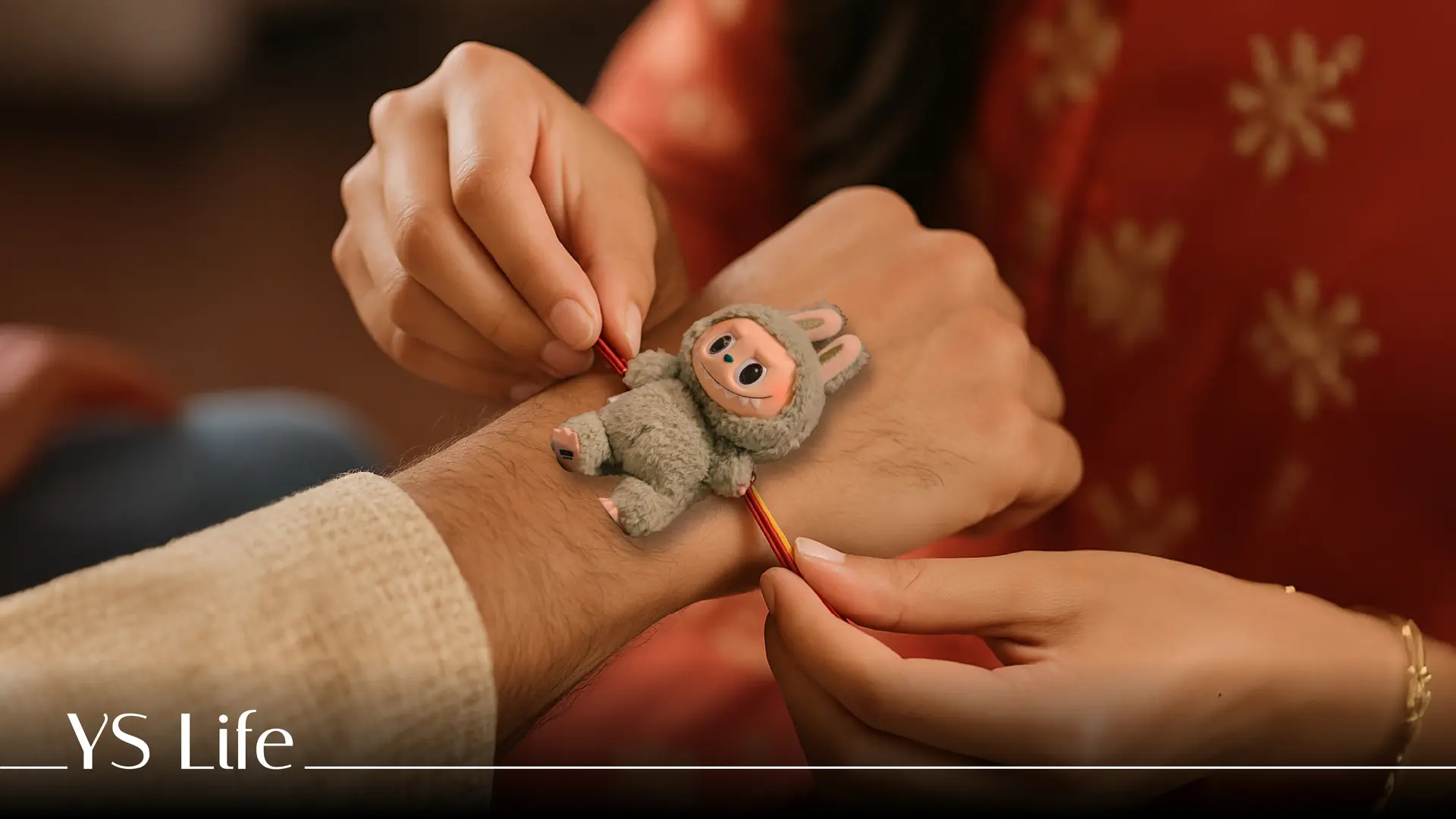

Raksha Bandhan, or Rakhi—the celebration of the bond between brothers and sisters—once meant handmade or store-bought beaded threads, boxes of kaju katli and laddoos, and a lifafa (an envelope with cash) or a handwritten note.
Fast-forward to 2025, Rakhi shopping is now dominated by ugly-cute cartoons, artificial intelligence (AI) generated greetings, mid-train deliveries, plantable keepsakes, and some heartfelt emotion in between.
The festival has become a mix of tradition and personalisation. Think Labubu-themed Rakhis and cakes, fake legal notices, silver and gold-plated threads from precious jewellery brands, and even gifts for the pet siblings.
From quirky pop-culture Rakhis to sustainability and train-delivered sweets, YS Life brings you the top trends shaping this year’s Rakhi market.
Pop-culture on wrist, and plate
Pop culture has always jumped onto festive trends, but 2025 takes it to a whole new level.
FNP (previously Ferns and Petals), which, its CMO Avi Kumar says, is the second-biggest festival (alongside Diwali and just behind Valentine’s Day), is betting big on character-themed celebrations. Beyond the usual suspects such as Marvel and zodiac designs, Labubu, the collectible plush toy monster elves created by Hong Kong illustrator Kasing Lung, is having a moment—appearing not only on Rakhis but also on cakes.
Although Rakhi is still a week away, Kumar says, “FNP has already sold over 20,000 limited edition Labubu Rakhis.”
American brand Magnolia Bakery was quick to jump on the bandwagon, serving Rakhi-themed cupcakes for those who prefer their affection dusted in frosting!
Petcare startup Supertails is offering hampers for the furry siblings. “Our pets are part of our families. They share in our joys, comfort us through quiet moments, and show us love in the most heartfelt ways,” says Vineet Khanna, Co-founder of Supertails.
AI-greetings to artisan hands
This year, AI has quietly stepped into the festivities, powering personalised video greetings—as is the case with FNP. The brand launched an AI-powered film prior to the festival to deliver personalised messages to brothers living far off. The video has been conceptualised by Teen Bandar and voiced by Piyush Mishra.
Travel isn’t off-limits either. Travel company Ixigo has collaborated with Zoop to deliver Rakhi mid-train journeys. Passengers can surprise their loved ones by ordering Rakhis, chocolates, tilak essentials (roli and chawal), and Rakhi hampers right from their train seats or berths.
“Every year, millions of Indians travel by train to reunite with their families for Raksha Bandhan. But for those caught in the last minute-rush, buying Rakhi gifts while travelling no longer needs to be a stressful, offline hassle,” says Sripad Vaidya, COO, ixigo Trains and Confirm Tkt.
These Rakhi hampers were made available at major railway stations across India, including New Delhi, Nagpur, Bhopal, Surat, Warangal, Kota, Kanpur, and others.
At the same time, quick-commerce players are also leaning into the emotional pull and are spotlighting the human craftsmanship behind the threads.
Davendra Meel, CEO at Zepto, calls Rakhi a “high-emotion, high-intent occasion,” adding that the quick-commerce platform has partnered with 12 top sellers working with over 3,500 artisans across India.
“We have Kolkata sellers working with 500+ artisans to craft 4.5 lakh Rakhis featuring Om, Ganesh, Krishna, Peacock, and Evil Eye motifs; a Delhi seller with the largest selection of American Diamond Rakhis; and Rajasthan artisans contributing 6 lakh Meenakari and Kundan designs. Our users can choose from over 500 unique Rakhi designs,” he adds.
Instamart too has jumped into the trend of ‘unique’ offerings. “We’ve expanded our selection, including silver Rakhis for the first time through a partnership with Kalyan Jewellers, and offered vouchers worth ₹2,100 to shoppers,” says Manender Kaushik, AVP and Category Head at Instamart.
Even in a year dominated by AI and quick-commerce, sustainability remains a strong calling. The Body Shop India is retailing The Beej Patra Rakhi by Terra Co—handmade by women artisans from seed paper, which can later be planted. Similarly, The Gram Art Project is offering plantable Rakhis.
Others are taking their gestures a step further by tying Rakhis for soldiers posted in remote locations.
Quick-commerce’s festive sprint
Although final numbers are yet to be in, Zepto has already seen a 30% rise in average order value, and a 150% surge in volumes, compared to last year. The biggest rush, however, still comes within 72 hours of the festival.
Instamart too experienced a demand spike days ahead of the festival, not just in the final stretch. “We have already surpassed last year’s sales, with a 3.5x surge in orders compared to the same period in 2024,” Kaushik reveals. He adds that Rakhi hampers on Instamart are up 8x year-on-year, sweets and chocolates are up 8x and 4x respectively, “Showing people want to go bigger, more thoughtful, and more indulgent with their gifting.”
In 2025, the medium has changed, but the message hasn’t. Whether delivered by AI, an artisan in Rajasthan, or on a crowded train, Rakhi is still about the same thing—telling your sibling that you remembered and showed up.
Edited by Megha Reddy