



World Interiors Day: Why emotive, experiential spaces are becoming a reality with AI
In the age of artificial intelligence, interior spaces are becoming more intuitive and experiential. What goes on behind the scenes? Are there any challenges? YS Life dives into this trend.

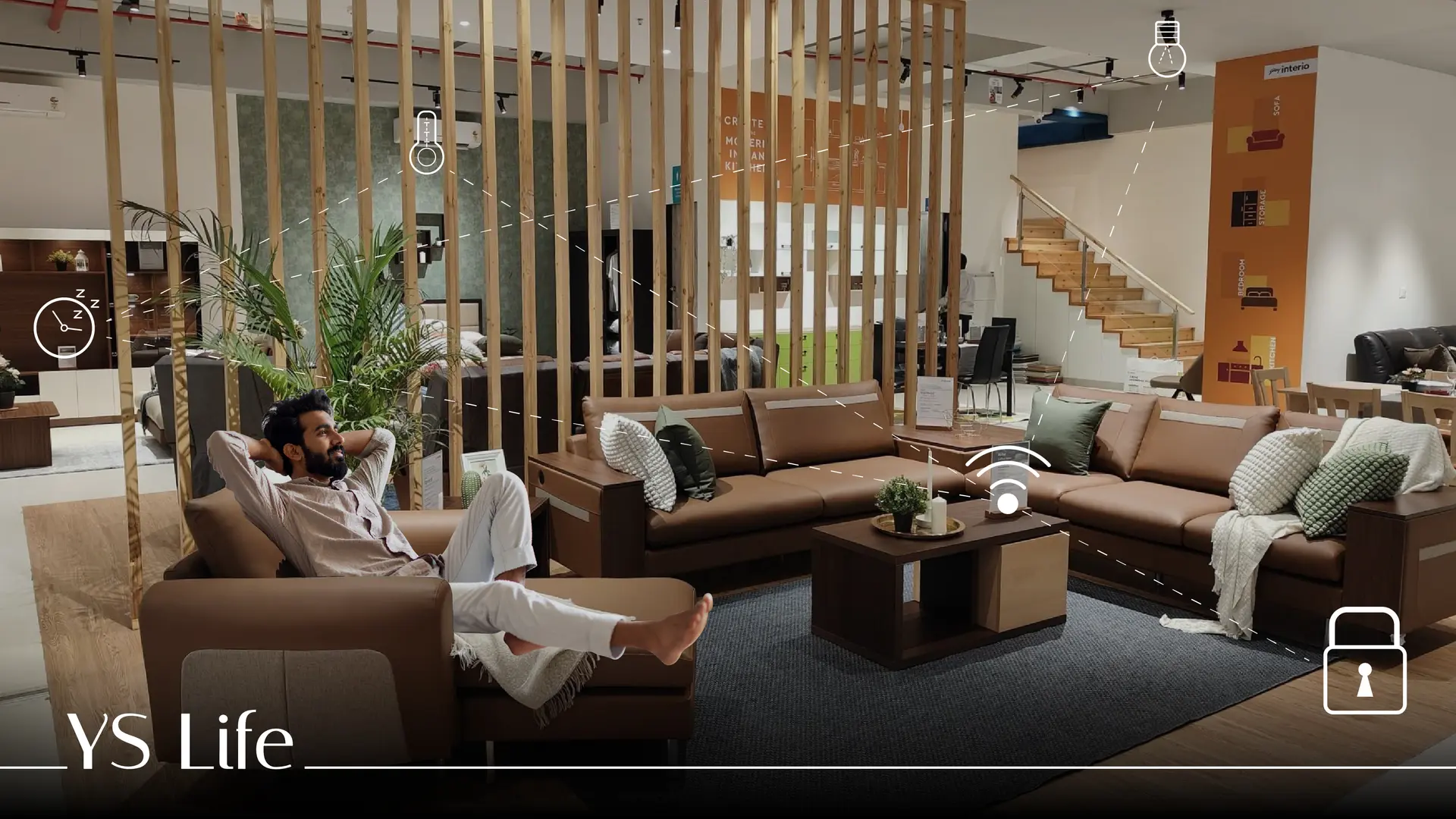

In today’s tech-powered world, artificial intelligence is quietly transforming how interior spaces are designed and experienced. Smart systems can now adjust lighting based on the time of the day, regulate temperature for comfort, and even learn daily routines.
We are entering an era where great design is not just beautiful or functional—it’s intuitive, inclusive, and emotive, says Anuj Ramchandran, Associate Director (Design and Build) at Livspace, the Bengaluru-headquartered interior and renovation company.
“Traditional interior design has long relied on educated guesses—general assumptions about how people might use a space. AI turns this model on its head. Instead of assuming, it observes, learns, and adapts in real time,” he tells YS Life.
By gathering user inputs—like lighting preferences, areas where people linger, or how they interact with their surroundings—AI begins to create spaces that feel personally tailored. This helps not just with efficiency but a quiet sense of ease, where a space seems to know what the user needs even before they do.
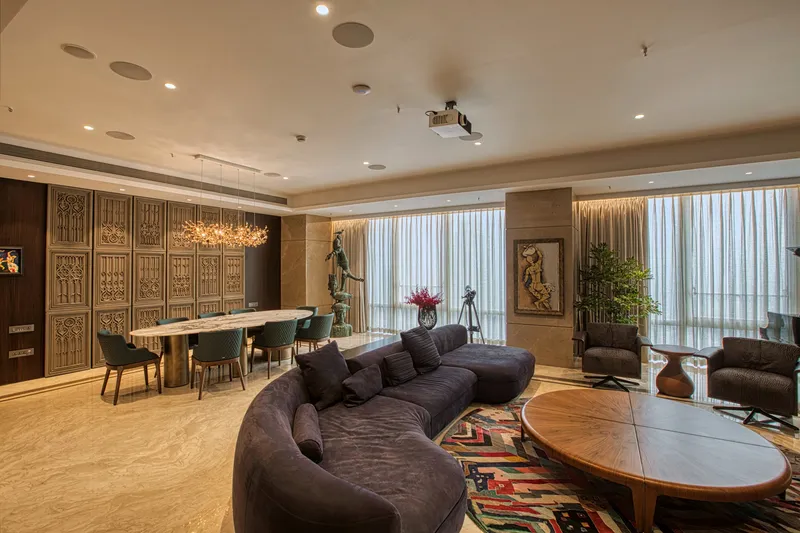
“Lighting, sound, visuals, and scent can work in harmony to create a multi-sensory narrative. Imagine a home that energises you with bright, cool light and upbeat music in the morning, and gently winds you down at night with warm hues and soft acoustics. These responses can be customised to suit each user’s emotional rhythm,” adds Ramchandran.
On this World Interiors Day, YS Life delves deep into this year's theme—‘Emotive Design, Experience, and AI’—with the help of experts.
What are emotive interiors?
Emotive interiors go beyond functional zoning—sleeping, eating, and working—to support moments of inspiration, reflection, focus, or joy. AI helps identify these emotional peaks and reshapes the environment to match, highlights Ramchandran.
“AI can also interpret more nuanced signals: voice tone, movement patterns, and even biometric data from wearables. If it detects signs of stress, the environment might respond with softer lighting, reduced noise, or calming scents. This emotional attunement creates a space that feels empathetic—almost as if it's in sync with its inhabitants,” he reiterates.
Design in the AI era must balance technological advancement with human-centred principles. For modern Indian homes, this means creating tech-integrated products that enhance lifestyle while maintaining cultural authenticity.
“The key lies in developing flexible interior systems that adapt to changing needs through smart technology. Premium products with tactile experiences remain essential, as physical touchpoints create emotional connections that digital interfaces cannot replicate,” shares Lalitesh Mandrekar, General Manager, Design at furniture brand, Godrej Interio.
There should be scope for users to co-create or adapt a design to reflect their identity, thus fostering a sense of ownership and emotional connection, says Akarsh Loomba, Co-founder of luxury design studio, Luxe Loft.
Challenges of integrating AI
One of the biggest challenges is ensuring AI doesn’t dilute the human element. While design is inherently emotional, AI is based on data and patterns. Relying heavily on machine learning can lead to homogenised results that lack cultural nuance or soul.
“There are also ethical concerns and bias in AI training data, which can lead to exclusionary design. Moreover, designers must now learn to collaborate with algorithms, which can be creatively liberating but also disorienting,” highlights Ramchandran.
“Lastly, rapid technological changes can pressure designers to prioritise speed over reflection, compromising the depth of the design process,” he adds.
The substantial initial investment in AI tools and training can be prohibitive for smaller design firms, potentially limiting access to these technologies. Privacy concerns arise when AI systems collect personal data to create customised solutions, requiring careful handling of client information.
Moreover, elements such as design intent and creative impression cannot be replicated or sourced through a simple search.
“These require thoughtful consideration and a human touch. Without that depth, we risk homogenisation—where everyone ends up creating variations of the same idea, lacking originality or substance,” points out Vrinda Kumari, Creative Director of bespoke interiors and furnishings brand, AE Living.
A playbook for intuitive, inclusive homes
For Meghana Nimmagadda, Founder of Hyderabad-based interior design studio, Designtales, creating intuitive and inclusive design starts with taking a moment to pause—to observe, listen, and feel. Even with the rise of intelligent systems, the goal remains the same—to create spaces that understand people, not just predict their actions.
“In today's context, good design is not only functional—it is also sensitive. It should respond to neurodiversity, cultural nuances, and evolving definitions of identity and comfort. Intuition in design comes from deeply understanding the user, while inclusion stems from genuinely caring for them,” she says.
As we advance with smarter tools, designers must combine intelligence with intention to design with warmth, soul, and a profound sense of belonging.
Thus, incorporating textures, fragrances, and acoustic elements that create memorable experiences is key. While tech-integrated products are significant and can control lighting and temperature throughout the day, utilising premium materials like handcrafted wood panels or natural stone surfaces provides tactile satisfaction.
“These physical touchpoints create emotional anchors that digital interfaces cannot replace, enhancing the overall lifestyle experience,” says Ramchandran.
Playing with translucency, reflection, and natural light through the use of materials like onyx, frosted glass, or perforated metals can dramatically change appearance throughout the day.
“The object becomes dynamic, changing with time, mood, and setting. It creates visual poetry, inviting viewers to slow down and observe,” highlights Ankit Jain, Co-founder of AE Living.
Spaces can also be made more emotive and experiential through shapes and forms. Gaetano Pesce’s bulbous chair is one such example.
Unconventional, biomorphic shapes challenge traditional aesthetics and ergonomics. “Pesce’s work invites the user to engage not just with a chair but with a sculptural encounter. These forms create an emotional response—playful, tactile, or even provocative—making the object feel alive and unpredictable,” says Jain.
Blending traditional Indian design motifs with modern aesthetics using premium finishes and smart lighting systems is another simple and effective strategy.
“Technology can highlight architectural details or artwork dynamically, creating spaces that honour heritage while embracing contemporary living. This approach makes homes both aesthetically pleasing and culturally resonant for modern Indian families,” advises Mandrekar.
Future of interior design
Interior design is being redefined as AI becomes more embedded in our homes and workspaces. It's no longer just about how a space looks—it's about how it feels, how it cares, and how it connects with the people inside it.
“I am fascinated by the idea of AI as a design partner. Imagine being able to sketch out a rough idea and have AI help me explore dozens of variations, or test how different lighting scenarios might feel at various times of day. This new tool makes many seemingly impossible things possible and with ease,” shares Nimmagadda.
Applying emotional intelligence in design has got her most excited. For instance, seeing spaces that can sense when one is stressed and respond with softer lighting or calming colours will be magical. “I envision a future where technology becomes so intuitive and responsive that it feels less like using a device and more like being understood,” she adds.
With a greater use of AI, the future can be more about co-creation, combining creativity with speed and efficiency. AI can help to create more personalised designs based on inputs such as size, shape or sustainability.
“Designs will be shaped by real-time user data. Design tools will become more intuitive, suggesting layouts, colours, or edits automatically. AI tools will also make such high-level designing more accessible to non-designers,” says Shreya Loomba, Co-founder at Luxe Loft.
Sustainability will become paramount, with AI recommending eco-friendly materials and energy-efficient solutions that provide better value while reducing environmental impact.
“Real-time collaboration tools will revolutionise client interactions, allowing instant visualisation and modification of designs during meetings,” shares Mandrekar.
Edited by Suman Singh