



Meta soars on AI-driven ad boom, posts strong Q2 results
The California-based firm posted a 36% YoY jump in Q2 net profit to $18.3 billion, with revenue up 22% to $47.5 billion—both the second-highest figures in nine quarters, highlighting strong financial momentum.

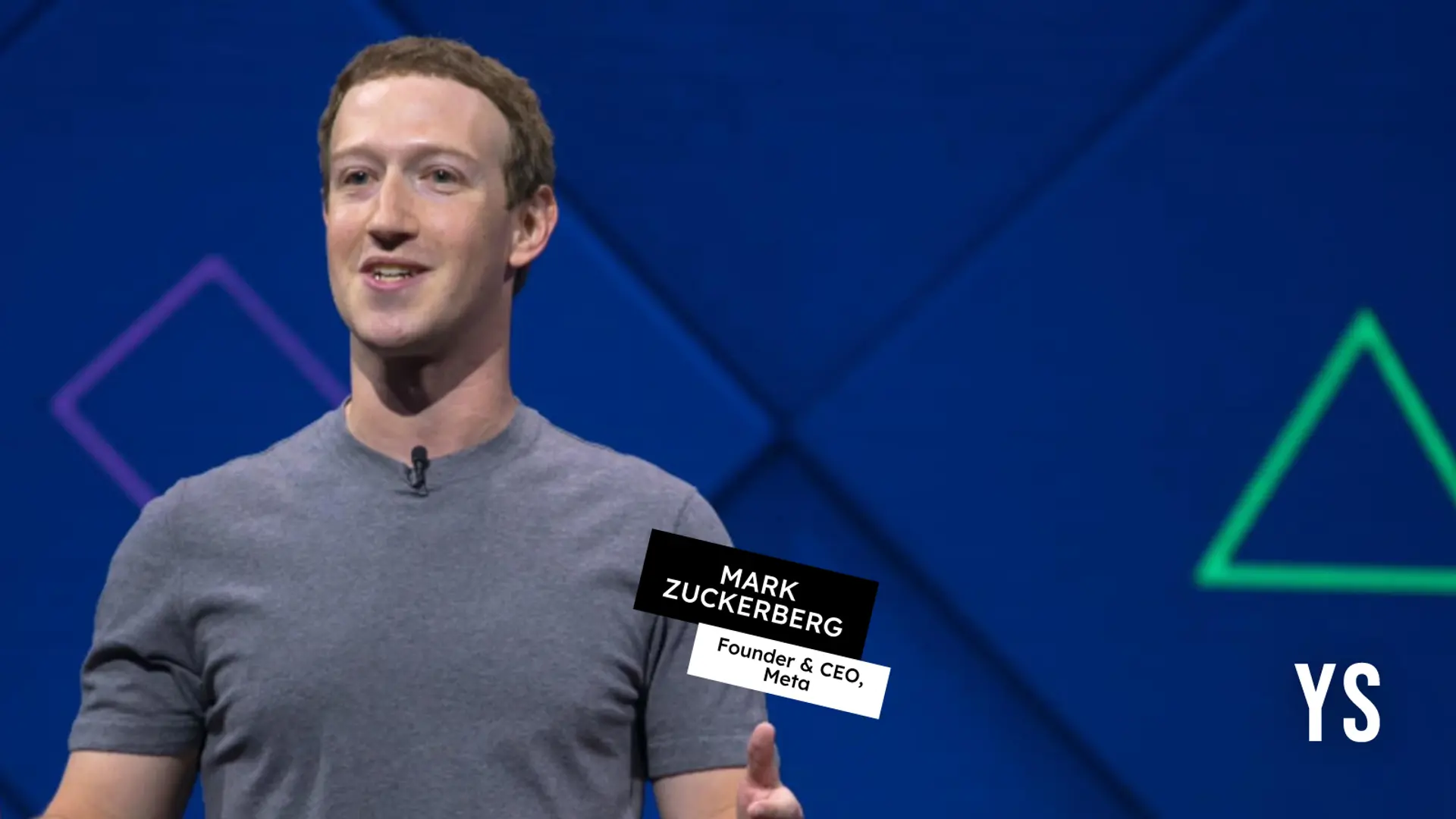

parent Meta rode a wave of AI-driven digital advertising demand to deliver strong revenue and profit growth in the second quarter of 2025.
“On advertising, the strong performance this quarter is largely thanks to AI unlocking greater efficiency and gains across our ads system,” Meta Founder and Chief Executive Officer, Mark Zuckerberg, said, during the earnings call.
“This quarter, we expanded our new AI-powered recommendation model for ads to new surfaces and improved its performance by using more signals and a longer context. It's driven roughly 5% more ad conversions on Instagram and 3% on Facebook,” he added.
The California-based firm posted a 36% year-over-year surge in Q2 net profit, touching $18.3 billion. Revenue climbed 22% YoY to $47.5 billion. Both figures marked the second-highest levels in the past nine quarters, underscoring strong financial momentum.
Meta expects total revenue for the third quarter of 2025 to range between $47.5 billion and $50.5 billion, up from $40.6 billion in Q3 2024. Based on the midpoint of $49 billion, this shows a YoY growth of 20.6%.
Its revenue forecast for the next quarter growth and AI-related developments strengthened investor confidence, sending the tech firm’s shares up by about 12% in after-hours trading.
Prioritising AI
The Meta chief highlighted the company’s focus on building its superintelligence team, led by Alexandr Wang, with Nat Friedman heading AI products and applied research, and Shengjia Zhao serving as Chief Scientist.
“We are building an elite, talent-dense team,” he said, “I’ve spent a lot of time building this team this quarter.”
Meta’s long-term vision is to bring personal superintelligence to everyone—AI that surpasses human intelligence in every way—so that people can direct it toward what they value in their own lives. According to Zuckerberg, smart glasses will become the main way through which the company will integrate superintelligence into people’s day-to-day lives.
The company’s R&D spending rose 23%, driven primarily by higher employee compensation and infrastructure costs.
Meta, having spent $14.3 billion to acquire a stake in Scale AI and recruit its CEO, Wang, has triggered an intense competition for AI talent. It is awarding over $100 million in compensation to researchers from rival firms.
The company ended Q2 (as of June 30, 2025) with 75,945 employees, up 7% YoY, but down 1% quarter-over-quarter, as most staff affected by earlier performance-related cuts were no longer counted, Meta’s Chief Financial Officer Susan Li said during the call. This decline was partially offset by continued hiring in key areas such as monetisation, infrastructure, Reality Labs, AI, and regulatory compliance.

Meta’s Q2 capital expenditures totaled $17.0 billion, driven by investments in servers, data centers, and network infrastructure. The company now expects 2025 CapEx to range from $66 billion to $72 billion, narrowed from its previous forecast of $64 billion to $72 billion and up about $30 billion year-over-year at the midpoint.
Despite the dynamic nature of infrastructure planning, Meta expects similarly significant capital expenditure growth in 2026 as it accelerates investments to expand capacity for AI and business operations, according to Li.
Tech giants like Meta, Microsoft, Google, and Amazon have been increasing their capital expenditure to expand their server and data centre infrastructure, driven by the exponential growth of AI and its demanding computational requirements.
Ads business
The Facebook and Instagram parent saw a 21.5% YoY growth in its advertising revenue—its main source of revenue—which increased to $46.6 billion in Q2 FY25. The revenue of the total family of apps touched $47.1 billion, which includes advertising revenue.
Meta’s family of apps, which includes Facebook, Instagram, WhatsApp, and Messenger, saw a 6% YoY increase in daily active users, reaching an average of 3.48 billion in June 2025. Ad impressions across its family of apps rose 11% year-over-year, while the average price per ad increased 9%.
Moreover, Reality Labs, which works on virtual reality and augmented reality gadgets and Meta’s metaverse vision, posted $370 million in revenue in Q2, up 5% YoY due to increased sales of AI glasses. The unit’s operating loss stood at $4.5 billion.
Li said the social media company expects its year-over-year growth rate in Q4 2025 to slow compared to Q3. Meta now projects full-year 2025 total expenses between $114 and $118 billion, slightly narrowed from its previous range of $113 to $118 billion, representing a 20–24% increase YoY.
“We expect the significant investments we are making now will allow us to continue leveraging advances in AI to extend those gains and unlock a new set of opportunities in the years to come,” Li noted.
Edited by Megha Reddy