



Robinhood wants to give EU a token of the US markets, but regulatory bodies, OpenAI not happy with the move
Robinhood, the US-based financial services company, introduced stock tokens that would allow retail investors in Europe to get a slice of the price movements of both public and private companies in the US.

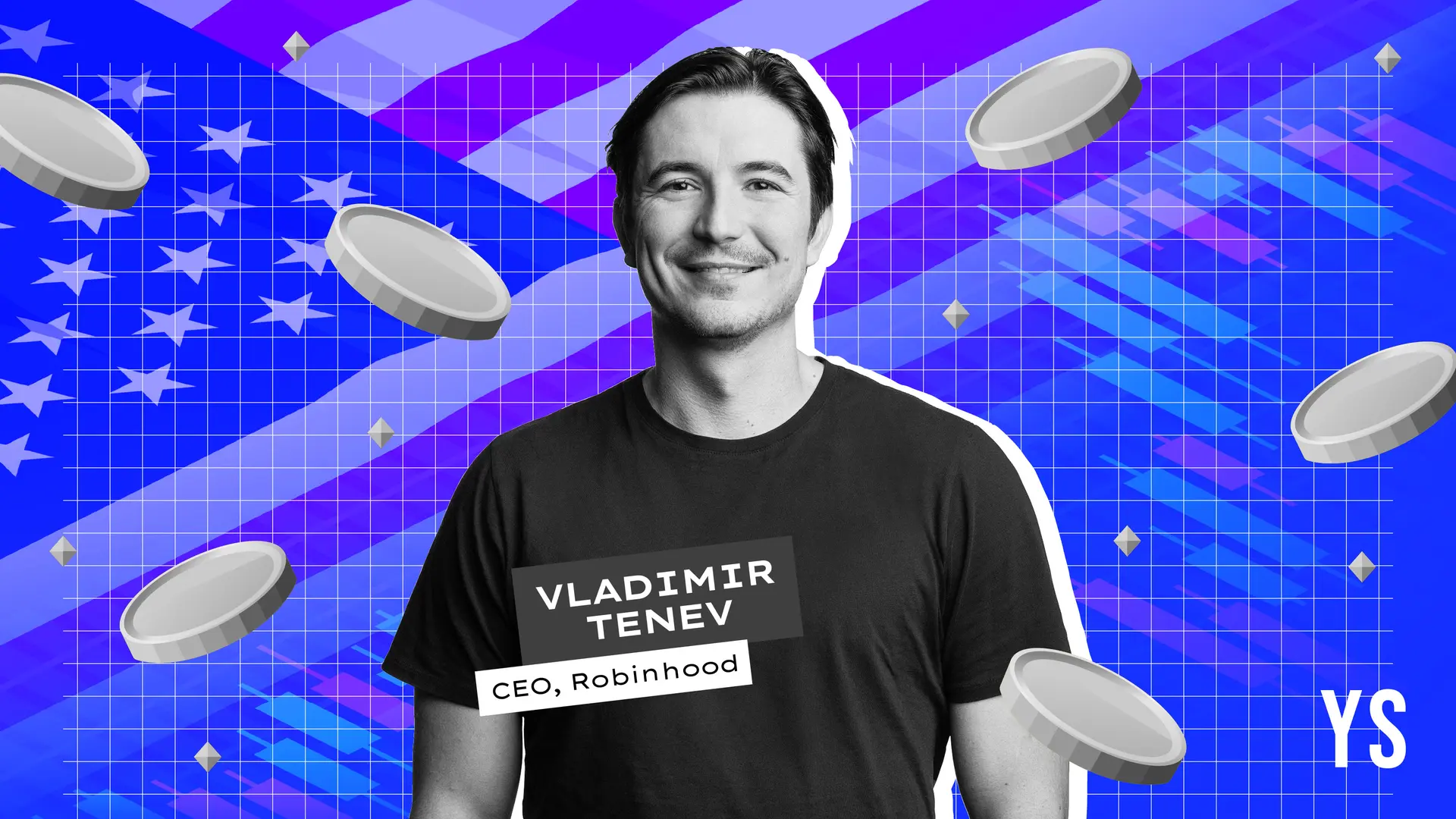

Imagine buying a token that claims to track a company’s stock price movements, but you do not own its shares, do not get voting rights, or cannot collect dividends. Meet tokenised stocks—a product introduced by online brokerage firm Robinhood in Europe on June 30.
The product allows users in the European Union (EU) to gain exposure to price movements of US-listed public and private companies, like ChatGPT-maker OpenAI and Elon Musk-led SpaceX.
According to Robinhood CEO Vlad Tenev, the company distributed $1 million worth of OpenAI tokens and $500,000 worth of SpaceX tokens as part of a giveaway after the announcement.
The catch? These tokens are derivatives, and not actual shares or equity. In other words, anyone buying these tokens will not have actual skin in the game. While the value of these tokens is tied to the performance of the stock or the company, Robinhood said it holds the underlying securities in custody in the United States.
Why the hype?
Historically, investing in private companies like OpenAI and SpaceX has been limited to accredited investors with deep pockets. These tokens lower entry barriers for retail investors.
Additionally, unlike traditional stock markets that open and close within specific business hours, tokenised stocks can be traded 24/5, a feature similar to cryptocurrencies. This would allow token holders to react to company announcements and events in real-time, regardless of the time zones they operate in.
Robinhood can do so by utilising blockchain technology. The stock tokens in the EU are issued on Arbitrum, which processes transactions off the main Ethereum blockchain, significantly reducing transaction costs compared to directly operating on Ethereum’s mainnet.
However, a rough scan of Reddit forums shows that while the announcement garnered hype around the new digital asset, many users have voiced out confusion and scepticism. This is not without cause, as the new announcement from Robinhood elicited a regulatory response and a statement from OpenAI, begging the question around the offering.

Under fire from regulators, OpenAI
Three days after Robinhood announced tokenisation stock of OpenAI and SpaceX, the ChatGPT-maker took to X to clarify its involvement in the same.
The AI company clarified that the “OpenAI tokens” are not OpenAI equity. “We did not partner with Robinhood, were not involved in this, and do not endorse it. Any transfer of OpenAI equity requires our approval—we did not approve any transfer. Please be careful.”
In response to OpenAI’s statement, Robinhood told TechCrunch that these tokens were part of a “limited” giveaway to offer retail investors indirect exposure "through Robinhood’s ownership stake in a special purpose vehicle”. This would mean that Robinhood holds a certain number of shares of a special purpose vehicle (SPV) that, in turn, holds a number of OpenAI shares. However, there is no clarity on what SPV is referred to by the company.
Moreover, the Bank of Lithuania—Robinhood’s lead regulator in the EU—has contacted the company seeking clarification of its tokenised stocks after OpenAI raised doubts. “We have contacted Robinhood and are awaiting clarifications regarding the structure of OpenAI and SpaceX stock tokens as well as the related consumer communication,” Bank of Lithuania spokesman Giedrius Šniukas told CNBC.
Meanwhile, Elon Musk, who owns SpaceX and OpenAI’s rival startup xAI, fired back at OpenAI. “Your ‘equity’ is fake,” Musk posted on X.
Notably, Musk helped launch OpenAI back in 2015 when it was a non-profit organisation to develop AI. The company’s move in 2018 to create a for-profit subsidiary and its later partnership with Microsoft were not viewed favourably by Musk, who later sued OpenAI and Sam Altman. In 2023, he launched xAI, which is building the AI chatbot, Grok.
Robinhood CEO defends product
In an interview with Bloomberg TV, Robinhood’s CEO, Vlad Tenev, said the tokens of OpenAI and SpaceX, while not tradeable yet, are testing the water to resolve what the company believes is one of the biggest inequities in capital markets—private companies.
Tenev also added that the company is confident that the product will withstand the “highest form of scrutiny” and welcomes discussions from regulators.
Robinhood has received several inquiries from private companies after the announcement, who want their shares to be tokenised to access retail investors, Tenev told Bloomberg.
The online brokerage is not a stranger to rising regulatory scrutiny over its new products. In February this year, the online brokerage firm had to roll back event contracts that would have allowed users to bet on the result of the Super Bowl—the annual championship game of the National Football League (NFL) in the US—at the request of the US Commodity Futures Trading Commission.
Edited by Suman Singh