



Tamil Nadu unveils incentives, research hubs to push semiconductor mission
According to officials, the initiatives are designed to bolster early-stage chip startups, foster collaboration between academia and industry, and strengthen the local semiconductor supply chain.

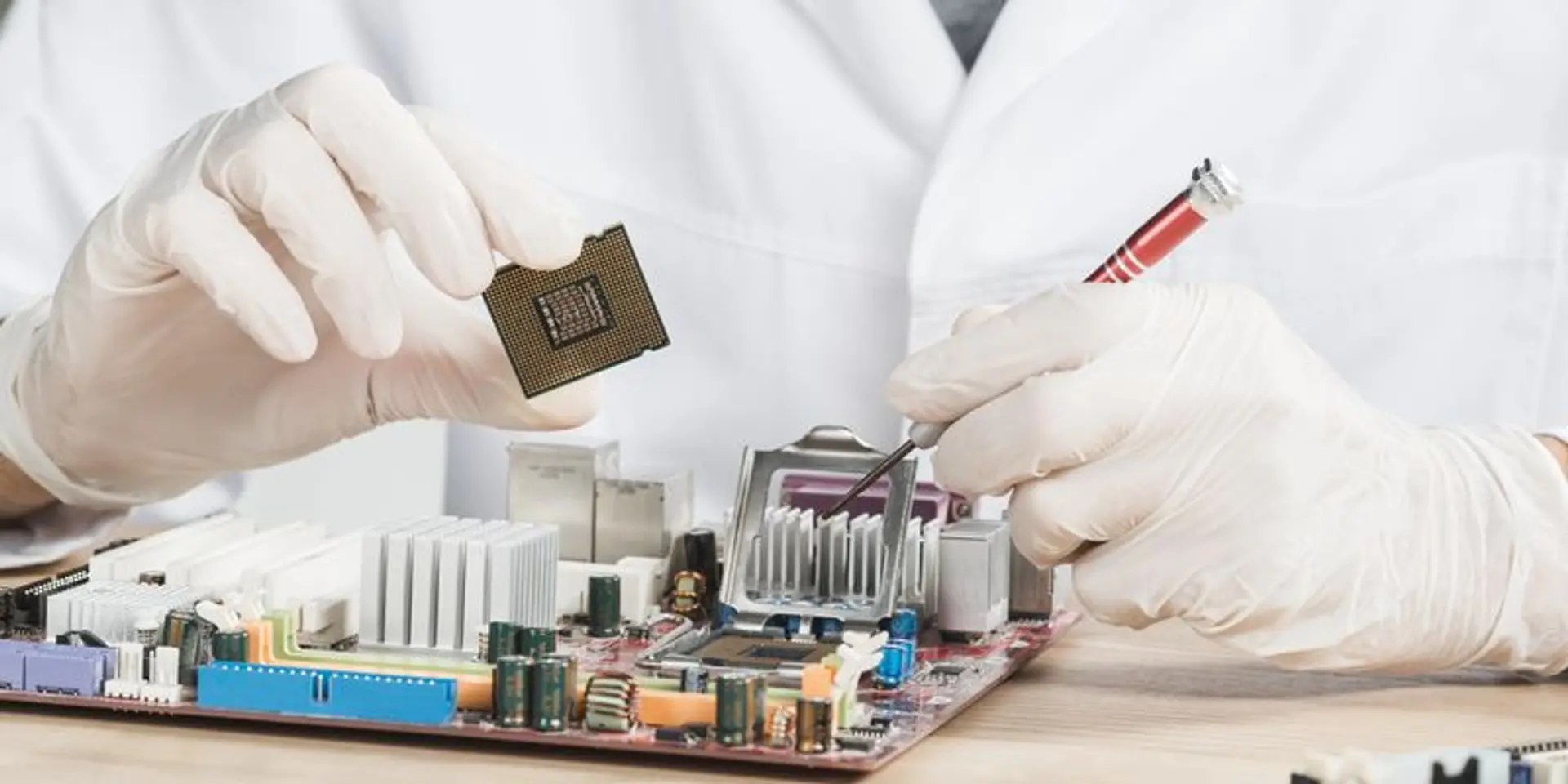

Tamil Nadu has rolled out a fresh set of measures under its Rs 500-crore Semiconductor Mission 2030, seeking to position the state as a hub for chip design, testing, and manufacturing.
The government on Monday sanctioned a Semiconductor Design Promotion Scheme, which will provide subsidies and prototyping grants to fabless design firms. Alongside, new Centres of Excellence will be established under the state-run TIDCO in partnership with private players, with a mandate to conduct research, testing, and training.
Officials said the initiatives are designed to bolster early-stage chip startups, foster collaboration between academia and industry, and strengthen the local semiconductor supply chain.
“By combining subsidies for design firms, co-investments in infrastructure and parks, enabling a pilot fabrication facility and an integrated skilling programme, we are creating a self-sustaining semiconductor value chain,” said V Arun Roy, Industries Secretary.
The Tamil Nadu Semiconductor Mission (TNSM) 2030, announced in this year’s state budget, rests on five pillars: promoting design firms, developing testing infrastructure, setting up Centres of Excellence, building semiconductor equipment manufacturing parks, and advancing workforce training.
Two semiconductor equipment manufacturing parks, each spread across 100 acres, are already under development in Sulur and Palladam in Coimbatore. The state is also working on a small-scale fabrication unit, in collaboration with IIT and industry partners, that will function as a prototyping and R&D facility.
As part of its workforce push, the government plans to train 1,000 engineering students through the India Semiconductor Workforce Development Programme and other platforms, while upskilling more than 4,500 technicians in fabrication, testing, and packaging.

The state’s move align with India’s broader effort to reduce import dependence and attract global semiconductor investment. Tamil Nadu’s plan comes amid rising competition among Indian states—including Karnataka, Gujarat, and Telangana—to draw chipmakers and equipment manufacturers with incentives and infrastructure commitments.
How Indian states are incentivising semiconductor investments
Indian states are competing aggressively to attract semiconductor investments, each tailoring incentives to strengthen their position as the next big hub for chipmaking.
Gujarat has taken the lead with one of the most generous state-level packages. Its semiconductor policy offers capital subsidies of up to 40% over and above central incentives, covering about 20% of a project’s cost.
The land is heavily subsidised, up to 75% on the first 200 acres at the Dholera Special Investment Region, where the state is developing a “Semicon City.” Water is supplied at a concessional rate of Rs 12 per cubic meter for five years, while electricity is offered at just Rs 2 per unit for ten years, with duty waivers attached. Gujarat has also streamlined compliance through a single-window clearance system and infrastructure support, making it one of the most attractive destinations for fabs.
Uttar Pradesh has crafted its semiconductor policy to build on Noida’s existing electronics manufacturing strength. The state is offering a capital subsidy of Rs 919 crore, a land rebate of Rs 124 crore, and a 10-year waiver on electricity duty.
To encourage research, the policy includes support of up to Rs 10 crore for R&D centers and 50% funding (capped at Rs 10 crore) for Centers of Excellence. Patent reimbursements and skill development grants of Rs 3 crore over five years are also available. These measures are aimed at cementing UP’s position as India’s electronics heartland, which already accounts for over half of the country’s mobile phone output.
Odisha is also trying to be a new contender, prioritising semiconductors and packaging technologies. In Bhubaneswar’s Info Valley, two semiconductor projects worth Rs 4,009 crore have been approved, including a Rs 618 crore silicon carbide fab by RIR Power Electronics that will create around 750 jobs. The Odisha Semiconductor and Fabless Policy provides 25% capital subsidies, along with exemptions from stamp duty and electricity duty, as well as power tariff reimbursements and water supply concessions.
Karnataka has long been a hub for electronics design and is now scaling up to attract semiconductor fabs and allied investments. The state offers a 20% capital investment subsidy and refunds of up to 25% on land costs (up to 50 acres), in addition to duty waivers and support under the central Production-Linked Incentive (PLI) scheme. In February 2025, US chip equipment maker Lam Research announced plans to invest more than $1 billion in Karnataka’s semiconductor ecosystem, underscoring the state’s appeal as a design and manufacturing base.
Assam is also looking to carve a niche by positioning itself as a packaging and testing hub. Tata Electronics has committed nearly Rs 27,000 crore to set up an Outsourced Semiconductor Assembly and Testing (OSAT) facility in the state. The state has also earmarked 175 acres for a dedicated semiconductor park to support the Tata unit and allied players.
Madhya Pradesh has drafted a fab-specific policy to entice investors. It offers up to 30 hectares of land free on long-term lease, along with electricity reimbursements and water subsidies for a decade. Training expenses are reimbursed up to $10 million over five years, reflecting the state’s recognition that skilled manpower is critical to semiconductor operations. However, the overall support is capped at 15% of capital investment, balancing fiscal prudence with competitiveness.
Together, these policies reflect India’s strategy of competitive federalism, where states are not just offering subsidies but tailoring ecosystems.
Edited by Megha Reddy