



Google’s Willow Chip Just Beat Supercomputers by 13,000x
Google’s Willow chip marks a historic quantum milestone with Quantum Echoes, running 13,000x faster and opening doors to real-world scientific use.

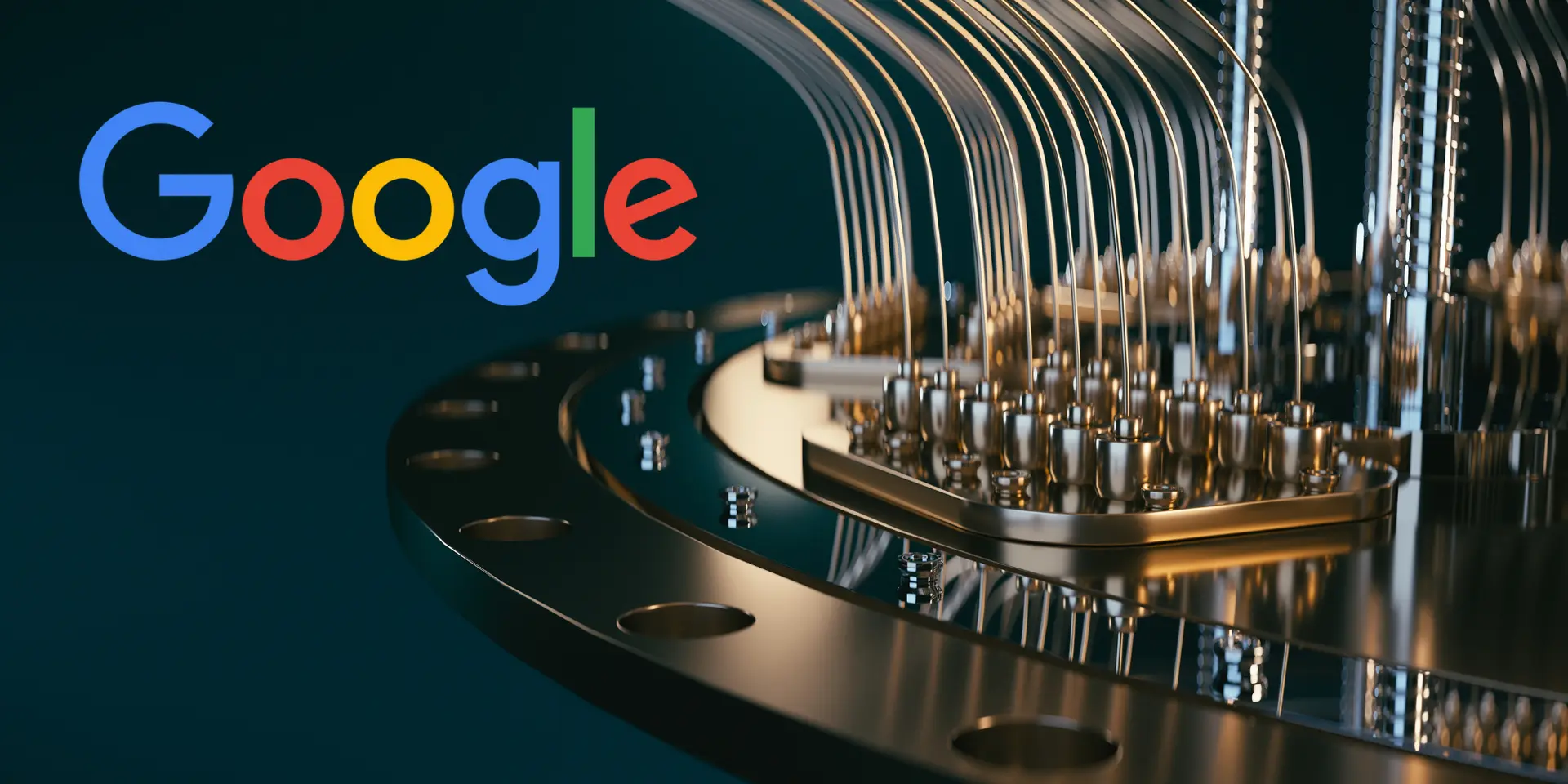

Sundar Pichai, the CEO of Google, recently took to X to share a landmark moment in the world of computing. And no, this isn’t about another Google app or AI update. It’s a breakthrough that could reshape the future of science and technology.
At the heart of his post was Google’s Willow chip, which has reportedly achieved the first-ever verifiable quantum advantage. In simpler terms, Willow has completed a task that would take classical supercomputers thousands of times longer, literally changing the game for computational possibilities.
The Quantum echoes algorithm
The breakthrough revolves around a new quantum algorithm Google has dubbed Quantum Echoes. This algorithm doesn’t just run faster; it runs 13,000 times faster than the best classical counterpart on one of the world’s fastest supercomputers.
That is not a small number; it is the kind of speed that opens doors to problems previously considered unsolvable. So, what exactly does Quantum Echoes do? It is designed to simulate interactions between atoms in a molecule using nuclear magnetic resonance.
In practical terms, it means we can now model molecular behaviour with unprecedented accuracy. For industries such as drug discovery and materials science, this is a significant development. Imagine testing thousands of potential compounds or materials in silico before even creating them in the lab. What used to take months or years could shrink dramatically.
Why verification matters
One of the most remarkable aspects Pichai highlighted is that this result is verifiable. That means other quantum computers can repeat the experiment, and physical experiments can confirm the outcomes. Verification is crucial because quantum computing has long struggled with scepticism. Demonstrating a repeatable, measurable advantage over classical machines puts this milestone on solid scientific ground.
More than just a speed record
It is easy to focus on the sheer speed. 13,000 times faster is headline-worthy. But the real significance lies in practical application. Quantum computing has been promising a revolution for decades, yet until now, most achievements have been largely theoretical or experimental.
Willow and Quantum Echoes signal that we are inching closer to real-world utility, the first steps toward solving problems that are currently out of reach for even the most advanced classical computers.
A peek into the future
While Pichai’s post doesn’t spell out immediate products or services, the implications are clear. Industries that rely on complex simulations, such as pharmaceuticals, chemistry, energy, and advanced materials, may be on the verge of a paradigm shift.
Quantum computers like Willow could drastically reduce research timelines, lower costs, and unlock innovations that have long remained theoretical.
Moreover, by publishing the breakthrough in Nature, Google is ensuring that the achievement enters the broader scientific conversation. This is not just a tech company brag; it is a contribution to the global pursuit of knowledge, inviting researchers, startups, and other tech giants to explore, replicate, and build on the foundation.

The bottom line
Sundar Pichai’s X post isn’t just a corporate update. It is a signal that quantum computing is moving from theory to tangible impact. The Willow chip and Quantum Echoes algorithm showcase what is possible when cutting-edge hardware meets innovative algorithms.
For now, the headline is speed and verification. But in the coming years, the real story will be how this breakthrough transforms industries, research, and perhaps even the way we understand the building blocks of matter itself. In short, if you thought quantum computing was still “science fiction,” Pichai’s latest post proves it is very much becoming science fact.