



Koo co-founder’s PicSee aims to make photo sharing mutual, automatic
The app from Billion Hearts Software Technologies, led by Mayank Bidawatka, who co-founded Koo, uses on-device artificial intelligence and face matching so that people receive pictures others have taken of them only after they share pictures of those others.

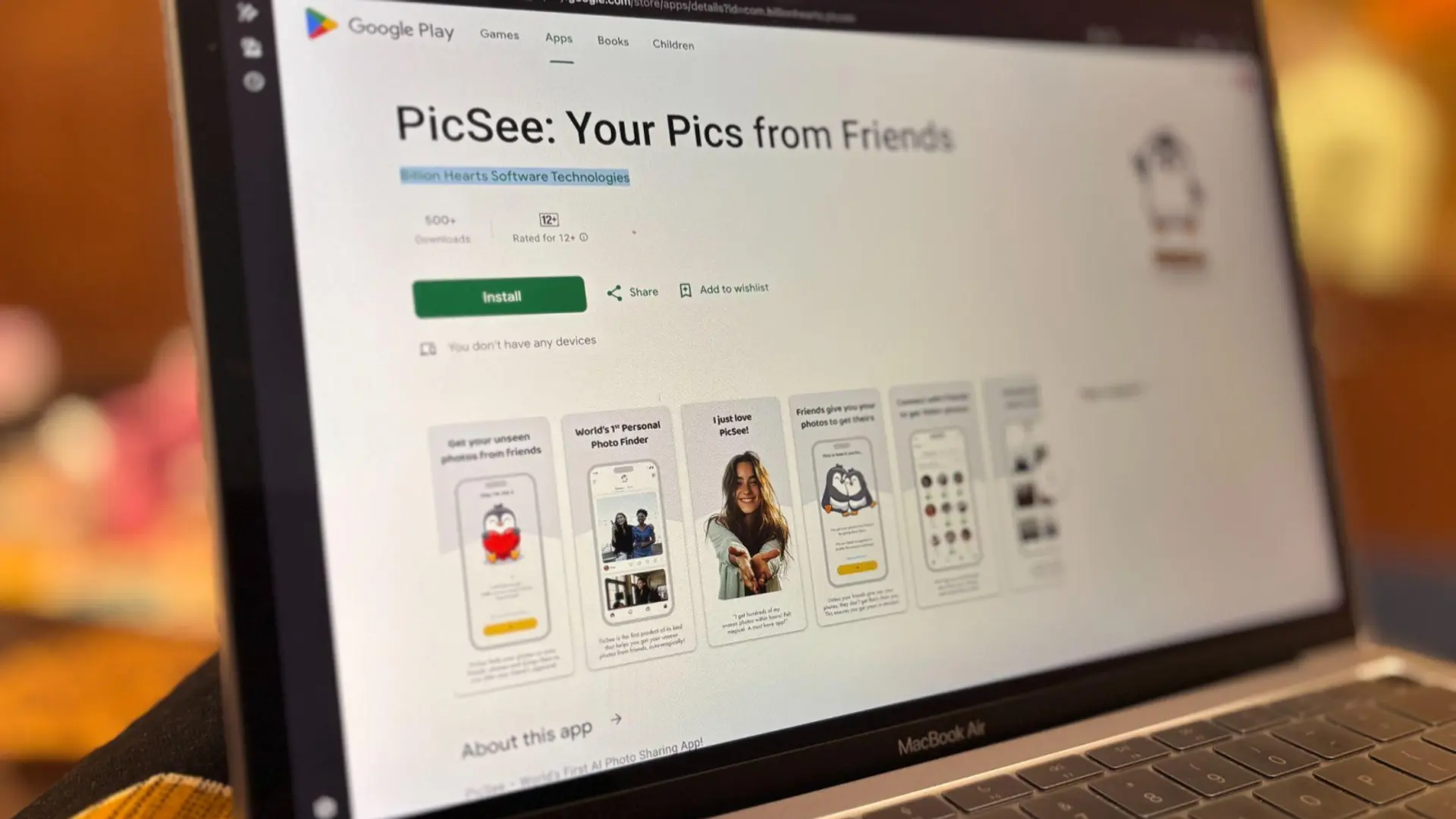

Mayank Bidawatka, who co-founded Koo, has officially launched a new app, PicSee, which seeks to change how people exchange photos by making sharing reciprocal and largely automatic.
The app from Billion Hearts Software Technologies, led by Bidawatka, uses on-device artificial intelligence (AI) and face matching so that people receive pictures others have taken of them only after they share pictures of those others.
The product’s soft launch was in July, and it is now available on iOS and Android.
PicSee’s so-called “give to get” flow scans a user’s gallery to find images that include other people, sends personalised invites to those contacts, and requires a one-time mutual approval. Once both parties accept, the app continues to exchange photos between them without repeated manual effort.
According to Bidawatka, this approach tackles a simple but widespread problem of people taking vast numbers of photos that never get shared.
“PicSee fixes this with its patent-pending mutual sharing flow — you get your unseen pics from friends, and for them to get theirs, they share yours,” he said, adding that the system relies on privacy-safe AI and on-device encryption to keep exchanges secure.
The company said the approach solves a familiar annoyance where hundreds or thousands of images of someone remain trapped on friends’ phones.
According to the company, images remain on users’ devices, transfers use end-to-end encryption, screenshots are blocked inside the app, and recipients get a 24-hour review window with a recall option for shared photos.
These design choices reduce some of the risks associated with cloud-first sharing because servers do not become long-term repositories of user images. The app’s public materials and store listings repeat these claims.

Despite these safeguards, there are specific privacy questions that come with automated face scanning and the use of biometric templates. Facial recognition and the data derived from it are treated as sensitive in many legal frameworks.
India’s Digital Personal Data Protection Act 2023 tightens the rules around consent and purpose limitation for personal data processing, and guidance on biometric data emphasises that organisations must be explicit about why they need such processing and how long they will retain any derived data.
On-device processing and encryption are positive signals, but they do not remove the need for clear, informed consent and careful operational practices if biometric processing is occurring.
For users, there are already well-known ways to share pictures. WhatsApp remains a main channel for most private photo exchanges because of its ubiquity and group features. It provides end-to-end encryption for messages and media and now offers an option for end-to-end encrypted cloud backups, but backups and metadata handling remain important caveats for privacy-conscious users.
Google Photos is popular for camera roll backup and for face grouping and sharing features, though much of its intelligence depends on cloud processing and account-level storage. Also, Signal offers a more privacy-centric route with default end-to-end encryption and minimal metadata collection, but its network size in India is smaller.
In late 2024, Billion Hearts secured a $4 million seed round from Blume Ventures, General Catalyst, Athera Venture Partners, and several angel investors behind startups such as redBus, Flipkart, Myntra, Ola, and InMobi. PicSee is the company’s first product, developed by a compact team of just 11 members.
Edited by Jyoti Narayan