



Namma Yatri’s Shan M S on bridging the government, driver and rider divide
The ride-hailing app, which was launched in 2021, has positioned itself as an app for the drivers, cutting out short-term discounts and incentives to focus on the long-term earnings of their driver partners.

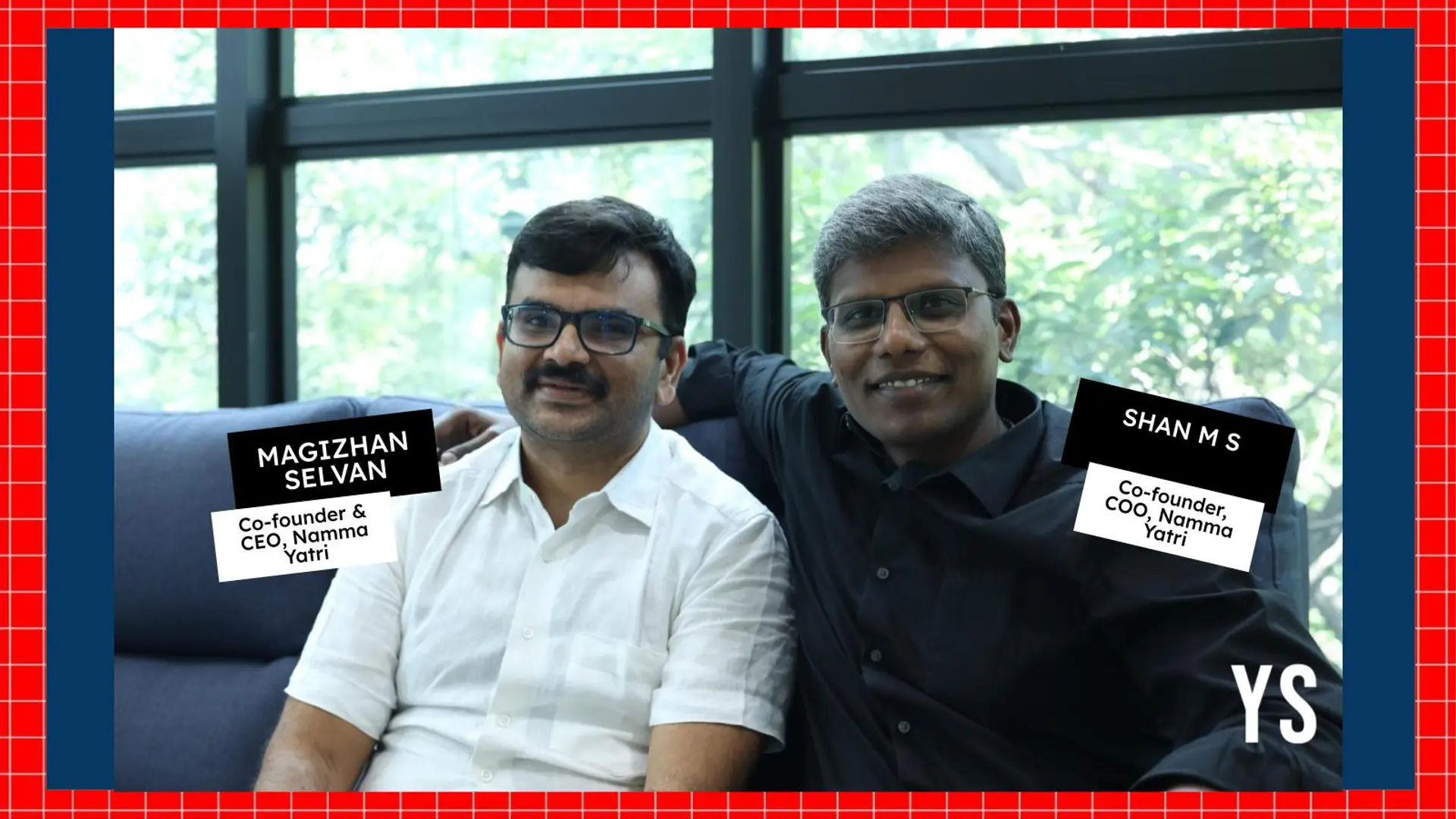

In 2021, when Namma Yatri launched in Bengaluru, it was hailed by auto unions with many driver partners blanketing posters of the platform on their vehicles. Since its establishment, the firm has positioned itself as a driver-first platform, solving a problem that India has long struggled with—mobility.
The firm is now also focusing on its infrastructure play. Built on the ONDC platform, Namma Yatri is utilising its infrastructure prowess to collaborate with governments to launch apps that will integrate all modes of transport onto a single platform. Killing two birds with one stone—making public transport accessible and thereby taking a shot at solving traffic congestion in urban Indian cities.
“Our idea is to give a rock-solid, high-performance, affordable infrastructure and services for hyper-local communities and governments to learn the service. So essentially, it has become a house of brands, which are all unified using a common protocol, like ONDC, etc. So that it is not yet another closed wall. Everything works interoperably,” co-founder and COO at Namma Yatri, Shanmugavel Mani Subbiah (Shan M S) told YourStory.
Number-wise, the bets seem to be taking off. Namma Yatri has seen a 3X growth in its revenue this calendar year, a major chunk of which is coming in from two states—Karnataka and West Bengal. The firm is also operationally profitable in these two regions. However, net profitability will take some time, Shan said.
In a conversation with YourStory, the co-founder details the firm’s infrastructure play, views on the ride-hailing landscape and on the competition in the market today.
Edited excerpts:
YourStory [YS]: Recently, you’ve focused a lot on infrastructure — will that be your main priority, with ride-hailing as a by-product, or will you build both together?
Shan M S [SMS]: Over the past year, we’ve put a lot into public transport, working with governments to digitise and integrate systems. ONDC has already digitised many metro services, which makes it easier to connect. By linking first- and last-mile options seamlessly, it’s better for commuters and auto drivers, with minimal costs for tech.
YS: Since Namma Transit launched, how has the response been? Any numbers on the types of users trying it out?
SMS: We’ve done over 60–70,000 transactions so far. Chennai’s system is more integrated, covering buses and local trains. In just three weeks, it’s already crossed 3 lakh transactions, with over 22,000 a day, and we expect to hit 2 lakh daily soon. It’s a collaborative effort with CUMTA (Chennai Unified Metropolitan Authority), MTC, Southern Railways, and Chennai Metro to make the experience seamless.
YS: How has the response been from your driver partners?
SMS: Our drivers have been very supportive of both regular transit and our zero-commission model, which focuses on long-term sustainability rather than short-term incentives. We also launched a Driver Welfare Fund for emergencies.
First- and last-mile challenges can’t be solved by drivers alone. Pooling trips or using feeder services, like shared autos or shuttles, can make rides affordable for commuters while increasing earnings for drivers. For instance, in Electronic City, morning traffic flows mostly from metro stations to offices.
By batching riders, drivers earn more and congestion is reduced, a model that’s proven in Delhi. As Bangalore’s metro network grows, this approach can scale in a decentralised way, letting drivers manage shared rides without relying solely on large shuttle services.
YS: Is Namma Yatri looking to introduce shared rides in Karnataka?
SMS: The reason I brought up that point is because, as per the current regulations, ride-sharing is still unclear in Karnataka. There are two kinds of services — stage carriages and contract carriages — and right now, operations are meant to be point-to-point. That’s just how the rules are structured at the moment.
But I think it’s only a matter of time before the government allows sharing as well. And even if it’s not permitted everywhere yet — say, in certain special zones or metro areas — having a shared option would definitely make a big difference.
YS: Namma Yatri’s open data shows that the platform has a 25% conversion rate. How do you think this tracks with that of your competitors?
SMS: I think the way conversion is measured can be very different across platforms. For example, some count a ride as “converted” as soon as a driver is assigned. We also consider whether the customer accepts the fare. Between customer acceptance, driver acceptance, and cancellations, our net conversion ends up around 30-35%.
Drop-off happens because people use multiple apps, search different destinations, or just check prices without the intent to travel. Each search is counted separately, even if it’s the same person.
So the denominator is larger, and the numerator is the actual trips completed. In smaller towns, we’re already seeing conversion closer to 50%. Some drop-offs are actually healthy, because they reflect fair pricing for both customers and drivers in an imperfect market.
YS: Does working with government organisations slow down expansion compared to peers who don’t engage as much? Has that been a challenge for Namma Yatri?
SMS: Not really. There are two ways to grow — throw money at it or leverage people's power. We’ve chosen the latter, staying true to our zero-commission, low-subscription model. Instead of heavy discounts or big marketing spends, we focus on building with the community and government. It might feel slower at times, but it’s far more sustainable.
Governments are increasingly forward-thinking, recognising that fast, affordable, reliable mobility drives economic growth. Digitisation is inevitable, and we aim to partner with them to accelerate it. On monetisation, we work on a transaction-based model.
For example, in Chennai, we earn a small percentage per transaction while handling tech, operations, and community engagement — no upfront bids or fixed fees.
YS: Do you track revenue from ride-hailing separately from infrastructure, or together since the app enables both?
SMS: For us, the focus has always been the end consumer — both drivers and passengers — even when working through communities or government partners. In our model, governments don’t bear any cost; it’s self-sustaining. Drivers or end-users pay for the service, and governments enable integration, digitisation, and better customer experience. This way, the goals of the government, the drivers, and the users are all aligned — a truly Indian, sustainable approach.
YS: Do you think ride-hailing has hit a growth ceiling, which is why your peers have increasingly expanded revenue streams?
SMS: I don’t think the ride-hailing sector is struggling to grow. It’s been growing at a 25-30% CAGR, and projections for the next 5-10 years are still strong. Digitisation, especially with more government involvement, will only accelerate growth, improving safety, transparency, fairness, and participation.
Competition exists, but we focus on full-stack mobility — integrating buses, trains, and other public transport — rather than just metro or ride-hailing. Many states want a “super app” for all mobility needs, including tourism and city transport, which we’re building.
For now, we’re sticking to two core themes: empowering people and digitising public transport. Other ventures only make sense if they align with that mission.
YS: Since driver availability impacts ride-hailing usage, is Namaya Yatri facing any challenges with driver acquisition, given the competition?
SMS: Drivers do respond to incentives, of course, but with Namma Yatri, we see strong loyalty. That’s because we operate with transparency and fairness — in pricing, subscriptions, and overall treatment. Drivers also trust the government and community backing, making us a local trusted brand rather than a corporate player. Even without heavy incentives, drivers stay engaged because of that trust and emotional connection.
YS: Can you explain how the welfare trust is structured and how it’s being rolled out?
SMS: We set up the trust and selected drivers to manage it. About 2% of revenue is being contributed to the fund. It’s self-managed by a committee of drivers, who decide eligibility and benefits for those applying.
YS: Currently, how does each transport mode contribute to your top-line?
SMS: In terms of contribution, autos make up about 55% of revenue and cabs about 45%, though revenue from cabs is higher.
YS: How have you structured passes for your driver partners?
SMS: Our model is simple and flexible. For cab drivers, it’s a per-trip model — around ₹9per ride, or ₹45 per day — so part-timers or drivers using multiple apps aren’t burdened with daily fees. For autos, drivers usually prefer a daily subscription, around ₹25 or ₹3.5 per trip.
YS: Could you elaborate on the revenue growth you have seen this year and your path to profitability as well?
SMS: As of August this year, our 12-month revenue run rate has tripled compared to last year. In our two main states, we’re operationally profitable — covering tech, infrastructure, operations, and marketing — though central admin costs aren’t included yet. Net profitability will take a bit more time.