


Patriarchy hurts men too: 8 books that redefine masculinity
Discover 8 thought-provoking books that reveal how patriarchy harms men emotionally, mentally, and socially, urging change toward true equality.


For centuries, patriarchy has been seen as a system that primarily oppresses women. But what often goes unspoken is how deeply it damages men, too. From the pressure to always appear “strong,” to the fear of showing vulnerability, men are taught from childhood to suppress emotions, dominate instead of empathise, and measure their worth by power or success.
This rigid definition of masculinity doesn’t just create broken relationships—it breeds loneliness, mental health struggles, and emotional disconnection. As societies slowly awaken to gender equality, it’s time to recognise that true liberation includes freeing men from the invisible chains of patriarchy as well.
Fortunately, several authors, writers, psychologists, and activists have tackled this complex topic with depth and compassion. The following eight books don’t just critique patriarchy; they offer healing, reflection, and a new blueprint for healthier masculinity.
8 books that redefine masculinity and free men
1. The Will to Change: Men, Masculinity, and Love by Bell Hooks
In this groundbreaking book, bell hooks dives deep into how patriarchy denies men the ability to express love and vulnerability. She argues that men are emotionally stunted not by nature, but by a system that teaches them to equate emotion with weakness. Hooks calls for men to embrace love as an act of courage—a radical departure from traditional masculine conditioning.
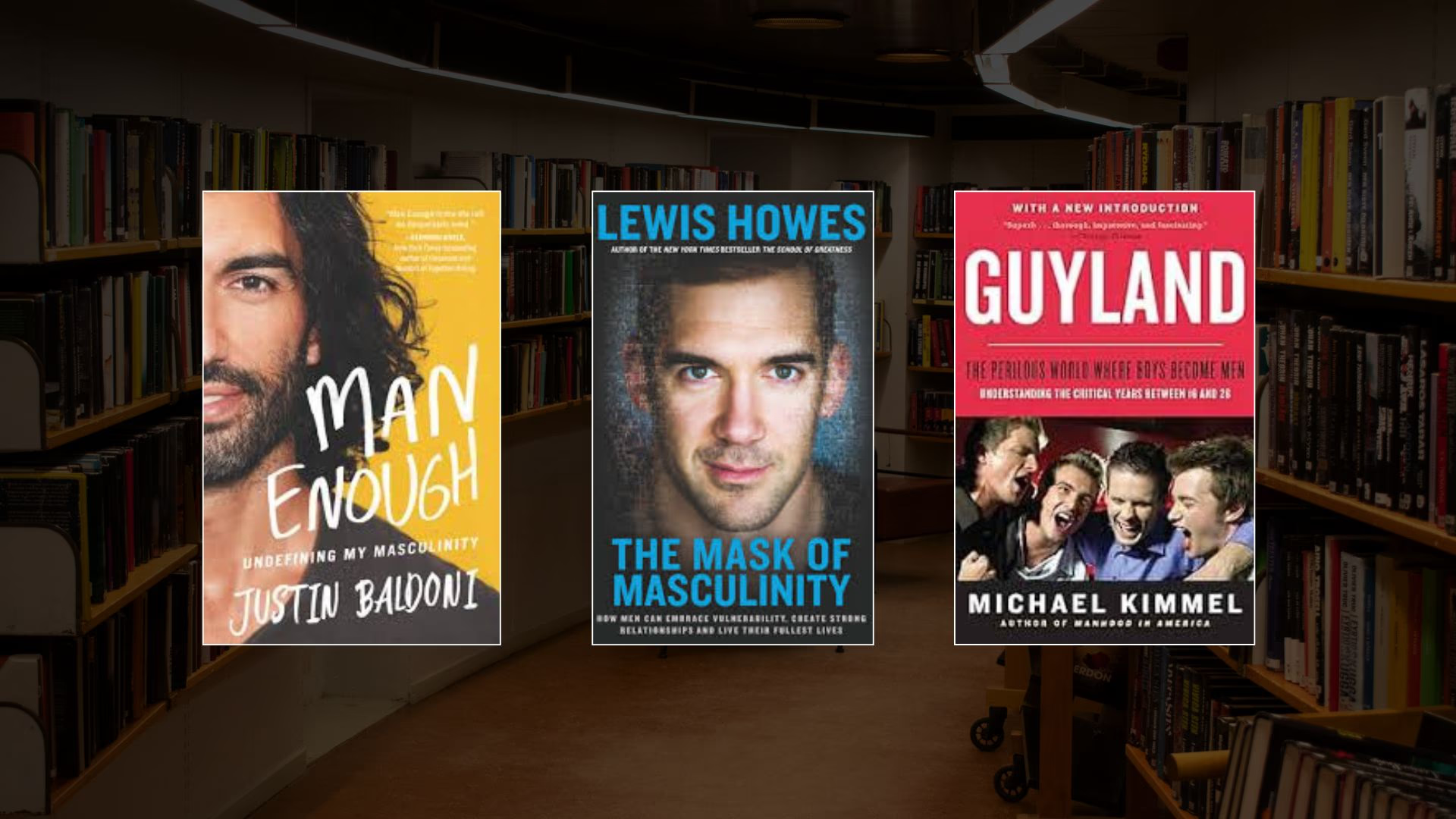
2. Guyland: The Perilous World Where Boys Become Men by Michael Kimmel
Kimmel explores the “Guyland” culture—a limbo where boys transition into men while navigating peer pressure, toxic masculinity, and social expectations. He sheds light on the destructive norms that glorify aggression, competition, and silence around emotions.
3. The Mask of Masculinity by Lewis Howes
Drawing from his own experiences, Lewis Howes reveals how men hide behind emotional masks—such as anger, control, or success—to shield their insecurities. This book invites men to remove these masks and live authentically, finding confidence in vulnerability rather than dominance.
4. Man Enough: Undefining My Masculinity by Justin Baldoni
Actor and activist Justin Baldoni redefines what it means to “be a man.” Through honest storytelling, he unpacks his struggles with ego, shame, and vulnerability while challenging readers to let go of toxic ideals.
5. For the Love of Men: A New Vision for Mindful Masculinity by Liz Plank
Liz Plank combines research, interviews, and personal insight to explore how patriarchy harms men at every level—from emotional repression to societal expectations. She offers a vision for “mindful masculinity,” where empathy replaces ego and equality benefits everyone.
6. Daring Greatly by Brené Brown
While not exclusively about masculinity, Brené Brown’s work on vulnerability and shame is deeply relevant to men. She illustrates how cultural messages around “toughness” suffocate human connection and how courage begins with embracing imperfection.
7. Invisible Men: The Burden of Black Masculinity by Michèle Alexandre
This book tackles the intersection of race and patriarchy, showing how Black men face unique pressures to conform to hypermasculine stereotypes. Alexandre argues for a more inclusive definition of manhood that allows emotional expression and healing.
8. Self-Made Man: One Woman’s Journey Into Manhood and Back Again by Norah Vincent
In a daring experiment, journalist Norah Vincent lived as a man for 18 months to understand male experiences firsthand. Her journey exposes how men endure silent suffering—pressures to succeed, emotional isolation, and lack of support.
Final Thoughts
Patriarchy thrives on silence—especially men’s silence. These eight books urge a collective awakening: that men, too, are victims of a system that denies their humanity. Change begins when we allow men to feel, cry, and love without judgment.
Redefining masculinity isn’t about weakening men; it’s about strengthening humanity. Because when men heal, so does the world.