



Paytm merges offline and online payments under one roof amid broader reshuffle
The move comes after the Reserve Bank of India issued new guidelines for payment aggregators last month requiring companies to keep all merchant payment operations inside licensed entities.

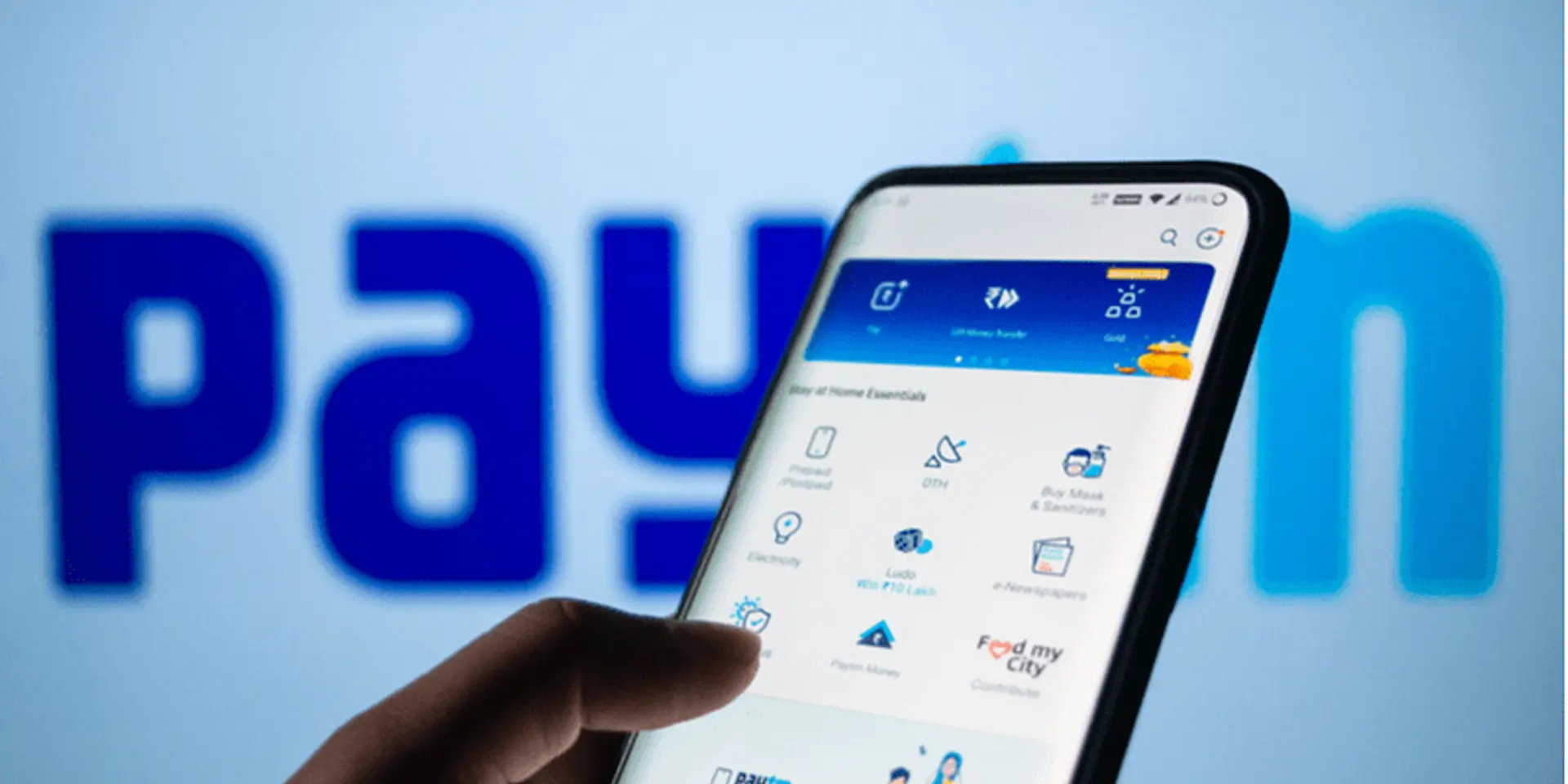

Paytm is shuffling one of its biggest businesses to meet new central bank rules, transferring its offline merchant payments arm, which handles QR codes, soundboxes and card machines, into its payments subsidiary, Paytm Payments Services Ltd (PPSL).
The move, approved by the board on October 15, comes after the Reserve Bank of India issued new guidelines for payment aggregators last month. The rules require companies to keep all merchant payment operations inside licensed entities.
Under the plan, Paytm will sell the offline payments unit to PPSL through what’s called a slump sale — essentially a transfer of an entire business division as a single package.
Paytm said the goal is to bring all merchant payment operations, both online and offline, under one regulated roof. PPSL already manages Paytm’s online payment gateway business, and this consolidation is expected to improve efficiency and keep the group compliant with RBI requirements.
The offline payments business is a major contributor to Paytm’s top line, generating about Rs 2,580 crore in revenue in the financial year ended March 2025 — nearly half of the company’s standalone sales.
As part of the plan, Paytm will acquire an additional 51% in Paytm Financial Services Ltd. (PFSL) from Vijay Shekhar Sharma and his private investment vehicles for a token Rs 0.5 crore, making PFSL a wholly owned subsidiary.
PFSL, in turn, owns stakes in Admirable Software, Mobiquest Mobile Technologies, Urja Money, and Fincollect Service, which will now also become fully owned by Paytm once the deal closes. The company plans to reorganise these units so they report directly to the parent rather than through multiple layers of subsidiaries.
Paytm will also buy out Sharma’s remaining shares in Paytm Emerging Tech, Paytm Insuretech, and Paytm Life Insurance for a combined Rs 3.5 crore, taking complete control of those entities.
Separately, Paytm is converting old loans and debentures in Little Internet Pvt. Ltd., a small ecommerce venture, into equity, increasing its ownership from 62.5% to roughly 78%.
The restructure comes as its rival PineLabs, a major player in the payments space, is gearing up for an IPO. Brokerage firm Emkay Research says Paytm’s blend of scale, execution prowess, and deep-rooted merchant network gives it unparalleled strength over its competitors—reinforced by innovations like QR-based payments and Soundbox.
The Soundbox is one of Paytm's key differentiators. India has about 27 million units as of March 2025, and the company hopes to increase this number to 54 million units by FY29. Smaller towns and semi-urban hubs are likely to see a rise in the adoption of these boxes, according to the report.
While Pine Labs retains dominance in the enterprise POS segment, with a 1.7 million device base, Emkay noted that the wider market is rapidly shifting toward QR-based acceptance. Pine Labs’s recent move toward low-cost, non-Android devices has cut its capex-to-sales ratio sharply (from 35% in FY22 to 6% in 9MFY25), a strategy Emkay said could erode average revenue per device and limit growth.
(With inputs from PTI)
Edited by Affirunisa Kankudti