



RBI Governor teases 'UPI for securities' as e-rupee reaches 7M users
Reserve Bank of India Governor Sanjay Malhotra said the retail pilot of the central bank digital currency (CBDC), known as the e-rupee, now includes 19 banks and 7 million users.

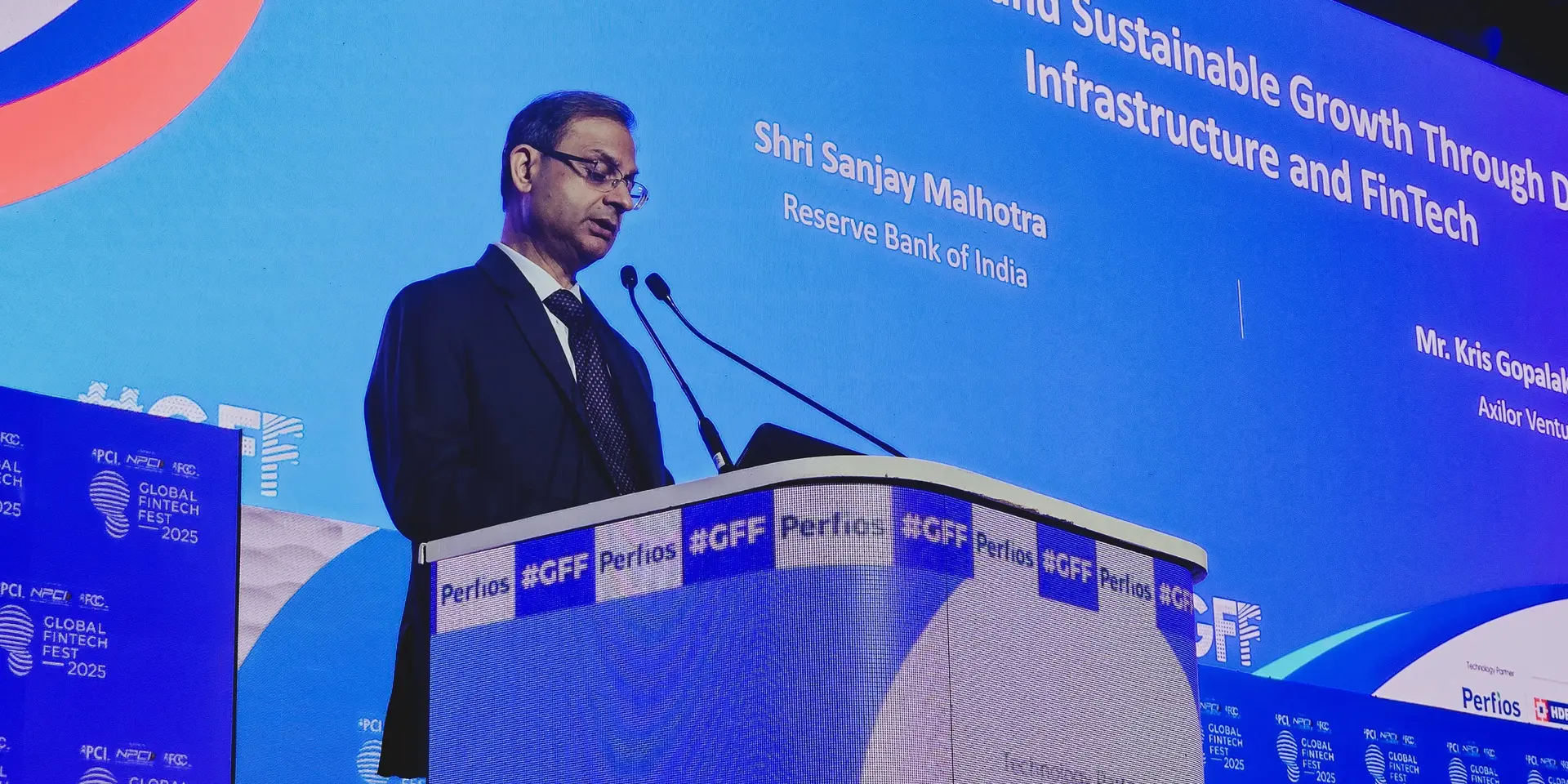

India’s central bank is widening the scope of its digital currency and laying the groundwork for tokenised asset markets, signalling an ambitious next phase in the country’s financial digitisation drive.
Reserve Bank of India Governor Sanjay Malhotra said the retail pilot of the central bank digital currency (CBDC), known as the e-rupee, now includes 19 banks and 7 million users, making it one of the largest sovereign digital currency pilots in the world.
The central bank is also testing interoperability between the e-rupee and the Unified Payments Interface (UPI), India’s dominant digital payment system. This will allow users to make transactions “with the same ease and convenience as UPI,” Malhotra said, adding that the goal is to encourage wider adoption “without compromising user convenience.” The integration would effectively let citizens use the e-rupee like any standard UPI payment.
The pilot is moving beyond basic transactions into programmable money, or digital cash coded for specific purposes. Malhotra highlighted early use cases by state governments, including Gujarat’s Saathi Scheme, which employs programmable CBDC for geo-fenced agricultural subsidies that can only be spent on approved inputs within designated areas. Andhra Pradesh’s DPUMP 2.0 uses the same approach for LPG subsidies, redeemable only at registered gas agencies upon delivery.
“These features demonstrate the potential for making subsidy delivery and direct benefit transfers more effective,” Malhotra said. He added that programmability could enable new forms of targeted lending and social welfare, helping reduce leakages in public spending.

The governor also announced plans for a Unified Markets Interface, a new financial infrastructure designed to tokenise financial assets and enable settlements using wholesale CBDC. The system will allow securities and other instruments to be traded and settled more efficiently through smart contracts.
“The Reserve Bank has conceptualised a Unified Markets Interface as a next-generation financial market infrastructure,” Malhotra told delegates at the Global FinTech Festival 2025 in Mumbai. “This interface will have the capability to tokenise financial assets and settlements using wholesale CBDC. Early results from the inaugural pilot are encouraging.”
Although details are limited, the project is being described internally as a potential “UPI for capital markets.” If successful, it could streamline trading, improve transparency, and lower costs in debt and securities markets by cutting out intermediaries.
Edited by Jyoti Narayan