



How AJVC is building a tech-driven team for pre-seed funding
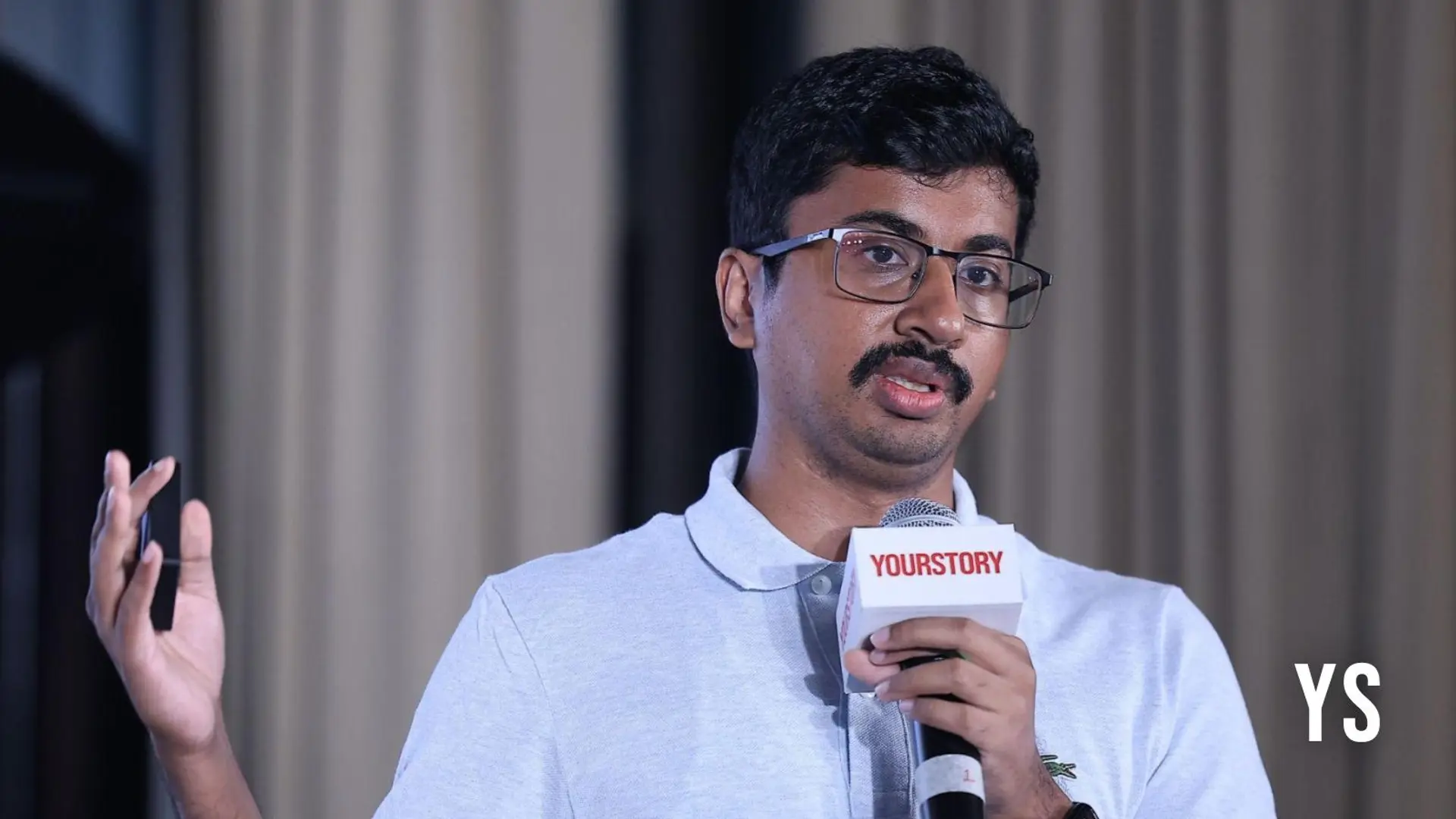
Speaking at TechSparks 2025, Aviral Bhatnagar, Founder of AJVC, said India's pre-seed market could be five times larger than what is is if institutional capital existed to support it.


While venture capital firms compete with each other to write large cheques in India's startup ecosystem, the country's earliest-stage companies are starving for capital. This is a market inefficiency that one investor is attempting to solve with algorithms and a staff of one.
Aviral Bhatnagar, the founder and the sole employee of AJVC, has built what he calls a "tech- and media-driven lean team pre-seed fund" that has fielded 13,000 startup applications and made 27 investments in its first year. His belief? India's pre-seed market could be five times larger than what it is if institutional capital existed to support it.
Speaking at TechSparks 2025, YourStory's flagship startup and innovation summit, Bhatnagar said, "There are at least 5,000 teams that deserve to get capital, but they don't, primarily because there aren't enough pre-seed funds."
He shared that only 10% of India's 1,000-odd annual pre-seed deals are completed by the top 10 institutional funds.
"How many of you have seen 100 million dollars seed rounds nowadays?" Bhatnagar asked the audience at TechSparks. "Those are not seed rounds or pre-seed rounds. They're just private equity rounds being called other things."
By Bhatnagar's definition, a true pre-seed round involves a fund-raise of Rs 2 crore to Rs 2.5 crore at a valuation of Rs 25 crore to Rs 30 crore, with teams that are "just on paper, barely have any revenue, and maybe a prototype."
Unicorn factory
The financial returns from India's earliest funding stage tell a compelling story. According to Bhatnagar's analysis, 60% of India's unicorns started with pre-seed rounds—including household names Meesho, Groww, Ola, and Swiggy.
"Meesho raised Rs 1 crore at a Rs 15 crore post-money valuation; it is at Rs 62,000 crore today. Groww raised Rs 1 crore at Rs 15 crore post-money; they're at Rs 62,000 crore," Bhatnagar said.
Bhatnagar's previous fund's initial investment in Meesho has returned approximately 750 times the capital—turning a roughly Rs 1 crore cheque into a Rs 750 crore position.
Ola's pre-seed round was particularly striking: a post-money valuation of just Rs 2 crore, with angel investors including Anupam Mittal acquiring 10% stake for Rs 25 lakh. On a logarithmic chart, Bhatnagar presented that Ola's first round has generated roughly 7,000 times returns.
Yet institutional investors largely ignore this stage, creating what Bhatnagar characterises as a "structural market failure".

AI angel investing
Around 22,500 founders from 6,000 colleges and 7,000 organisations across 57 Indian cities have applied for pre-seed funding through AJB Ventures. To handle the volume, Bhatnagar has automated much of the diligence process using proprietary technology that evaluates 140 parameters across founder quality, market opportunity, and product viability.
"We put the onus of diligence on us, rather than on the founder at the first stage," said Bhatnagar.
The system scores applications and surfaces only those meeting internal thresholds for manual review.
When asked about the algorithm’s accuracy, Bhatnagar said he “back-tested” it by running it on historical data from the Indian startup ecosystem, including unicorns. “Eighty-five per cent of them actually passed,” he said, calling it a strong hit rate for an algorithm.
Applicants receive responses within 48 hours—a promise Bhatnagar said hasn't been broken in a year. "The biggest problem today in the investment process is they don't hear back from anyone," he said. "What we are doing is (ensuring) everyone gets an answer, a yes or a no."
The automation creates leverage that allows Bhatnagar to maintain active involvement with portfolio companies despite operating solo. "I meet all 27 every week now," he said.

From Dumka to decacorns
The geographic spread of applications reveals untapped entrepreneurial ambition across India's smaller cities. Bhatnagar cited two teams building startups from Dumka, a city in Jharkhand that few in the audience had heard of.
"There's so much talent in India for entrepreneurship, but it's very inaccessible because of the way the systems are," he said.
His youngest portfolio founder is 19 years old and still in college. Companies are funded at the "idea stage, just on paper, nothing more," said Bhatnagar.
The model borrows from Y Combinator, which completes approximately 400 investments annually—a scale Bhatnagar believes is achievable in India. "Why can't someone do this scale in India?" he asked.
At his current pace of 30-plus investments per year, AJVC would become India's largest pre-seed fund by deal volume, he said.
Bhatnagar applies first-principles thinking to an industry that has resisted technological transformation despite investing in technology companies.
"Funnily enough, although most VCs invest in tech companies, they themselves don't adopt a lot of tech, which is a bit ironical," he said.
Bhatnagar predicts that early-stage private investing will be swept by the same algorithmic wave that transformed public-market trading. What is now a slow, relationship-driven process could shift toward automated sourcing, scoring and decision-making, much like how quantitative models and high-frequency trading reshaped equities.

Edited by Swetha Kannan