



Reinvention is an absolute must for entrepreneurs: Ronnie Screwvala
Ronnie Screwvala, Co-founder of upGrad & Swades Foundation, spoke about the need for founders to reinvent themselves continuously and the importance of failure in an entrepreneur's journey, at Techsparks 2025.

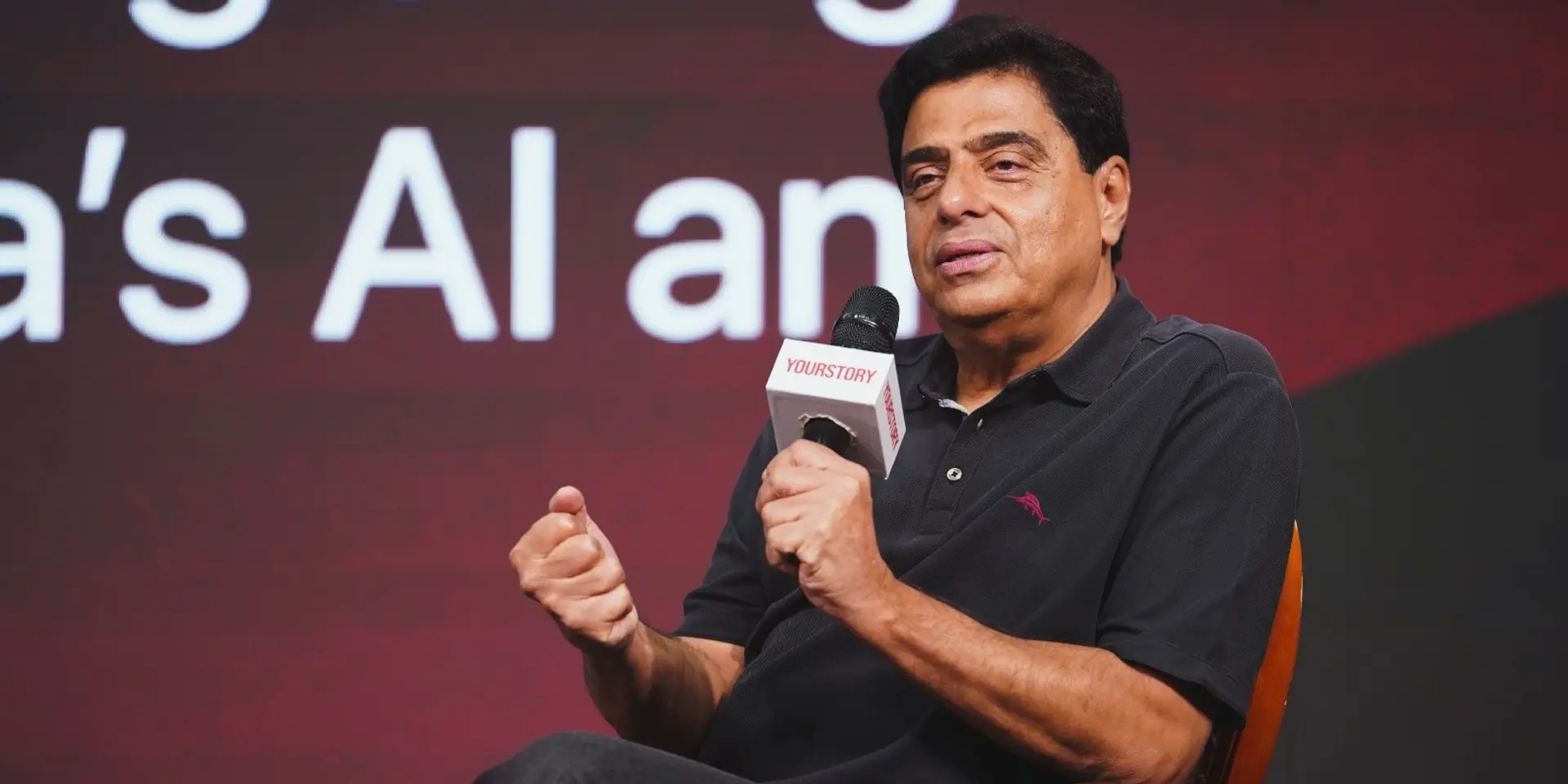

From a middle-class upbringing in Mumbai to building UTV, one of India’s largest media empires, and reinventing himself through education venture upGrad and philanthropy, Ronnie Screwvala has been in a constant state of motion throughout his life.
Not because he had a plan, but because status quo felt unnatural.
"Reinvention today is an absolute must for everybody ... And when you're a founder or an entrepreneur, reinvention is a given on an ongoing basis," said Screwvala, Co-founder, upGrad & Swades Foundation, during a fireside chat with Yourstory's Founder Shradha Sharma, at Techsparks 2025.
But Screwvala doesn't treat reinvention as a special event in his life; it is the fuel that keeps him going every day.
“Most of us think of it as a project and an innovation. But, in your mind, if there’s a sense of restlessness, you’re reinventing. If you haven’t got that, that’s a problem,” he said.
He also pointed to the interconnectedness of his ventures to demonstrate that reinvention need not necessarily be a restart, but can also be a cumulative effect. His creative work informed his media storytelling, which in turn shaped his approach to education.
"Each one has contributed to the other. If it wasn’t for my creative sources, I don’t think I would have gone into media. If it wasn’t for media and storytelling, I wouldn’t have had the connection with education. If I hadn’t started a not-for-profit early in life, I wouldn’t have seen what giving back really means," said Screwvala.
Asked about the uncertainties that come with reinvention, Screwvala was characteristically candid: there isn't a single day when an entrepreneur feels truly comfortable.
"I came from a lower middle-class home," he said. "When I started out, being an entrepreneur wasn't aspirational. People thought it meant you couldn't get a job. So when you have no entitlement or bank balance, that discomfort is the best way to start."
He said resources shouldn't give comfort that the next day will be better. "If they do, that's a problem."

Failure can be fruitful
Apart from uncertainties, an entrepreneur also has to encounter failures. “My ratio of failures to successes is eight to two,” he said. “When you’re at that failure, it can be quite cathartic. The reason I say that very clearly is that if there were five failures and five successes, the probability of my five successes being really big would be lower. But if you’ve lost eight times, the two successes need to be big ones—that’s the formula I go by.”
His early years at UTV involved a string of near-collapses. “When we started cable TV, for the first year everyone said maybe you should do an MBA and get a job because we didn't get a customer. In my media days, we were (almost) bankrupt thrice in the first three years. Every time, I had to address 30 people, then 300, then 600, to tell them we wouldn’t get salaries the next day... The first five movies we made in UTV were disasters,” he admitted.
But Screwvala drew big lessons from that reservoir of failure.
"The more we celebrate failure, the better," he said, to drive home the point that failure is not only inevitable but also essential in an entrepreneur's journey.

Edited by Swetha Kannan