


Uber launches B2B logistics service, metro ticketing in Bengaluru
The offering, which has been launched in partnership with ONDC Network, has gone live in the city today with driver partners fulfilling grocery deliveries for brands such as Zepto and KPN Farm Fresh.

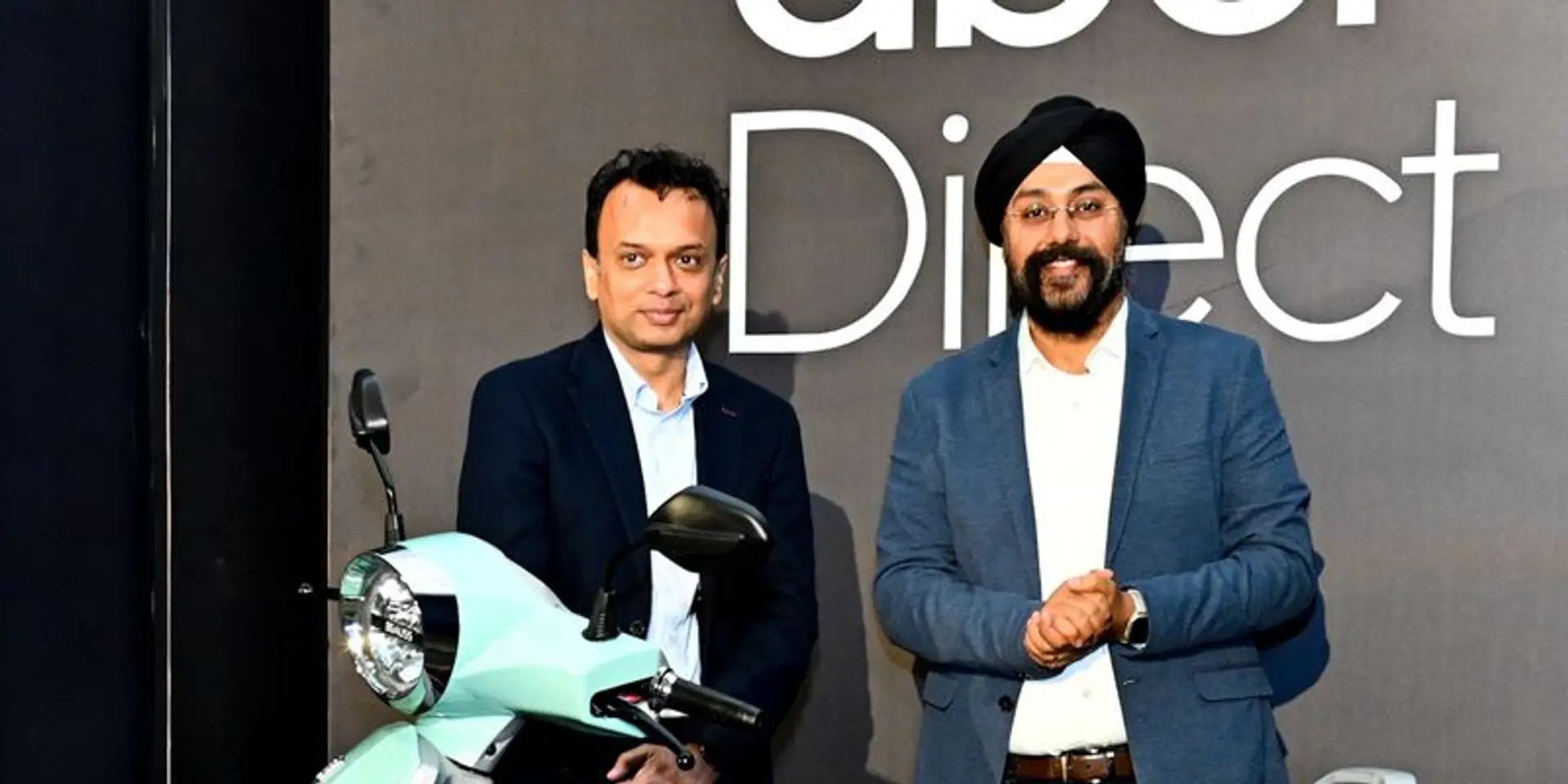

Uber India on Wednesday launched its business-to-business (B2B) logistics offering in partnership with Open Network for Digital Commerce (ONDC), which will see its driver partners fulfilling grocery deliveries for brands such as Zepto and KPN Farm Fresh, as well as other brands on the platform.
The company has introduced the offering as a plug-and-play solution for enterprises where orders placed by users on a seller’s app or website are fulfilled by Uber Direct, with the customer interacting with Uber until the delivery partner arrives. While this is not Uber’s foray into logistics, where the company already has a presence with Uber Courier and Courier XL, the company clarified that this vertical will operate behind the scenes as a logistics engine for businesses, while its Courier offerings are customer-facing.
“Bengaluru is the tech capital of India and arguably in the world, and we are innovating. I think there is no better place to innovate. It is an ecosystem which is demanding, mature, and there is a massive need for an efficient logistics network. We are obviously starting in Bengaluru, but our intent is to take it to almost all cities where we have our logistics network,” Prabhjeet Singh, President of Uber India and South Asia, told YourStory.
Uber Direct will be expanded to food delivery within the next couple of weeks, fulfilling deliveries for brands such as KFC, Burger King, Taco Bell and Rebel Foods.
The ride-hailing platform also announced its entry into metro ticketing—an offering that has been launched by its peers Rapido and Namma Yatri in Bengaluru. Uber’s metro services are already present in cities like Delhi, Mumbai and Chennai.
However, the company is in no hurry to monetise this offering, Singh told YourStory. “I think at this stage, what we are very much focused on is solving for consumer convenience because there are many consumers we are realising who are using our three-wheeler, two-wheeler services often to go to and from metro networks itself. This becomes an incremental convenience for them.”
Over time, the company expects that as more and more consumers come to the app to use its metro ticketing service, the demand for its other services will also see growth, including three-wheeler and two-wheeler services, which are often used in first and last-mile mobility. “Right now we are very much focused less on monetisation but really more around providing the best metro ticketing experience we can and the best multi-modal experience we can,” Singh noted.
The company said that it has planned for more metro integrations and Uber Direct city launches for 2026.
Uber India services across 125 cities in India with 1.5 million monthly active drivers and has completed 1.2 billion trips as of 2025. The company noted that India has emerged as the third-largest market for US-based companies, after the US and Brazil.
“It is a business with an incredibly strong footing and one of the fastest growing globally, and the third largest in volumes. We are on a very strong path to sustainability, and large parts of our portfolio are already profitable. We are making investments because India is still an underpenetrated market with so much headroom. You're seeing the kind of investments we are making so we continue to be excited about the long-term vision in serving both the mobility and the logistics needs for the entire ecosystem,” Singh told YourStory.
Edited by Jyoti Narayan