



Antler is doubling its checks and speed amidst the flurry of AI companies in India
Antler, which announced its AI residency programme in July 2025, is looking to reduce its cohort size, going forward, targeting quality founders and ideas. But the firm is also looking to onboard new cohorts every quarter as it begins to adapt to the age of AI.

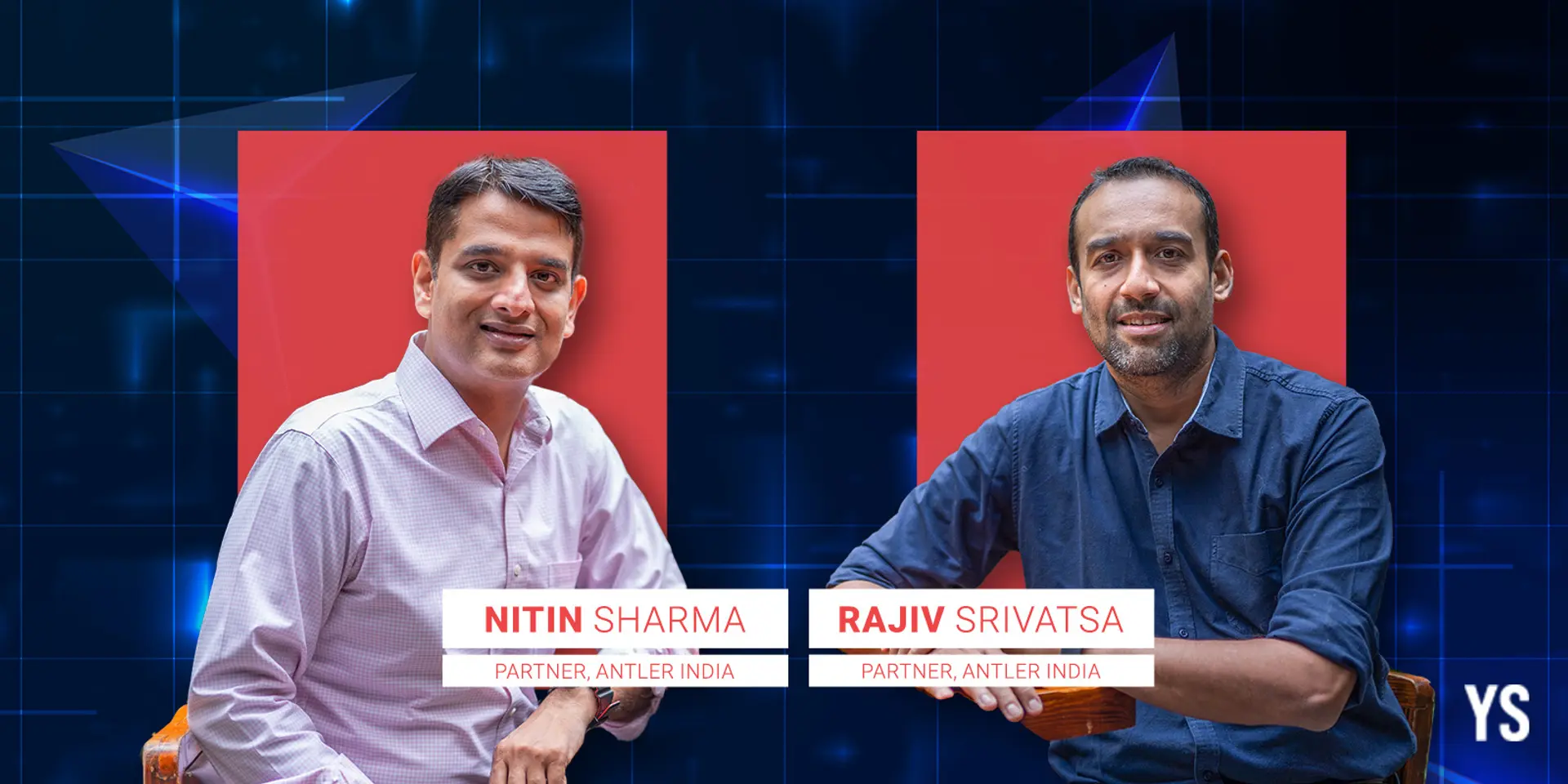

Further, faster—this is Antler’s new motto. The firm, which has funded companies like Cautio and Moving Tech (Namma Yatri), is making tweaks to its strategy to increase investments in pre-seed companies, especially those building in AI and deep-tech in India.
As a rising number of VCs make bolder bets in deeptech and AI, Antler wants to do things differently. It is looking to onboard fewer companies in each of its cohorts to provide curated support for the products they are building. Moreover, the firm is also eyeing a separate residency programme for deep-tech startups.
This also means that the firm is now looking at a 45-day cycle with a new cohort every quarter. “Because we are doing that once a quarter, we also have to turn around within a 45-day cycle, which means that we're launching our next residency on Feb 2nd. We would have made investment decisions by March 15th, which is the fastest, and that essentially means the expectation of what the founder comes to us with is also slightly higher,” said Rajiv Srivatsa, Partner at Antler India.
The firm remains rooted in backing pre-seed companies. However, Antler is now seeking more clarity to onboard companies to its cohort. Since the founder is clearer about what they want to build, Antler can connect them with the right mentor, advisor and sessions, Srivatsa pointed out.
Srivatsa spoke to YourStory on the sidelines of Antler India’s 6th annual showcase event, which spotlighted 11 startups, including Green Aero Propulsion, Uncharted AI, Pulse Energy, Redacto, Freshcon, and more.
Antler’s deeptech focus
The firm has noticed that there is an increasing share of deeptech and AI startups applying to its cohorts. For instance, this cohort had about 7 out of 11 companies working on AI and deeptech solutions, while in previous cohorts, this was far fewer.
The company is currently evaluating a gene editor startup out of India, as an alternative to CRISPR.
“At the stage at which we invest, the biggest difference we are seeing is the ambition of the founders who are coming in. It is partly a function of the excitement around what the government is doing and how many other deep-tech companies in India are scaling. And also founders who are coming back from other countries to build in India,” noted Nitin Sharma, Partner at Antler India.

According to Sharma, spacetech, defencetech, advanced manufacturing, robotics, and biotechnology are some of the spotlight sub-sectors that the firm is seeing rising action in.
When it comes to AI companies, Antler has also noticed a shift in the founders—more Gen Z founders are starting up. The median age across its cohorts has come down to 20-29 years, when two years ago, it stood at 35.
The firm has also launched Antler Embark, which is a post-investment initiative to support pre-seed and seed-stage startups expanding from India and Southeast Asia to the US. In the first edition, 19 Antler-backed founders spent a month in the Bay Area, engaging deeply in meetings with founders, operators, community connectors, and VCs.
This is to help portfolio companies gain traction in the US, after which fundraising from the region will be easier.
The maturing startup ecosystem
In recent times, India has seen the volume of startups being funded ease, but the size of checks is picking up. According to Antler, AI has a huge role to play in this trend. “AI is sucking out the oxygen,” Srivatsa noted.
Moreover, he also noted that the ecosystem has matured. “It's (the startup ecosystem) more mature. We are definitely seeing founders who are more serious. So you don't have as many people getting funded, but the ones who are getting funded get funded well. The 2023-24 correction helped, because I think before that, anyone could pitch, anyone could raise money, as long as you have a particular set of experiences. But today I think it's way less about pedigree and way more about your obsession to build something, which is why even younger founders get funded.”
Edited by Jyoti Narayan