


Dosa with a side of AI: The Filter Coffee is brewing a Rs 100 Cr premium ‘darshini’ revolution
The Filter Coffee treats its restaurants like factory floors and its manufacturing facility like a tech lab. From AI-powered manufacturing to multi-format expansion and a new FMCG vertical, the company is rewriting the South Indian ‘darshini’ experience.


Ask most people what comes to mind when they think of South Indian food, and chances are they will mention darshinis—the neighbourhood standing-only South Indian eateries or quick-service restaurants, where one can grab a quick dosa, crisp vadas, and piping hot filter kaapi—all without burning a hole in their pockets.
This has been the model for the longest time; South Indian food equals quick, cheap food—fresh, great taste, but nothing beyond that.
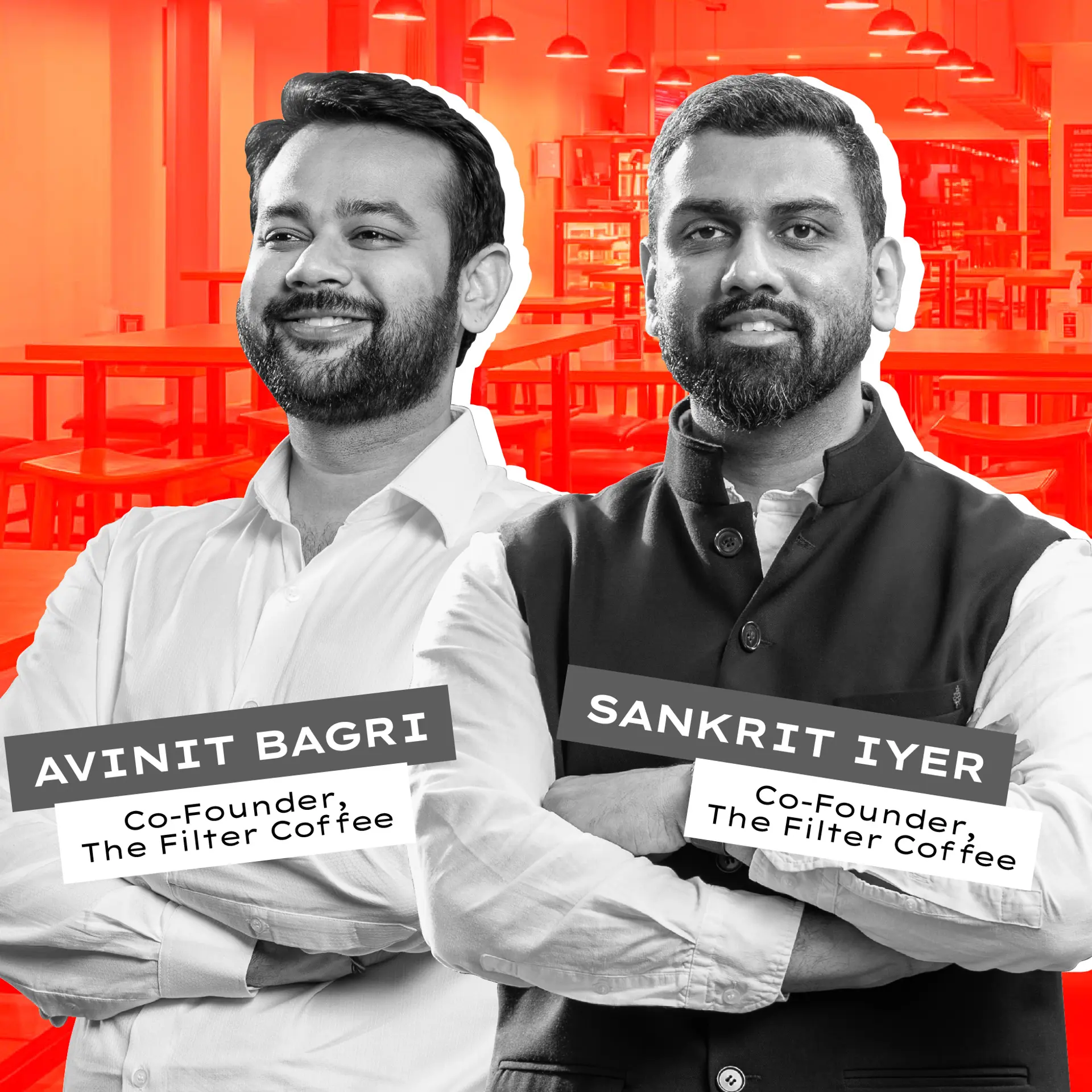
However, friends Avinit Bagri and Sankrit Iyer were not buying it. When the duo launched The Filter Coffee in 2014—with a Rs 75 lakh investment—as a 40-seater outlet in Bengaluru’s Kalyanagar, their mission was simple: South Indian food deserves better.
"People believe South Indian food has to be priced cheaply," says Bagri. "Our thesis was—with growing per capita GDP and changing consumption patterns, there would be enough people appreciative of good experience and good quality, just like they would with any other cuisine," the co-founder tells YourStory.
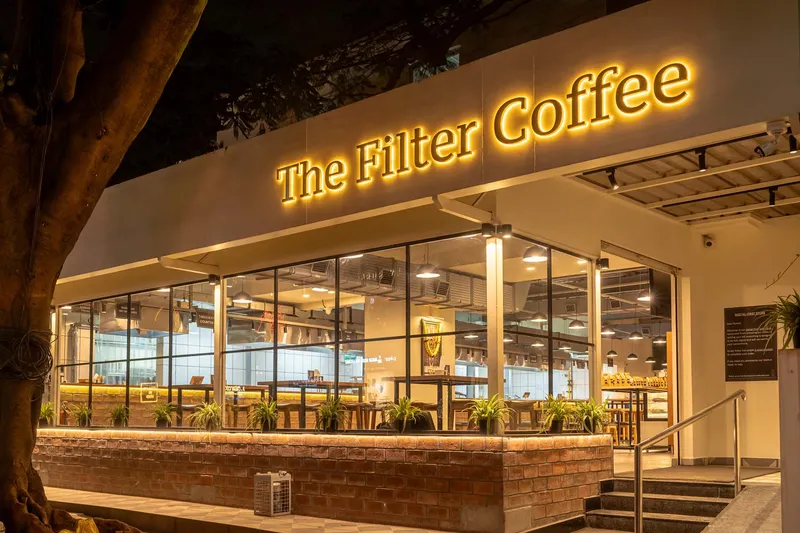
The first weekend told them everything they needed to know. The response was overwhelming. "We kind of knew this made sense. And maybe we had grossly underestimated how big this space is, and how much demand we could generate," he recalls.
A decade later, that hunch has evolved into nine outlets across Bengaluru—four casual dining restaurants, three cloud kitchens, and two quick-service restaurants (QSRs). The Filter Coffee is now targeting an annual revenue run rate above Rs 100 crore as it exits FY25.
By October 2026, the brand aims for 22 outlets in Karnataka’s capital alone, and by 2027, new cities are on the horizon.
But that’s not what makes this story different. The Filter Coffee is not just scaling exponentially; it is also building something that looks less like a restaurant or QSR chain, but more like a precision manufacturing operation powered by technology.
Automating to scale
Step into The Filter Coffee's US FDA-certified manufacturing facility in Doddaballapur, about 20 kms from Bengaluru airport, and one will realise that this isn't a typical central kitchen. "We're probably the only brand of our size managing to run an ambient, cold, and frozen supply chain. It's very capital-intensive and difficult from an operations perspective, but we've built it with scale in mind," says Bagri.
The facility doesn't cook food centrally and reheat it at outlets. Instead, it operates as an end-to-end traceable supply chain, handling raw material aggregation, batter manufacturing, namkeen production, and vegetable processing for sambar. Everything gets converted into kits and distributed to the nine outlets.
"Our front-end doesn't function like a restaurant," Iyer explains. "It's basically a factory that happens to run a retail business."
The facility is designed to produce 40,000 kg of material per day, and the team is working to build front-end throughput that can sell 25,000 kg daily. The math is compelling, too. A business with less than seven days of inventory, selling 80-90% of produce on the same day, with high gross margins. "That's probably one of the most powerful businesses ever," he adds.
The most interesting part of The Filter Coffee's operations is its early adoption of AI-powered monitoring systems implemented more than a year ago. The brand has installed AI cameras across the manufacturing facility, monitoring everything with precision.
"If a door needs to be closed at 6 PM and opens at 6:05 PM, my factory manager will get a notification," says Iyer. "That is the level of granularity with which we've approached this problem."
The system tracks other things too, like employees wearing specific coloured shirts entering restricted areas trigger alerts; flame detection happens before sprinkler systems even activate; cold vehicle loading must happen within 10 minutes, and if it exceeds that, the team gets notified; even how cartons are handled matters, and if they are thrown beyond a defined 4ft circumference, the respective team is notified.
But the technology goes deeper. The brand’s quality management system enables complete traceability.
"We can take a bite of a dosa in the front-end, and my team should be able to tell you what batter has been used, who's the chef, who made the batter, what ingredients went into it, and trace it all the way to the batch," says Bagri.
It's the kind of system KFC, McDonald's, Burger King, and Domino's have built in India, until now.
Beyond backend operations, the brand uses data analytics tools like GeoIQ for real estate decisions, accessing 600-800 data points, including street width, foot traffic, proximity to competitor brands, and existing cuisine density.
It also works closely with food delivery giants Swiggy and Zomato to assess market size and business potential in each micro-market before opening an outlet.
Number game
In an industry notorious for wafer-thin margins and high failure rates, The Filter Coffee's unit economics stand out. Capex investment ranges from Rs 70 lakh to Rs 2 crore, depending on store size, location, and format.
Payback periods are 15 to 18 months, which is close to half the recovery timeline for most F&B retail outlets in India. Mature stores consistently deliver EBITDA margins above 20%.
"Every store must be profitable on a standalone basis," Iyer emphasises. "No outlet is subsidised by another. This is a non-negotiable part of our operating model and one of the biggest reasons why margins remain healthy as we expand," he adds.
The revenue mix between offline and online is 70-30. Breakfast is the heavyweight, contributing 40-45%of total revenue.
The Beyond Leaf menu, the à la carte offering featuring appetisers, soups, mains, and desserts from different South Indian states, accounts for nearly 20%. Evening snacks and dinner together contribute 20-25% of the revenue.
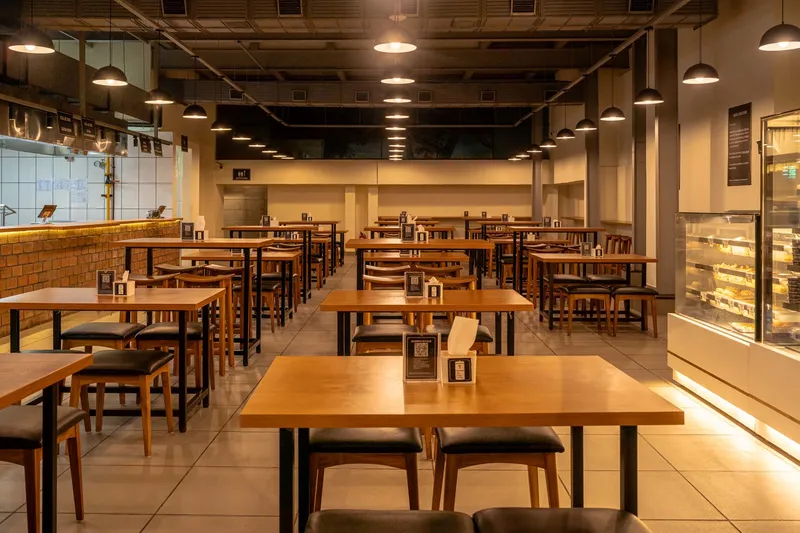
The casual dining format offers a premium experience with banana leaf service, table ordering, and the full Beyond Leaf menu.
QSRs operate as prepaid, self-service models in smaller formats. Cloud kitchens validate demand in new micro-markets before committing to retail outlets.
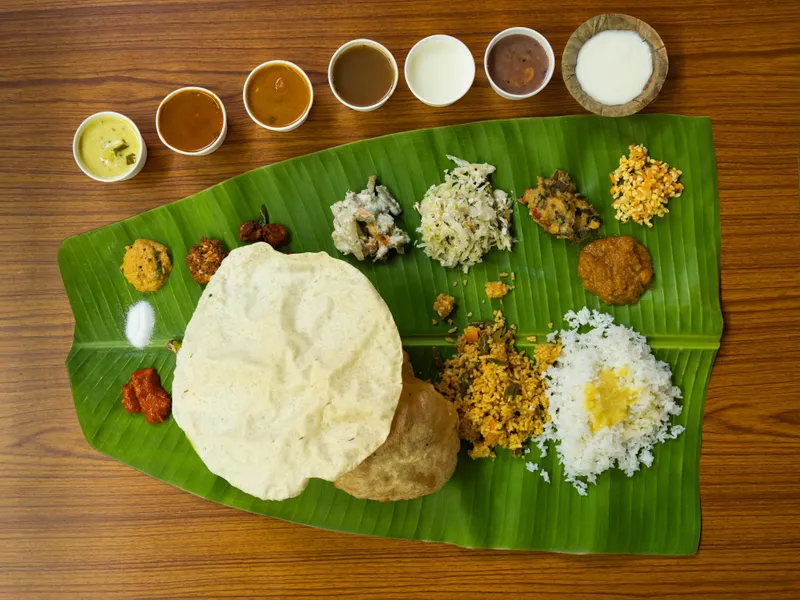
Beyond Leaf meal by The Filter Coffee
The FMCG bet
If running nine restaurants with factory-grade precision wasn't ambitious enough, The Filter Coffee is now launching Origins by TFC, a packaged foods vertical that emerged from its persistent customer requests.
"Guests regularly asked for batters, bases, condiments, savouries, and sweets that match the authenticity of our restaurant offerings," says Iyer. The brand expects Origins to contribute 30-35% of total revenue within two to three years of launch.
The product range includes chips, sweets, savouries, batters, condiments, and beverages. Distribution will start through retail stores, and later enter quick commerce and modern trade channels.
"Whatever needs to be done on the production side, whether for F&B or FMCG, it's basically the same process," says Bagri. "We've built infrastructure that can service vegetarian brands across packaged foods and F&B."
The brand has already begun with potato chips, currently producing 300 kg per day, using batch fryers. But the infrastructure is ready to scale to 4,000 kg daily with semi-automatic lines once demand builds.
Road ahead
The brand recently secured backing from Deepak Agarwal of BKG Group, bringing decades of F&B and FMCG experience to the table.
"Getting Deepak ji on board was a privilege," says Bagri. "He encouraged us to set up the backend first rather than opening 50 stores and then figuring out how to solve that problem."
For FY26, the company plans to invest Rs 30-35 crore. About 60% will fund The Filter Coffee brand expansion, 20% has already been invested into backend infrastructure, and a portion will support Origins.
The remaining 10% will support technology, automation, people, and talent acquisition.
The brand is evaluating Delhi, Hyderabad, and Chennai for geographical expansion outside Bengaluru.
"Our decision-making matrix isn't just based on where the trend is," says Iyer. "When we enter a geography, it's important to capture market share and run a sustainable brand over the long term."
The expansion strategy is clear—to achieve a proof of concept with 30-40 stores in Bengaluru, then replicate the model across multiple cities simultaneously.
"It may not be Delhi sequentially. It may be across North India, like Delhi, Kanpur, Lucknow, Noida, and Gurugram, 6-7 cities at the same time," says Iyer.
The company remains committed to company-owned, company-operated stores, refusing the franchise route despite potentially more capital on the table.
"The incentives for franchisees are very different from incentives for brands," Bagri explains. "Franchisees want to make money by being a franchisee. But a brand needs to deliver exceptional products and build IP to eventually garner value," he concludes.
Edited by Suman Singh