



The Subtle Art of Not Giving a F*ck: 5 quotes from the book
Explore 5 bold quotes from The Subtle Art of Not Giving a Fck* that challenge your mindset, priorities, and how you choose what truly matters.

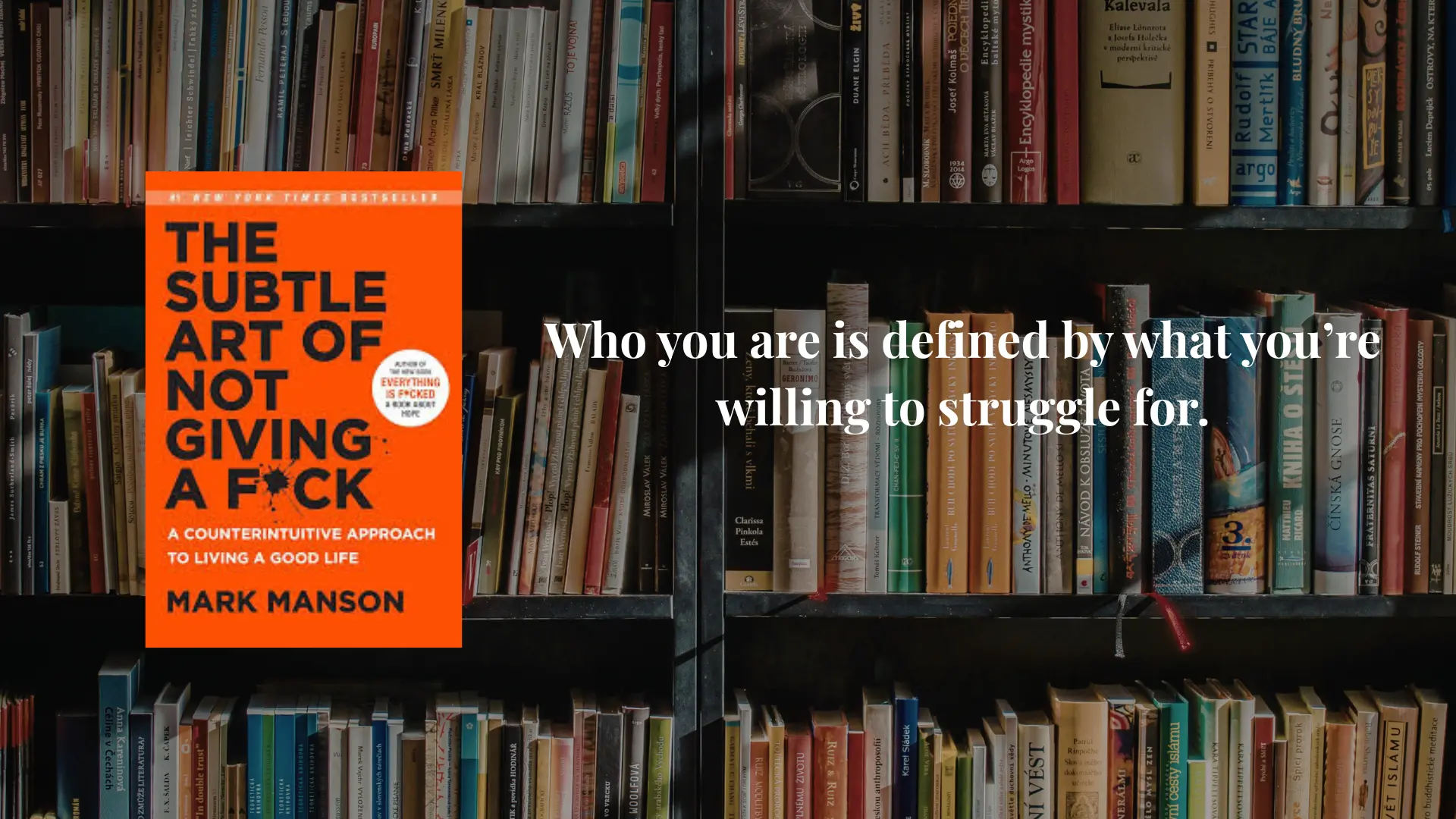

In a world obsessed with positivity, constant success, and curated perfection, The Subtle Art of Not Giving a F*ck by Mark Manson feels like a reality check most people didn’t know they needed. It doesn’t promise happiness in 10 steps or success through endless motivation. Instead, it flips the script entirely.
Manson argues that the key to a better life isn’t about caring more—it’s about caring less, but about the right things. It’s about choosing your struggles, accepting discomfort, and being brutally honest with yourself in a way that most self-help books avoid.
What makes this book powerful is its raw, unfiltered honesty. It doesn’t try to comfort you—it tries to wake you up. And sometimes, that’s exactly what creates real change.
Here are five impactful quotes from the book that challenge how you think about success, failure, and what truly deserves your energy.
5 quotes from The Subtle Art of Not Giving a F*ck
1. “Who you are is defined by what you’re willing to struggle for.”
Most people focus on goals, the end result, the success, the outcome. But this quote shifts the focus to something deeper: the process and the pain that comes with it.
Everyone wants success, but not everyone is willing to endure the struggle behind it. The truth is, your identity is shaped not by what you want, but by what you’re willing to go through to get it. Whether it’s long hours, rejection, or uncertainty, your struggles define your path more than your dreams do.
2. “You and everyone you know are going to be dead soon.”
It sounds harsh, even uncomfortable. But that’s exactly the point.
Manson uses this quote to strip away unnecessary worries. When you truly accept how limited life is, trivial problems lose their weight. You stop obsessing over what people think, minor failures, or things that won’t matter in the long run.
It’s not pessimism—it’s clarity. When you realise time is finite, you naturally start focusing on what actually matters.
3. “The desire for more positive experience is itself a negative experience.”
This is one of the most counterintuitive ideas in the book.
Constantly chasing happiness, success, or positivity creates pressure. It makes you feel like what you have right now isn’t enough. Ironically, the more you chase positive experiences, the more dissatisfied you become.
Real growth begins when you accept that life includes discomfort, failure, and uncertainty. Instead of avoiding them, you learn to live with them.
4. “Not giving a f*ck does not mean being indifferent; it means being comfortable with being different.”
This quote clears up a major misunderstanding. The book is not about apathy or laziness. It’s about selective focus.
Not caring about everything allows you to care deeply about what truly matters. It means letting go of societal expectations, unnecessary validation, and the fear of standing out.
It’s about choosing authenticity over approval—and being okay with the consequences.
5. “Problems never stop; they merely get exchanged or upgraded.”
Many people believe that success eliminates problems. But Manson challenges that illusion.
Life doesn’t become problem-free, it just changes the nature of your problems. A student worries about exams; a professional worries about deadlines; an entrepreneur worries about scaling.
The goal isn’t to avoid problems. It’s to choose better ones—problems that come with growth, purpose, and meaning.
Final thoughts
The Subtle Art of Not Giving a F*ck is not a typical self-help book, it doesn’t sugarcoat reality or offer easy solutions. Mark Manson pushes you to confront uncomfortable truths and rethink what deserves your time, energy, and attention.
These quotes are reminders that life isn’t about eliminating struggles or chasing constant happiness. It’s about choosing what’s worth struggling for, accepting what you can’t control, and focusing on what genuinely matters.
Because in the end, the real power lies not in caring about everything—but in choosing what not to care about at all.