



The Psychology of Money: 10 powerful quotes from the book
Discover 10 powerful quotes from The Psychology of Money by Morgan Housel that reveal timeless lessons on wealth, behaviour, and financial mindset.


When people think about money, they often imagine spreadsheets, stock charts, or complex financial strategies. But what if the real secret to building wealth had very little to do with numbers—and everything to do with how you think?
That’s exactly what The Psychology of Money by Morgan Housel explores so brilliantly. Instead of overwhelming readers with technical jargon, Housel takes a refreshing approach—he dives into the emotional, psychological, and behavioural side of money. Because at the end of the day, financial success is not just about what you know, but how you behave.
Through simple stories, relatable examples, and deeply insightful observations, the book reveals a powerful truth: two people with the same income can end up with completely different financial outcomes—not because of luck or intelligence, but because of their mindset.
Money decisions are rarely made on logic alone. They are shaped by fear, ego, habits, past experiences, and even the desire to impress others. And that’s why understanding your relationship with money is far more important than mastering complex financial formulas.
10 quotes from The Psychology of Money
1. “Doing well with money has little to do with how smart you are and a lot to do with how you behave.”
This quote sets the tone for the entire book. It dismantles the common belief that financial success is reserved for the highly intelligent or financially educated.
Housel argues that behaviour, like patience, discipline, and consistency, matters far more than IQ. Someone with average knowledge but strong habits can build lasting wealth, while someone highly intelligent but impulsive can lose it all.
This is a powerful reminder: you don’t need to know everything about money. You just need to avoid the mistakes that come from poor behaviour.
2. “Wealth is what you don’t see.”
In a world obsessed with visible success, luxury cars, branded clothes, expensive vacations, this quote feels almost rebellious.
True wealth, Housel explains, is not about what you display. It’s about what you quietly accumulate: savings, investments, and financial security. The irony is that the more someone tries to look rich, the less likely they are to actually be rich.
Real wealth lives in bank accounts, not on social media.
3. “Spending money to show people how much money you have is the fastest way to have less money.”
This quote hits hard because it reflects a common trap. Many people spend beyond their means just to maintain a certain image.
But impressing others is an expensive habit. It creates a cycle where income rises, but expenses rise even faster. And in the end, there’s nothing left to build real wealth.
The lesson is simple: stop trying to prove your success, focus on building it quietly.
4. “Saving money is the gap between your ego and your income.”
Saving is often seen as a financial decision, but Housel reframes it as an emotional one.
Your ego wants you to spend: to keep up, to impress, to feel validated. But your income has limits. The gap between these two forces determines whether you build wealth or stay stuck.
The smaller your ego, the bigger your savings.
5. “The hardest financial skill is getting the goalpost to stop moving.”
No matter how much you earn, it never feels like enough, because your expectations keep rising.
You get a raise, and suddenly your lifestyle upgrades. You achieve a milestone, and immediately set a bigger one. This endless chase prevents satisfaction and delays financial freedom.
Learning to define “enough” is one of the most underrated financial skills you can develop.
6. “Time is the most powerful force in investing.”
This quote highlights the magic of compounding. Wealth is not built overnight, it grows slowly, quietly, and steadily over time.
The longer you stay invested, the more your money multiplies. But this requires patience, which many people struggle with.
The real advantage in finance is not timing the market, it’s time in the market.
7. “You can be wrong half the time and still make a fortune.”
Perfection is not required for financial success. In fact, even the best investors are wrong frequently.
What matters is that your wins are bigger than your losses. Consistency and resilience matter more than accuracy.
This quote removes the fear of failure and encourages action. You don’t need to be perfect, you just need to keep going.
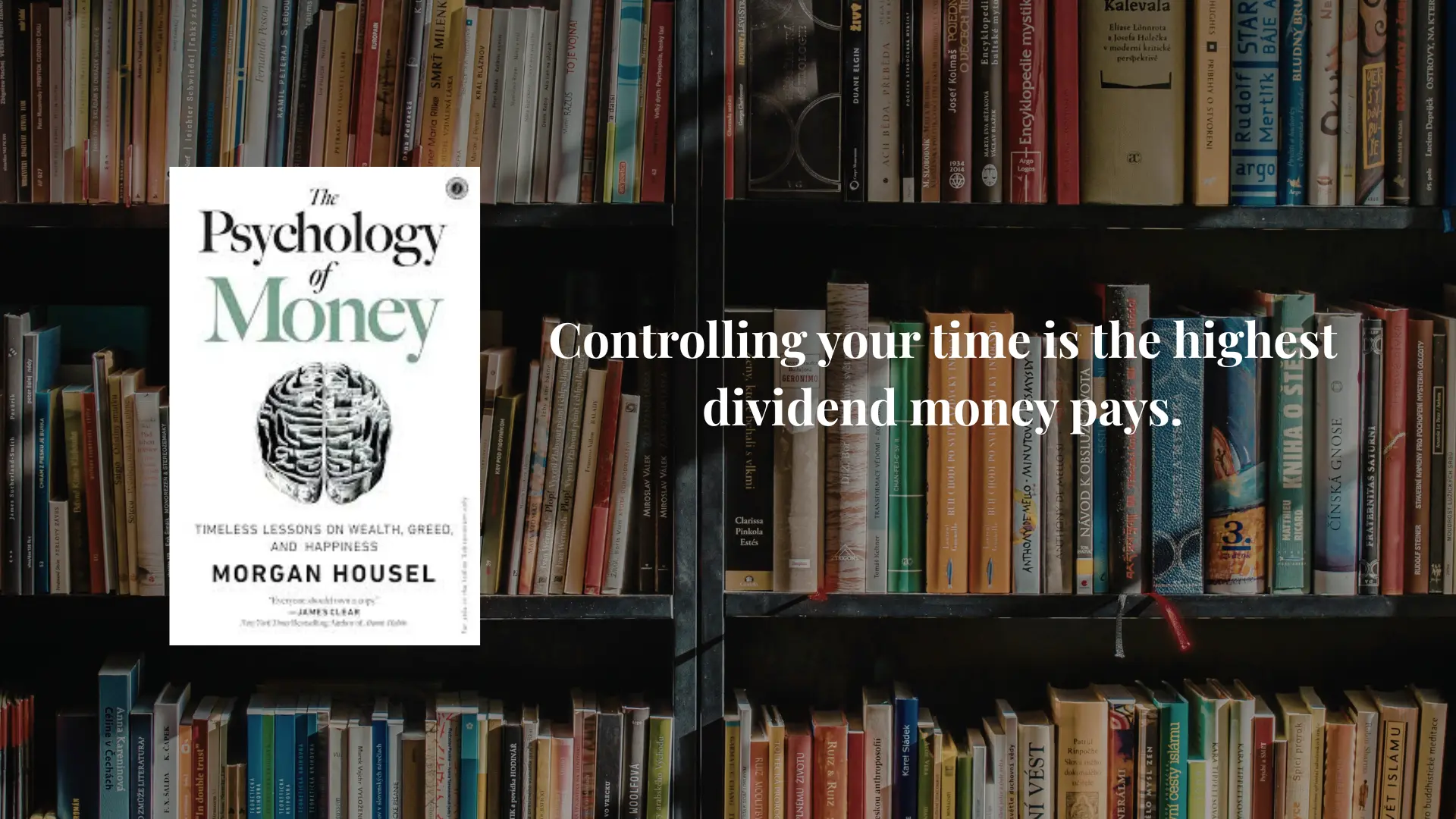
8. “Controlling your time is the highest dividend money pays.”
Money is not just about buying things, it’s about buying freedom.
The ultimate goal of wealth is not luxury, but control over your life. The ability to wake up without stress, choose how you spend your day, and live on your own terms, that’s the real reward.
Financial independence is, at its core, time independence.
9. “Luck and risk are both realities that every outcome in life is guided by forces other than individual effort.”
This quote brings humility into the conversation. Success is not always earned, and failure is not always deserved.
Acknowledging the role of luck prevents arrogance, while recognising risk builds caution. Both are essential for making better financial decisions.
It’s a reminder to stay grounded, no matter where you stand.
10. “Reasonable > Rational.”
Being completely rational with money is often unrealistic. Humans are emotional, and our decisions reflect that.
Instead of chasing perfect logic, Housel suggests being “reasonable.” That means making choices you can stick with, choices that align with your personality, lifestyle, and comfort level.
Because the best financial plan is not the most perfect one, it’s the one you can follow consistently.
Final thoughts
The beauty of The Psychology of Money lies in its simplicity. It doesn’t promise overnight riches or complicated strategies. Instead, it offers something far more valuable—clarity.
These quotes are not just words to read and forget. They are reminders to rethink how you approach money in everyday life.
You don’t need a high income to build wealth. What you truly need is the right mindset.
Because in the end, money is not just about numbers. It’s about behaviour, patience, and the quiet choices you make when no one is watching.