



5 Books that explain why we compare ourselves with others
Explore 5 insightful books that explain why we compare ourselves with others and how to build confidence beyond external validation.

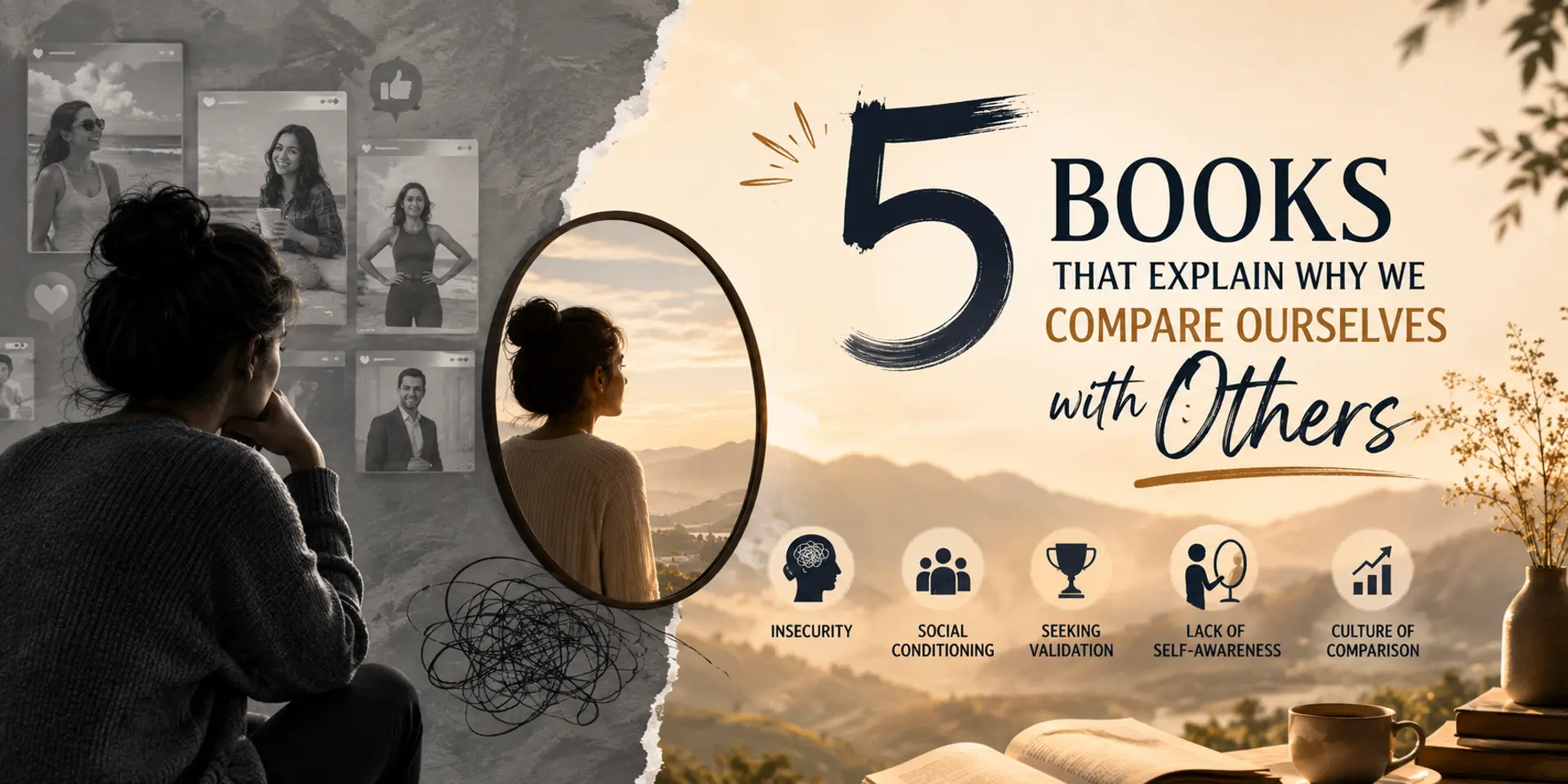

Comparison is a deeply human habit. Whether it is measuring career success against colleagues, comparing lifestyles on social media, or wondering why someone else seems happier, people constantly evaluate themselves in relation to others. While comparison can sometimes motivate growth, it often leads to dissatisfaction, anxiety, and a distorted sense of self-worth.
Many writers, psychologists, and thinkers have explored why humans compare themselves with others and how this tendency affects happiness and personal development. The following five books offer valuable insights into the roots of comparison and provide practical ways to build a healthier relationship with yourself.
5 Books that explain why we compare ourselves with others
1. The Social Animal by Elliot Aronson
Elliot Aronson's classic work explores the psychological forces that shape human behaviour, including the tendency to judge ourselves through social comparison. Drawing from decades of research, Aronson explains how people form opinions about themselves by observing those around them.
The book shows that comparison is not simply a personal flaw but a natural part of human psychology. Understanding this tendency helps readers recognise when comparison is useful and when it becomes harmful. Aronson also highlights how social environments influence self-esteem and personal identity.
2. The Happiness Trap by Russ Harris
Russ Harris examines why so many people struggle with feelings of inadequacy despite achieving success. One of the reasons, he argues, is the constant habit of comparing our lives with idealised versions of other people's experiences.
Drawing on principles from Acceptance and Commitment Therapy (ACT), Harris encourages readers to shift their focus from external benchmarks to personal values. The book explains that happiness becomes difficult to achieve when self-worth is tied to outperforming others. Instead, fulfilment comes from living according to what genuinely matters to you.
3. The Gifts of Imperfection by Brené Brown
Brené Brown's work focuses on vulnerability, self-acceptance, and the pursuit of authenticity. She explores how comparison often emerges from a fear of not being good enough and a desire to meet unrealistic standards.
Brown argues that comparison thrives when people believe they must earn their worth through achievements, appearance, or approval. Through research and personal stories, she encourages readers to embrace imperfections and develop a stronger sense of self-worth that is not dependent on how they measure up to others.
4. Stolen Focus by Johann Hari
In a world dominated by social media and constant connectivity, comparison has become more intense than ever. Johann Hari examines how modern technology shapes attention, behaviour, and mental well-being.
The book explains how digital platforms expose people to carefully curated images of success, beauty, and achievement.
As a result, individuals often compare their ordinary moments to someone else's highlights. Hari explores the psychological consequences of this phenomenon and offers insights into reclaiming attention and reducing unhealthy comparison habits.
5. Mindset by Carol S. Dweck
Carol Dweck's influential book introduces the concepts of fixed and growth mindsets. People with a fixed mindset often compare themselves to others because they view abilities as permanent measures of worth. Every success or failure becomes a judgment of their value.
In contrast, a growth mindset encourages learning and improvement rather than competition. Dweck shows how shifting focus from proving yourself to developing yourself can reduce the need for constant comparison. The book helps readers see others' achievements as sources of inspiration rather than threats.
Conclusion
Comparing ourselves with others is a habit deeply rooted in human nature, but it does not have to control our lives. Books like The Social Animal, The Happiness Trap, The Gifts of Imperfection, Stolen Focus, and Mindset help explain why comparison occurs and how it shapes emotions, decisions, and self-esteem.
By understanding the psychology behind comparison, readers can begin to focus less on competing with others and more on building a meaningful life according to their own values, strengths, and aspirations. In doing so, they may discover that the most important comparison is not with other people, but with the person they were yesterday.