



Coratia Technologies builds underwater robots in Odisha, and just signed a Rs 66 crore Navy deal
The Rourkela startup makes indigenous ROVs and AUVs to inspect bridges, pipelines and undersea cables, and won a Rs 66 crore Indian Navy contract under iDEX.

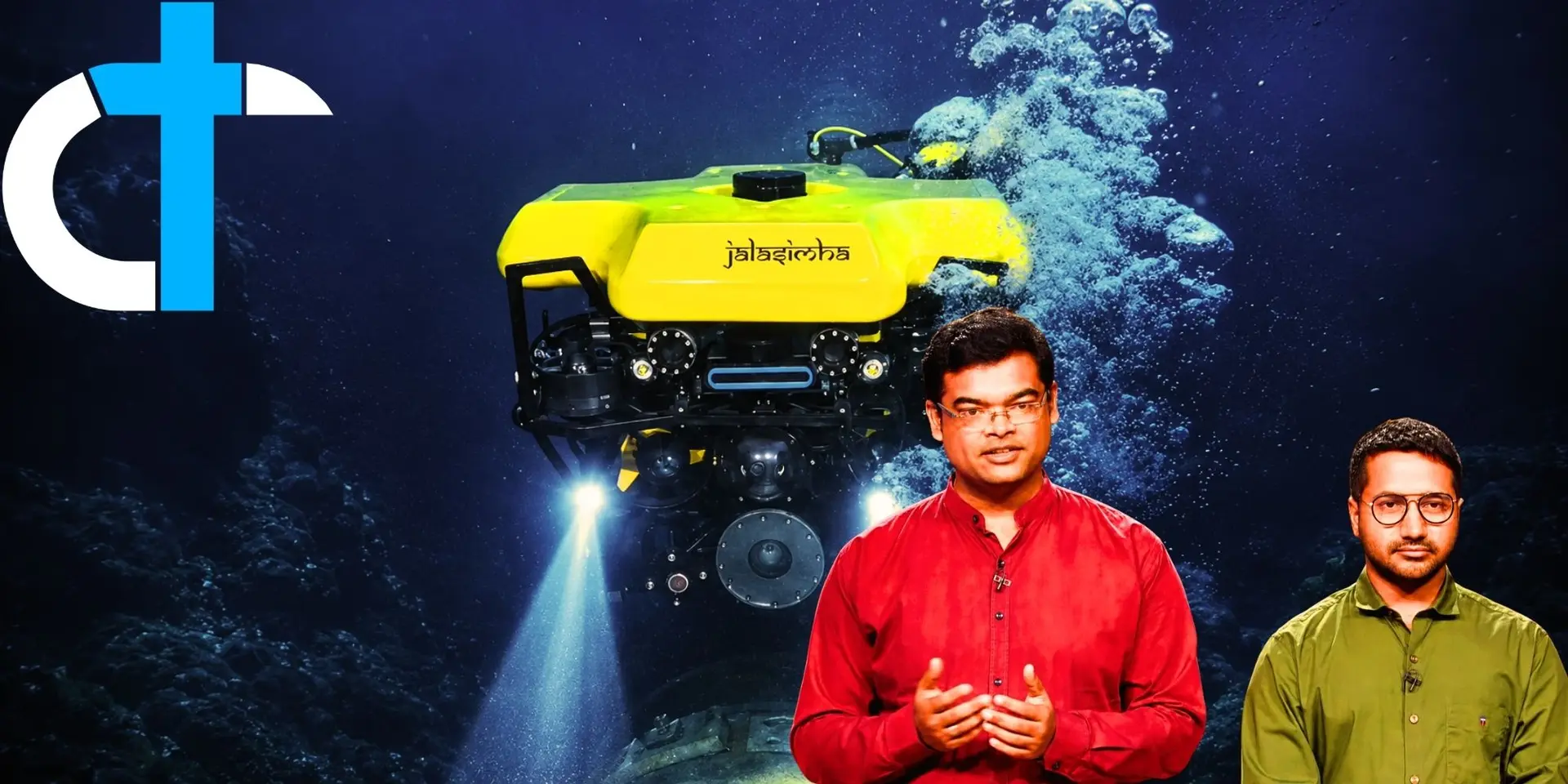

Inspecting anything underwater, a bridge pier, a ship's hull, a pipeline, a data cable on the seabed, usually means sending down human divers: slow, costly and dangerous. Coratia Technologies, a Rourkela startup, builds robots to do that work instead. It is one of only a handful of Indian companies operating in deep-sea robotics.
The company traces back to a student project at NIT Rourkela. Debendra Pradhan and Biswajit Swain, both mechanical engineering graduates of the 2017 batch, met there and joined a research team building underwater robots from scratch.
What pulled them in was a Ministry of Earth Sciences challenge to make a robot that could navigate underwater on its own and hit a target. They won it, saw how underdeveloped India's underwater-robotics field was, and after a few years in corporate jobs at home and abroad, they returned to start Coratia full-time in 2021.
Robots for the places divers should not go
Coratia builds two kinds of machines: remotely operated vehicles (ROVs), which a pilot controls from the surface through a tether, and autonomous underwater vehicles (AUVs), which navigate on their own.
Both carry cameras, sonar and positioning systems to work in murky water where visibility is poor, and satellite navigation does not reach.
The company adds AI-based inspection on top, including non-destructive testing that can judge a structure's condition without damaging it, and runs the job end-to-end, from putting a vehicle in the water to handing back the analysed data and a report.
The robots inspect, map and monitor places people cannot safely reach: bridges, dams, docks, ship hulls, pipelines and undersea cables.
That last one matters more than it sounds. India's ability to inspect and repair the undersea cables that carry its internet traffic is weak, and Coratia pitches its robots as a homegrown fix.
The same core technology serves both industrial and defence needs, from checking a dam for cracks to assessing threats around a naval asset, which lets the company sell into two very different markets without building two separate product lines.

From Shark Tank to a Navy contract
Coratia's customers run across heavy industry and the public sector, including Indian Railways, SAIL, IOCL, Tata Steel and the National Institute of Oceanography. It carries out customised underwater inspections for each. Deep-sea robotics has very few Indian players. That gives Coratia room to operate in parts of the domestic market that foreign specialists have largely ignored.
Its biggest milestone came in September 2025, when the Indian Navy signed a Rs 66 crore contract under the Ministry of Defence's iDEX scheme for Coratia's indigenous underwater ROVs. “Induction of indigenous UWROVs not only reduces costs and reliance on foreign suppliers but also combats trade restrictions and tariff uncertainties,” Biswajit Swain, Co-founder & CTO, Coratia Technologies, said.
The startup has raised about Rs 22 crore from Piper Serica Angel Fund, MGF Kavachh and Pontaq Ventures, alongside government grants, and now employs around 32 people, still working out of the NIT Rourkela incubation centre where it began.
The company is still early in its revenue journey, but the Navy contract, arriving after a stage-show pitch on Shark Tank India, marks its shift from proof of concept to delivery.
The founders' aim is for India to build its own underwater robots rather than import them, serving both its defence needs and its wider blue economy (ocean-based economic activity). The Navy order is both a validation and a test of whether it can scale from one-off projects to steady production.
(This story has been researched and compiled using publicly available information.)