



Dognosis is training dogs and AI to detect cancer from a breath sample
The Bengaluru deeptech startup is running early trials that combine dogs' sense of smell with brain-computer interfaces and AI, aiming at cheap, non-invasive cancer screening.

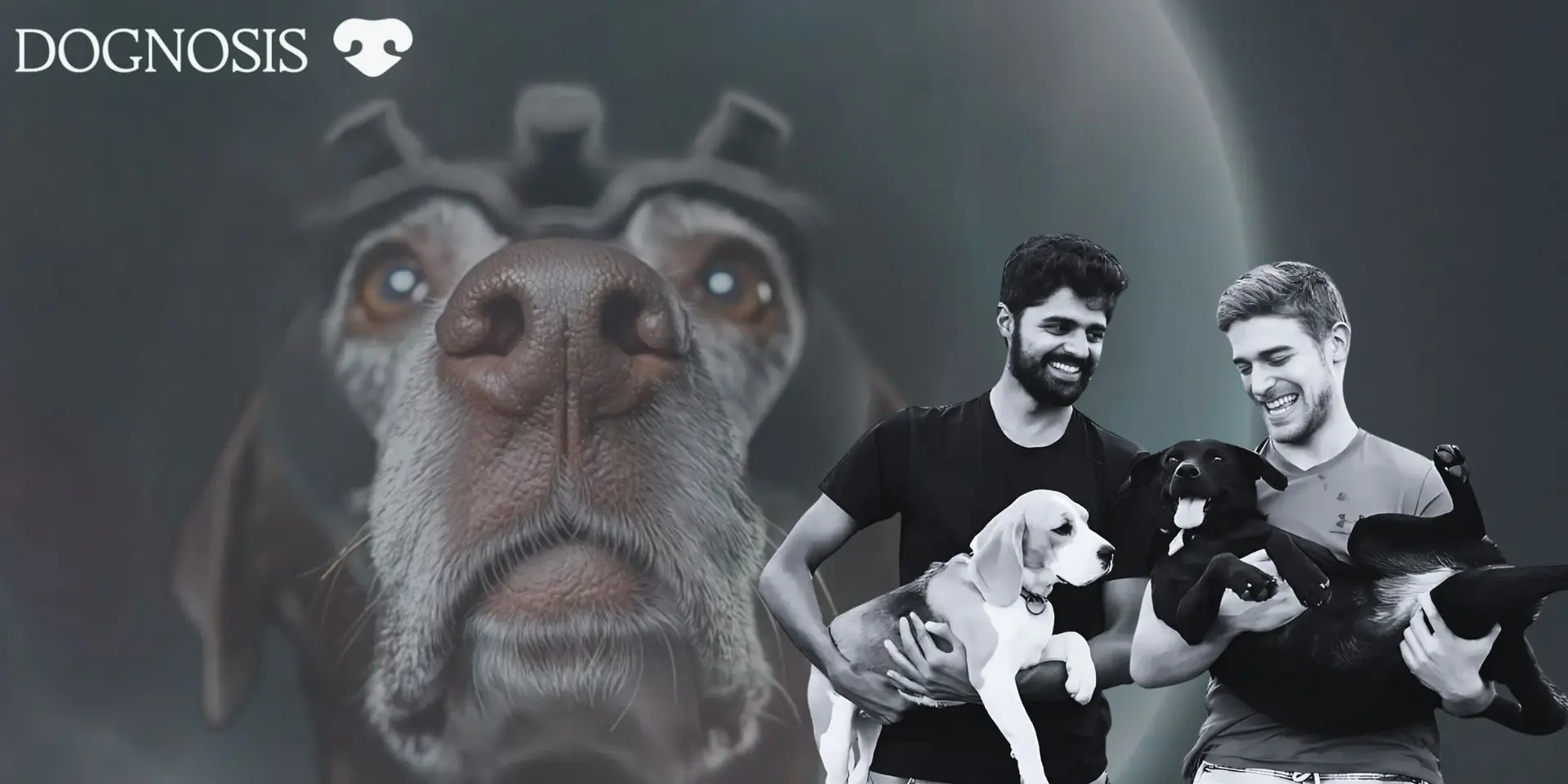

A dog's nose is one of the most sensitive chemical detectors in nature. It carries hundreds of millions of scent receptors, against a few million in humans. Researchers have known for years that trained dogs can pick up the faint chemical traces of diseases like cancer in a person's breath.
The problem has always been turning that ability into something standard and scientific. A dog cannot fill in a lab report. , a Bengaluru deeptech startup, is trying to close that gap with technology.
By the company's count, dogs have detected disease in more than 50 peer-reviewed studies across 28 conditions. What no one has cracked is making the results consistent enough for a clinic.
Akash Kulgod studied cognitive science at UC Berkeley. A research grant then took him to labs in Israel, Budapest and the UK. Scientists there were testing whether animals could smell disease. In Israel, he met Itamar Bitan, a former military dog handler. The two founded Dognosis together.
Kulgod moved back to India and set up the company in Bengaluru in 2024. He was convinced India was the right place to build an affordable screening tool, rather than another Silicon Valley venture.
A dog's nose, made measurable
The approach has three layers. Trained dogs sniff breath samples collected on masks. The masks carry the volatile organic compounds that can signal disease. A wearable brain-computer interface records the dogs' neural and behavioural responses. Machine-learning software turns those responses into standard, measurable readings.
The sensors and the AI exist to remove the guesswork. In the past, a handler watched a dog sit or bark and made a judgement call. The system aims to capture the same signal the same way every time, so a result can be repeated and checked.
Consistency is the hardest part. A dog that is right most of the time is interesting. A test that gives the same result every time, with evidence behind it, is something a doctor can use. Its products include BreathEasy, the breath test, and DogSense, the canine interface. A software layer combines the neural, behavioural and sensor data. Breath carries chemical traces of what is happening inside the body. Dognosis wants to read those traces cheaply, and without having to take blood samples.
A promising idea, not yet a proven test
Dognosis says early trials with 1,500 participants showed around 90% accuracy in flagging cancer. These figures come from the company and have not been independently peer-reviewed. The approach rests on real published research, but it is not yet a validated clinical test.
The work ahead is taking a promising idea and building the kind of solid, repeatable proof a cancer test needs before doctors and patients can trust it.
The stakes are especially high in India, where doctors often catch cancer too late, and screening is either too expensive or too hard to reach. A cheap, non-invasive test could reach people the current system leaves behind.
The company has raised about $2 million. Its backers include Boost VC, 1517 Fund, Accel India, MBX Capital and House Fund. In March 2026, it was selected for the first Accel Atoms X cohort, an early-stage programme run by Accel India and Prosus, picked from more than 2,000 applicants.
Dognosis now runs more than 10 hospital pilots in India. It says its technology has been validated with the Government of Singapore. If the results hold, the test could offer a fast, affordable way to catch cancer early, especially for people who cannot reach conventional screening.
(This story has been researched and compiled using publicly available information.)