



Indian drone makers import their batteries. Dreamfly Innovations wants to change that
The Bengaluru startup makes fire-resistant, high-density batteries for drones and aerospace. It raised Rs 12 crore in a seed round led by Avaana Capital.


A drone is only as useful as its battery. Most Indian drones fly for 20 to 30 minutes at a stretch. Operators work around this by carrying spare packs into the field, sometimes half a dozen of them, and swapping them out between flights.
The batteries themselves are mostly imported. India has built a large drone industry without building the component supply chain underneath it.
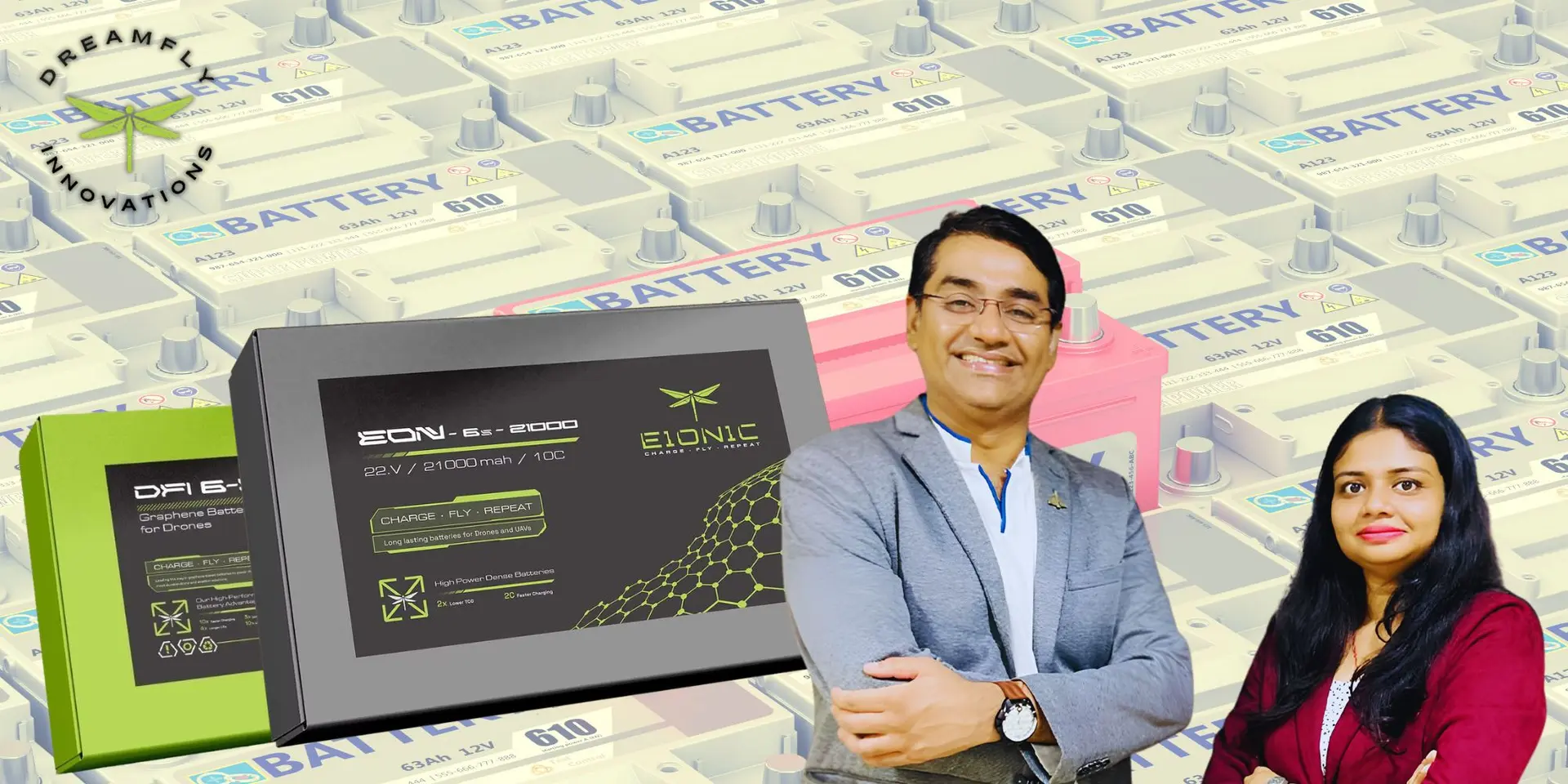
, a Bengaluru startup, makes those batteries in India. It was founded in 2021 by Kajal Shah, its chief executive, and Dr Saurabh Markandeya. Both had built companies before, and both had worked in clean energy and mobility.
Their reading of the market is that the gap is not in drones. It is in the parts that go inside them.
The problem is most acute in agriculture. A spraying drone works in long shifts over open fields. Every battery swap costs time, and every spare pack is weight and cost the operator has to carry.
Batteries built for Indian conditions
Dreamfly designs and manufactures high-power-density battery packs for drones, aviation and aerospace. It works across several cell chemistries, including lithium, graphene and supercapacitors.
The engineering focuses on heat and safety. Its thermal case design lowers operating temperature by up to 20 degrees Celsius, lowering fire risk. Lighter cell stacks cut the weight a drone has to carry. The company has filed two patents on this work.
Heat is a bigger factor than it appears to be. A hot battery loses power faster, ages sooner and carries a higher fire risk. In a drone, weight and heat pull against each other. A bigger battery flies longer, but it also weighs more and eats into the payload the drone can carry.
It also builds for specific Indian use cases. One battery is designed for high-altitude flying and works at temperatures as low as minus 30 degrees Celsius. Another is a non-explosive graphene pack aimed at agricultural drones, which spray fields and need to be safe around crops and people.

Selling to Tata and L&T
Dreamfly sells to drone and aerospace manufacturers rather than to end users. Its customers include Tata Advanced Systems, the Tata Group's aerospace arm, and Larsen & Toubro. It also supplies General Aeronautics, which builds agricultural spraying drones, and Neosky India, a subsidiary of RattanIndia Enterprises.
Large defence and engineering firms test components slowly, and once a supplier clears those standards, it's hard to displace.
In February 2025, the company raised Rs 12 crore in a seed round led by Avaana Capital, with Sunicon Ventures and existing backers. It had raised Rs 4.9 crore in an angel round in 2023, supported by the Rebalance Angel Community.
The money is going into a manufacturing facility, a larger team and further research. The company employs about 27 people.
"Building batteries in India also cuts a dependency that's common in the sector: cells and packs are among the components Indian drone makers most often import, which leaves them exposed to shipping delays and price swings they cannot control.
Dreamfly also works beyond drones, on batteries for electric aviation and other aerospace uses. The underlying engineering is similar, and the certification standards are demanding in the same way.
India's drone market is expected to grow quickly over the rest of the decade. Dreamfly's position is that the growth will need a domestic component industry to support it, and that batteries are the place to start.
(This story has been researched and compiled using publicly available information.)