



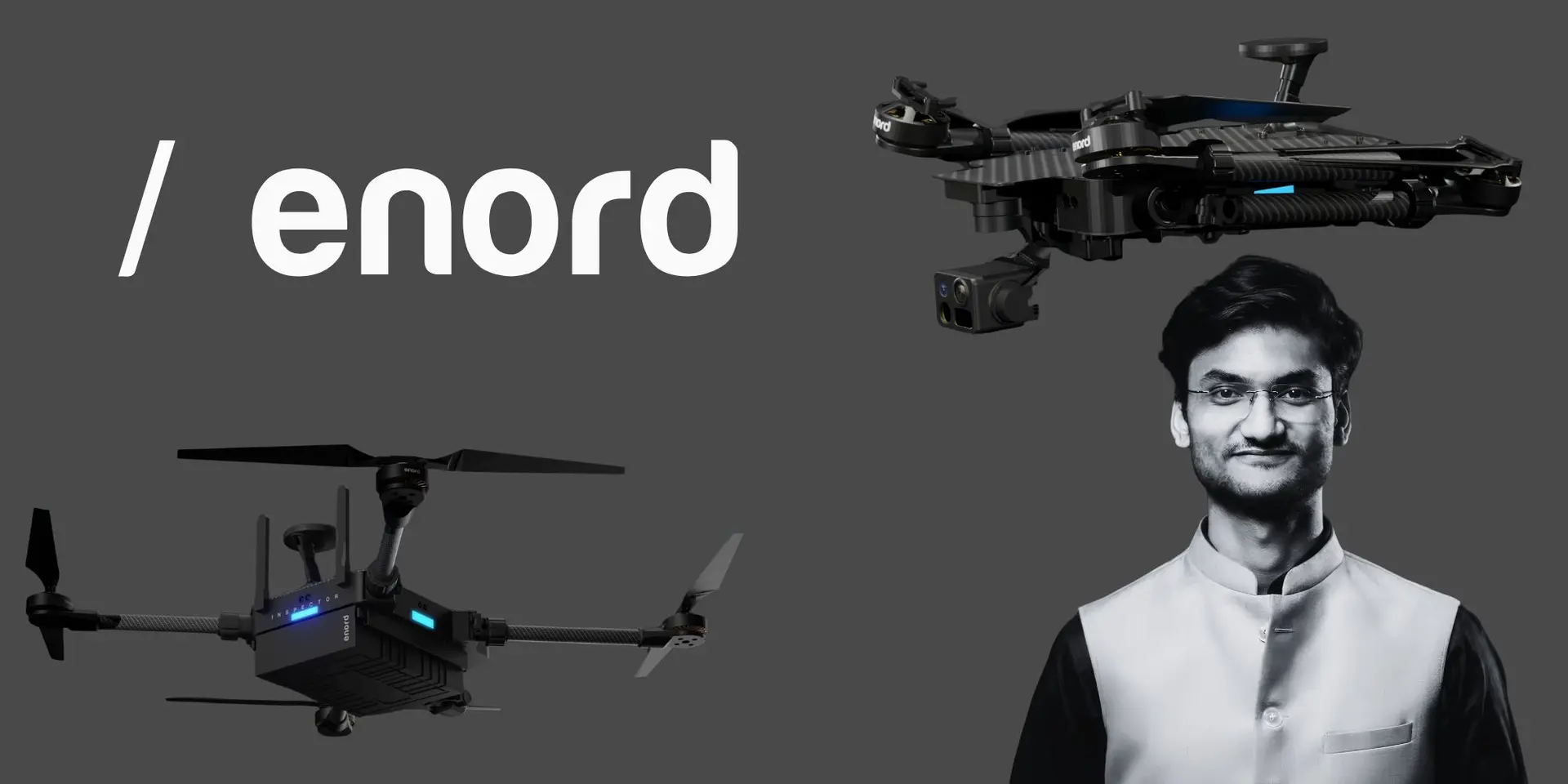
Most drones are lost without GPS. Enord builds ones that are not
The Delhi startup's inspection drones navigate confined spaces without GPS, checking power lines, towers and industrial sites.


A drone flying over open ground can track its position using satellites. Take it inside a boiler, a tunnel, or a tight gap between machines, and that signal is gone.
This matters because many of the places worth inspecting are exactly those confined, hard-to-reach spaces where sending a person is slow and dangerous.
, a Delhi startup, builds drones designed to work there. Its drones navigate on their own, no GPS, no compass, no pilot.
The company was founded in 2021 by Muhammad Anas, CEO, and Zain Saeed Alig, COO. He was introduced to drones through a college robotics competition, then ran a venture that trained students to fly them.
Drones that navigate by looking
Enord's main product line is INSPECTOR, a drone built with an AI Pilot system. Information processing happens on the drone itself, keeping it operational where connectivity is poor.
The drones inspect high-voltage transmission lines, telecom towers, and thermal plants, as well as routine industrial checks. A foldable variant takes swappable payloads for different jobs, and the company also sells an air-monitoring device that reads gases and particulate matter.
Enord describes itself as India's first AI-on-edge drone company. It has signed a research agreement with IIIT Delhi on drone navigation and says it holds several patents.
The commercial logic is straightforward. Inspecting a transmission line or a tall tower by hand means sending someone up, shutting equipment down; a drone that can do it unaided removes the risk and the downtime together.

Small funding, real customers
The company sells to businesses and government agencies in utilities, infrastructure, construction, agriculture and defence.
Enord has raised about $80,600, largely from institutional backers including IIT Mandi Catalyst and iHub. Its annual revenue is higher than the total it has raised. The startup has built a team of more than fifty people, and it chooses to concentrate on building technology that is hard to copy and easy to scale, rather than chasing capital in a tight funding market.
(This story has been researched and compiled using publicly available information.)