



Nabhdrishti is building small gas turbines for drones, aircraft and power generation
The Bengaluru-based company is developing fuel-flexible engines on a shared core, one sized for unmanned aircraft and one for industrial and defence power supply.

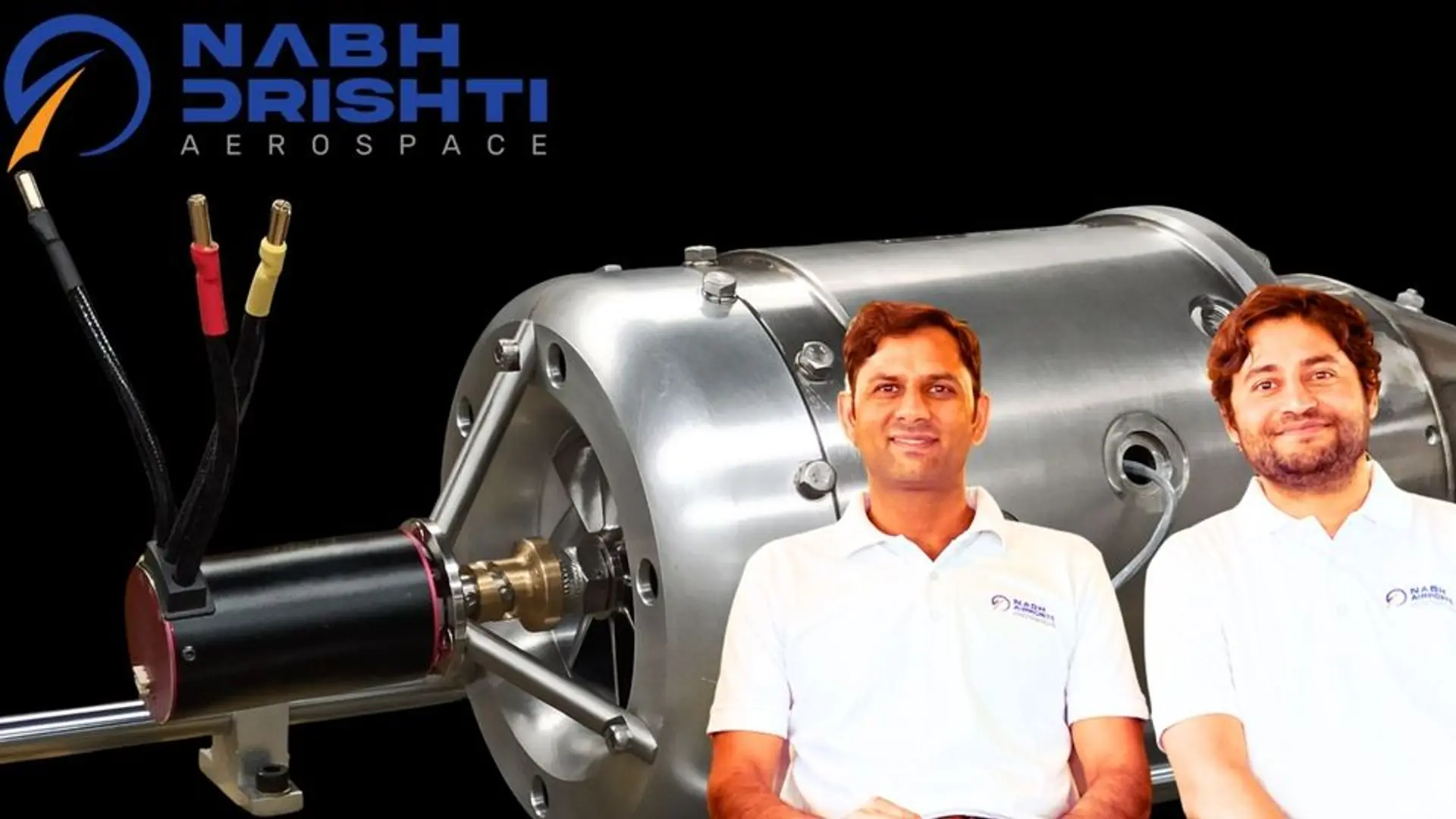

India designs aircraft and drones and imports most of the engines that power them. Gas turbines are among the hardest machines in engineering to build well. They run hot, spin fast, and have to hold tolerances for thousands of hours without failing. The global supplier list is short, and the dependency has shaped what Indian aerospace can and cannot do on its own.
was founded in Bengaluru in 2023 to work on the small end of that problem. Its three co-founders are Rohit Chouhan, the CEO, Arjun Srivatsa and Antanu Sadhu, who between them have worked at General Electric, Rolls-Royce and the Gas Turbine Research Establishment, the DRDO laboratory that develops engines.
Chouhan has said India's reliance on imported propulsion has long held back its aerospace ambitions, and describes the company's purpose as building engines that are fuel-flexible, high-performance and developed in India.
One core, two machines
The company's approach is to build a single micro gas turbine core and derive two products from it. Its first product was the ND350 engine, a versatile fuel-flexible micro gas turbine designed as a 275 KW turbogenerator or a 350 SHP turboprop. The ND400 is a turbojet in the 400 Newton class, aimed at unmanned aerial vehicles (UAVs) and small aircraft. The ND2000 is aimed at industrial and defence users, at up to two megawatts of power output.
Sharing a core across both is a cost decision. Developing a turbine is expensive and slow, and getting two products from one development programme spreads that cost across a wider market than aviation alone would provide. It also gives the company a route to revenue on the industrial side while the aviation work is still in test.
The other design choice is fuel flexibility. The engines are built to run on more than one fuel, and the company has said it is exploring cleaner options including green hydrogen. Its earliest work, funded by the pre-seed round, went into a fuel-flexible combustor prototype and testing of fuel injectors.
The combustor is where fuel flexibility wins or loses, because different fuels burn at different speeds and temperatures, and the chamber has to hold a stable flame across all of them.
The company publishes the ND400's specifications itself. It lists a maximum thrust of 400 Newtons, a top speed of 95,000 revolutions per minute, an engine weight of 3.95 kg, and an operating envelope reaching Mach 0.85 and 10,000 metres. The markets it names run from unmanned aircraft and light aviation to decentralised power generation.
Accel, and three prototypes to test
Nabhdrishti raised Rs 3 crore in a pre-seed round led by IIMA Ventures in April 2024. In March 2025, it raised Rs 25.64 crore, about $3 million, in a seed round led by Accel, with IIMA Ventures and existing investors taking part.
The company said at the time that the money would go towards testing three engine prototypes, running flight trials with customer UAVs, beginning early revenue generation, and hiring across engineering, production and customer support.
In January 2026, the company ran its ND400 turbojet for the first time. It described the campaign as taking the engine from a clean-sheet design to a successful first run in nine months, and published video of the test. Flight trials and revenue have not been announced since. The company has said it aims to be India's leading propulsion provider by 2032.
Accel, whose Indian investments include Flipkart and Swiggy, has described propulsion as one of the harder bottlenecks in aerospace for emerging markets, and Nabhdrishti's dual-market approach as a way to pair near-term commercial use with longer-term goals. The company has also said it is positioning the engines around cleaner fuels, which is a longer horizon again.
(This story has been researched and compiled using publicly available information.)