



RoshAi makes the trucks you already own drive themselves
The Kochi-based company sells autonomy kits and fleet software that let industrial operators convert the trucks and heavy vehicles they already own, rather than buying new ones.

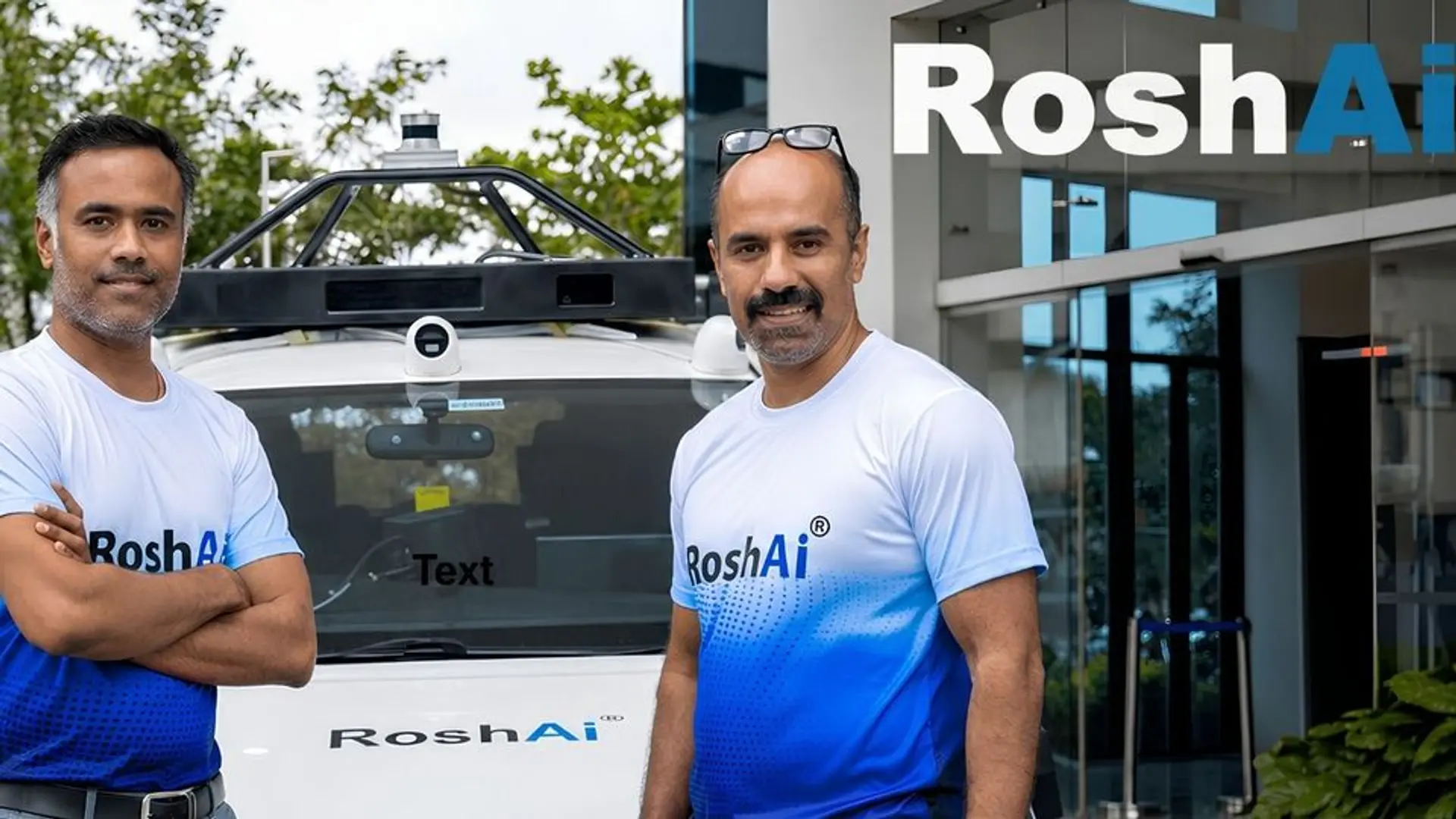

Driverless cars on public roads remain a distant proposition in India. However, driverless vehicles inside a port, a mine or a factory yard are a different problem. The routes repeat, the area is enclosed, and nobody is going to step off a pavement in front of the truck. That is where industrial autonomy has found its early footing.
works in that space. The company was formally founded in 2021 by Roshy John, the CEO, who had earlier been global head of robotics and cognitive systems at TCS, and Rajaram Moorthy, its CTO. The work behind it goes back further, to 2010.
John's early prototypes were built on his own cars. He has described retrofitting a Tata Nano and driving it around Kochi, where the cameras mounted on the roof drew enough attention from passers-by that he asked the Kerala Police for somewhere private to test.
He was given tracks inside the Infopark campus, where the company is now headquartered. A later prototype ran on a BMW 3 Series.
Retrofit rather than replace
The pitch is simple: customers keep the vehicles they already have.RoshAi sells retrofit hardware that gives an existing vehicle drive-by-wire control, an autonomy software stack that drives it, and a cloud platform to manage the fleet. An operator can convert trucks it already owns, whether diesel or electric.
The company describes the model as Android for autonomy: the software is licensed to original equipment manufacturers (OEMs) and fleet operators, while the hardware kits go onto vehicles already in service. It says the stack supports Level 4 autonomy, the level at which a vehicle handles its own driving within a defined area without a human fallback.
The company's cost argument centres on labour. John has pointed out that five trucks running around the clock need about fifteen drivers, and that an operator subscribing to the autonomy stack avoids both the wage cost and the work of managing driver shifts.
Industry estimates put India's shortage of skilled commercial drivers in the millions. RoshAi says its systems have been tested over 100,000 km without a safety incident, and that it holds a growing patent portfolio. It has also begun applying the same software to precision manufacturing, particularly in electronics, where the task is repetitive and not mobile.

Funding and revenue target
The company raised Rs 22 crore in April 2026 in a round led by IAN Alpha Fund, part of the IAN Group. This was followed by an earlier seed round of about Rs 15 crore backed by Caret Capital, Ev2 Ventures and ThinKuvate.
The funds will go toward the autonomy stack, perception systems and fleet software; scaling deployments beyond the pilot stage; and building a sales presence abroad. The company says the United States, Australia and Southeast Asia are its target markets. On revenue, the company has said it generated Rs 15 crore in operating revenue in FY26 and is aiming to close the current financial year at Rs 50 crore. Its investor has pointed to repeat customer engagement and partnerships with tier-one OEMs as early validation.
What is not public is who those customers are. RoshAi describes work with ports, mining operators and logistics firms through pilots and early deployments, and the founder has referred to Indian automotive companies and overseas carmakers among its clients, but no customer has been named and no contract value disclosed.
(This story has been researched and compiled using publicly available information.)