



ASTRA Drones is building an interceptor to catch other drones in the air
The IIT Ropar-incubated company is developing high-speed unmanned platforms designed for Indian operating conditions and has moved into strike systems.

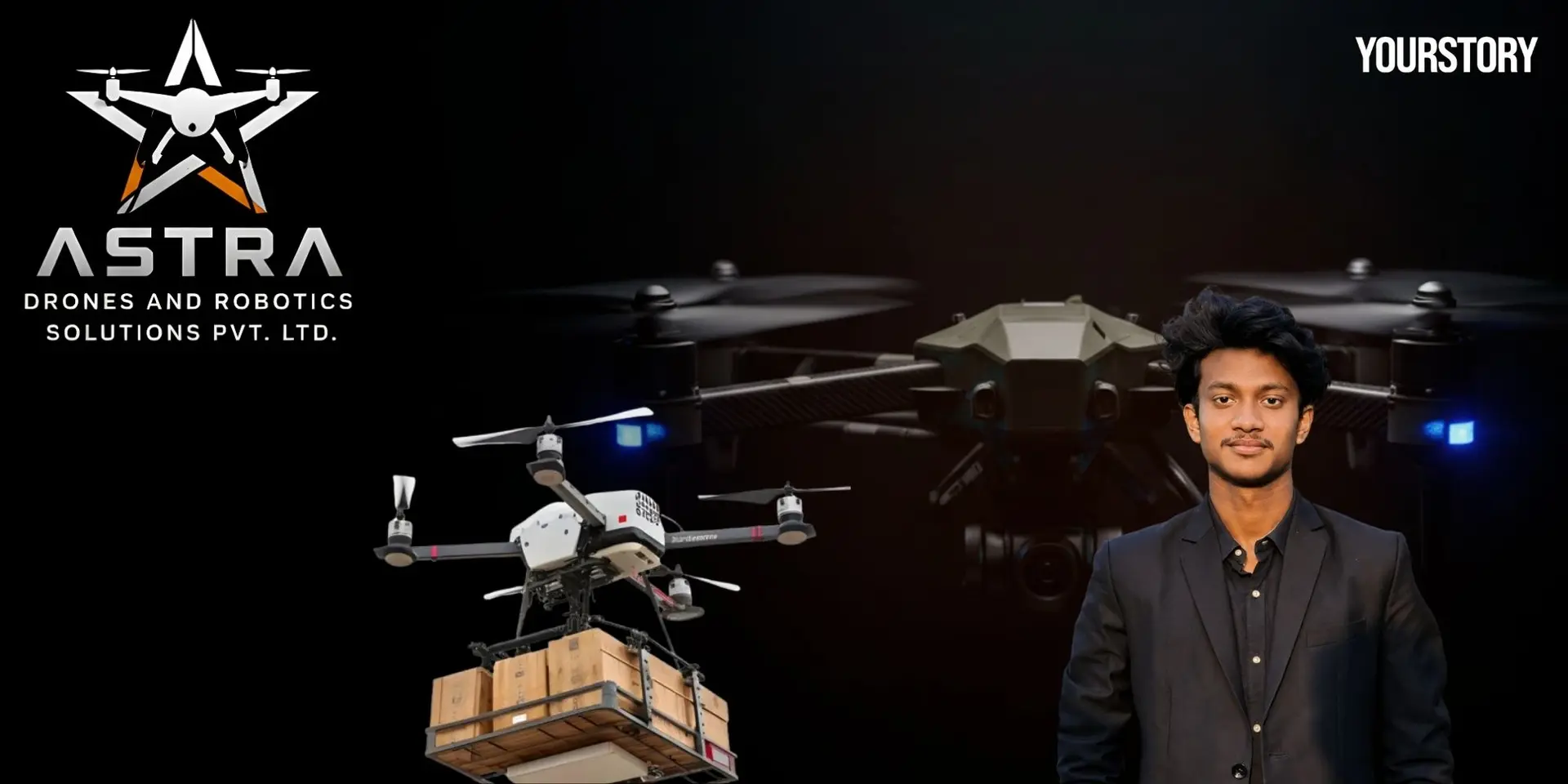

Shooting down a small drone is a strangely difficult problem. A missile can cost hundreds of times more than the drone it's meant to destroy. Jamming works until the drone flies on its own navigation. Guns need line of sight and drop debris on whatever is below. The answer that has gained ground is a faster drone that catches the slower one.
That requires speed above all, and speed in a small airframe is a different engineering problem from endurance, which is what most drone design optimises for. An interceptor spends minutes in the air rather than hours, and everything is traded for the ability to close distance quickly.
Solutions was founded in 2025 by Sarthak Gaira and Siddharth Kushwaha to build one. Based in Punjab and incubated at the Technology Business Incubator Foundation at IIT Ropar, the company describes itself as developing unmanned platforms engineered specifically for Indian operational requirements.
Built for here, not adapted to here
The company draws a distinction between building a system for Indian conditions from the ground up, versus taking an imported system and adjusting it to fit. Terrain, temperature range, dust and the specific threats a system is expected to meet all differ, and a platform designed elsewhere carries assumptions that may not hold.
Its first product is a high-speed interceptor drone, which the company says addresses aerial threats while reducing dependence on imported technology. In July 2026, it said it was entering the loitering munition segment with an indigenous strike drone, moving from defensive systems to offensive ones within a year of founding.
Designing critical systems domestically is its argument for itself, as it improves supply chain security while building intellectual property and manufacturing capabilities in India rather than licensing them.
Its stated longer-term direction is autonomy: integrating robotics, artificial intelligence and autonomous decision-making so that platforms can carry out more complex missions with less human input. That's the direction the whole industry is heading, but for now, it's a goal the company has stated, not something it has actually built.

A year old, and early
ASTRA works across defence, surveillance, disaster response and industrial applications, though its public activity so far has been on the defence side. Disaster response uses much the same technology as surveillance, which is why drone companies routinely list both.
Punjab is a relevant base. The state sits on a border where small drones have become a recurring concern, and its universities and industrial base have been drawn into the counter-drone effort accordingly.
Its incubation at IIT Ropar gives it access to research infrastructure and technical expertise that a company of this age would not otherwise have. This is what incubators like IIT Ropar's typically offer companies at this stage: lab access and institutional credibility, standing in for the capital a venture round would normally provide. That matters because a hardware company this early usually has little to show a private investor. No funding round has been announced, no specification for the interceptor or the strike drone appears anywhere, and no customer, trial, order or delivery is on record.
The company is roughly a year old, and what exists publicly is two product announcements. Indian defence procurement moves through trials, qualification and orders, a process that typically takes years, not months. Whether either product eventually finds a buyer won't be clear for a long time. (This story has been researched and compiled using publicly available information.)