



How a Bengaluru company turns fruit waste into everyday product ingredients
BacAlt Biosciences ferments agricultural residue into bacterial cellulose and polyglutamic acid, ingredients that formulators can use in place of petrochemical polymers.


A shampoo, a toothpaste and a floor cleaner have more in common than the shelf they sit on. Each contains synthetic polymers that thicken the liquid, hold the mixture together and control how it feels, and many of those polymers are made from petrochemicals and end up in water systems as microplastics.
Regulators have started closing that off, and formulators need replacements that behave the same way at a similar price. Biological alternatives exist and have historically been too expensive, or too difficult to blend into an existing formulation, to be used at consumer-product scale.
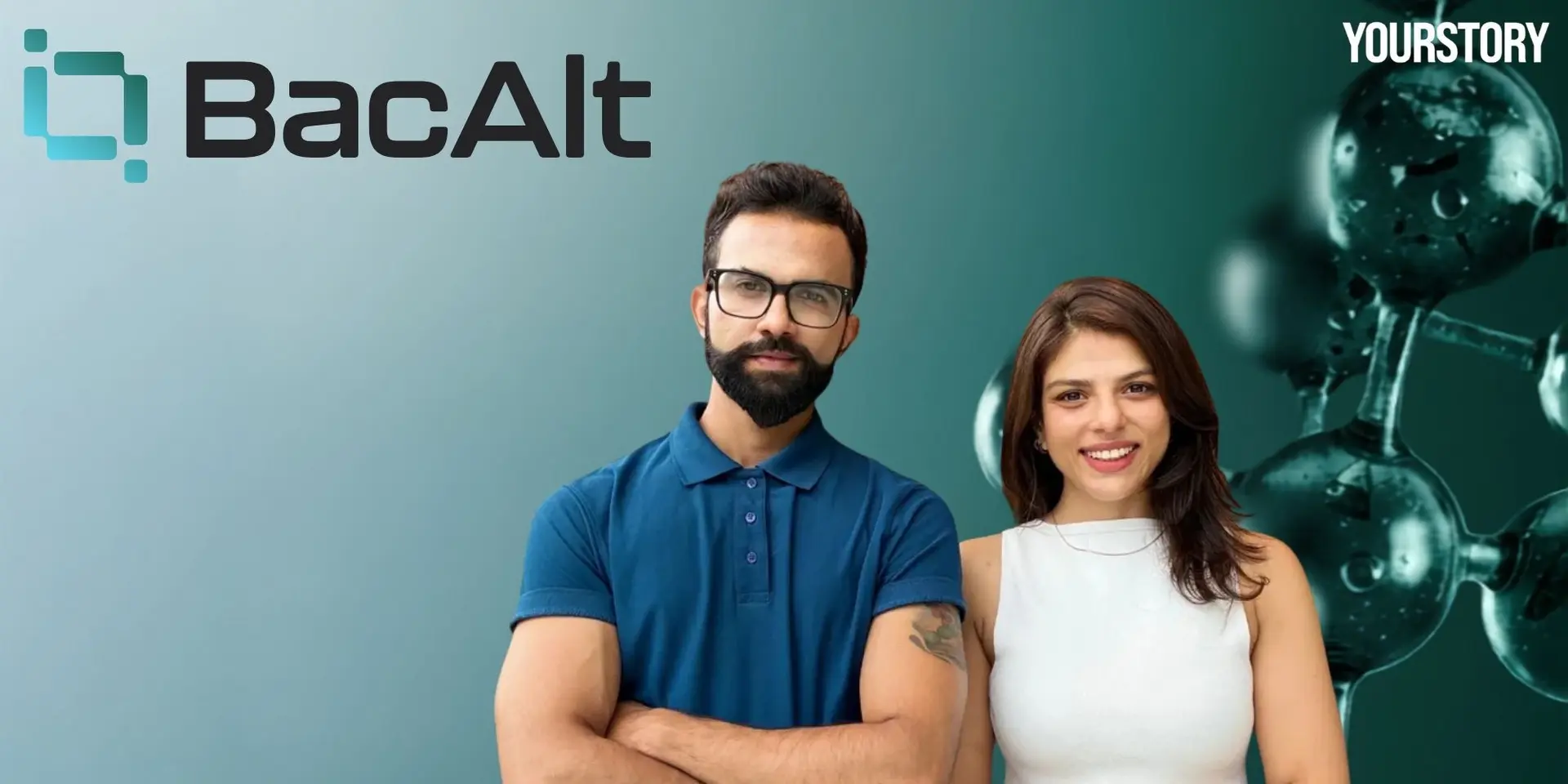
was founded in Bengaluru in 2023 to make them cheaper. Its founders are Shruti Kutmutia, the CEO, and Pranav Nair, both biotechnologists with backgrounds in microbiology and biopolymer fermentation. The company works from Electronics City and sells to other businesses rather than to consumers.
Fermenting waste, without a sterile tank
The raw material is agricultural residue. BacAlt takes post-harvest crop waste and agro-industrial fruit waste and ferments it into two biopolymers: bacterial cellulose, which is produced by microbes rather than extracted from plants, and poly-gamma glutamic acid, a thickener and moisture-holding agent. Using waste as feedstock keeps the input cost low and gives crop residue a use other than being burnt.
The cost argument rests on how the fermentation is run. Industrial fermentation is normally done in sterilised tanks, and sterilising them consumes energy, takes time and adds a point of failure if contamination gets in. BacAlt says its process runs non-sterile, alongside high-throughput methods and waste feedstock, which is where its claimed cost advantage comes from.
The product it has put a name to is ReRaw, a blend of the two polymers. The company describes it as replacing up to five synthetic additives with a single biodegradable ingredient, and says the process achieves a multi-fold cost reduction against existing biopolymers at scale. Both figures are the company's claims.
The applications it lists run across personal care, oral care and home care first, with agrochemicals, nutraceuticals, pharmaceuticals, textiles and wound care named as further markets.
Kutmutia has argued that recyclable packaging is not enough on its own, and that the formulations inside the bottle are where the microplastic problem actually sits. Her stated ambition is for India to move from importing speciality ingredients to exporting them.

Rs 18 crore, and a launch date that has passed
BacAlt raised Rs 18 crore, about $2 million, in a round announced in September 2025. Avaana Capital led it, with participation from Lubrizol InnoVentures, the venture arm of the American speciality chemicals company Lubrizol.
That second name matters more than the money. A corporate investor from the industry BacAlt intends to sell into brings distribution and formulation knowledge that a financial investor does not, and it suggests the technology has been looked at by people who buy ingredients for a living.
The money was earmarked for research and development, pilot-scale production facilities, hiring and preparing to sell in new geographies. At the time of the round, the company said its first commercial product would launch in June 2026, made at a pre-pilot facility in Bengaluru, with agrochemical and pharmaceutical markets to follow in 2027.
That date has now passed, and no launch has been announced. The company was listed among the Indian companies shown at Bharat Innovates in Nice, France, in June 2026, where it described ReRaw and the partnerships it is seeking. No customer, order or revenue figure is public.
(This story has been researched and compiled using publicly available information.)