



Constelli builds the signal processing tools used to design radar and electronic warfare systems
The Hyderabad-based company makes hardware and software for testing defence electronics in the laboratory and sells to DRDO as well as contractors in three other countries.

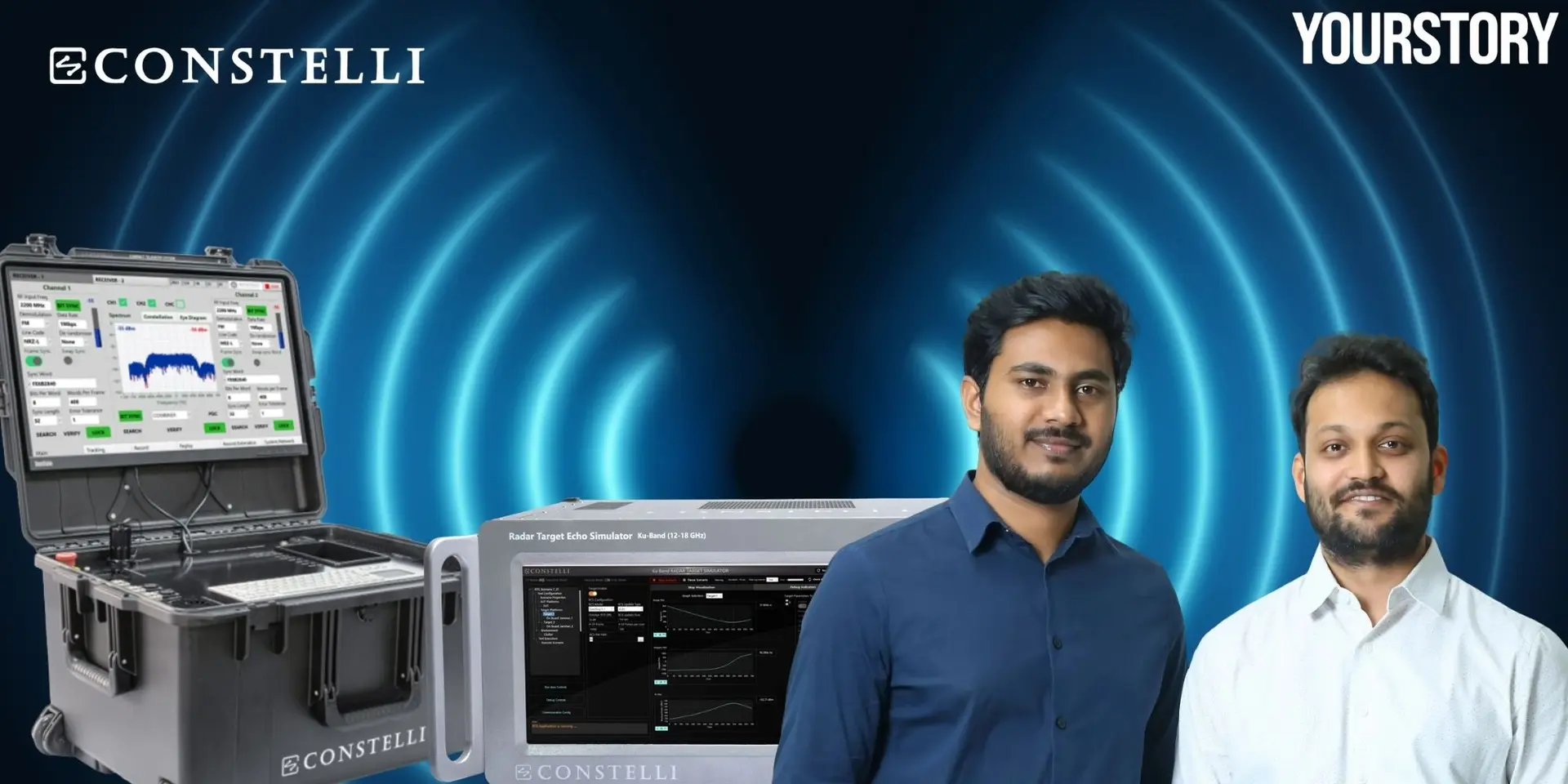

Building a radar or an electronic warfare system means testing it against the signals it will meet in service, and those signals are difficult and expensive to produce. Flight testing has high costs and yields little data per sortie. The alternative is to generate the environment in a laboratory, feed it to the system under development, and identify issues before anything leaves the ground.
India has been developing more of its own defence electronics over the past decade, and every one of those programmes needs the same testing infrastructure. Most of it has traditionally been imported.
builds the equipment that does that. Founded in Hyderabad in November 2017 by Satya Gopal Panigrahi, the CEO, and Avinash Chenreddy, the company works on signal processing for radar, electronic warfare, tactical communications and telemetry.
Its position from the start was that it would not build only for India. Panigrahi has said the company deliberately targeted export markets, on the reasoning that competing internationally is what tests whether the technology is any good, and that a company selling only at home never finds out where it stands.
Simulation before flight
The core of the offer is modelling and simulation. Constelli uses in-lab simulation to reduce how much flight testing a programme needs, which lets design problems surface earlier and be examined in more detail than a test sortie allows.
Around that sit the products themselves: hardware and software built on modern processing technology, distributed computing and field-programmable gate arrays, the reconfigurable chips that let a system be rewired for a different signal without new silicon. The company says this shortens development timelines, which in defence programmes are measured in years.
Its customers are the organisations building the systems rather than the ones operating them. Constelli works with India's Ministry of Defence and the Defence Research and Development Organisation (DRDO), and with defence contractors in South Korea, Australia and Singapore.
That export list is a part of the business that supports the company's argument about testing itself against global players.

Rs 180 crore, and a move into payloads
Constelli raised about Rs 180 crore, $20 million, in a round announced in February 2026 and led by General Catalyst, with 360 One Asset Management participating alongside the existing investor Pravega Ventures. Pravega had led a $3 million pre-Series A in January of the previous year.
The money is for research and development on next-generation electronic warfare and communication payloads, designed for drones, ground systems, naval vessels and satellites. That is a move from selling tools to programme builders towards building the systems themselves.
The company also plans infrastructure for rapid prototyping and early-stage production, aimed at shortening the gap between a design and a field-ready system. Moving into payloads puts it alongside the companies that were previously its customers, which is a different competitive position from selling them tools.
The timing sits with a broader increase in Indian defence spending, and a widening group of Indian companies working on defence electronics and unmanned systems. No revenue, order book or contract value has been made public.
(This story has been researched and compiled using publicly available information.)