


Gudlyf Mobility builds the lightweight cylinders that hydrogen vehicles need to carry fuel
The Madurai-based company designs and makes Type IV composite hydrogen cylinders rated to 700 bar for vehicles, gas distribution and industrial use.

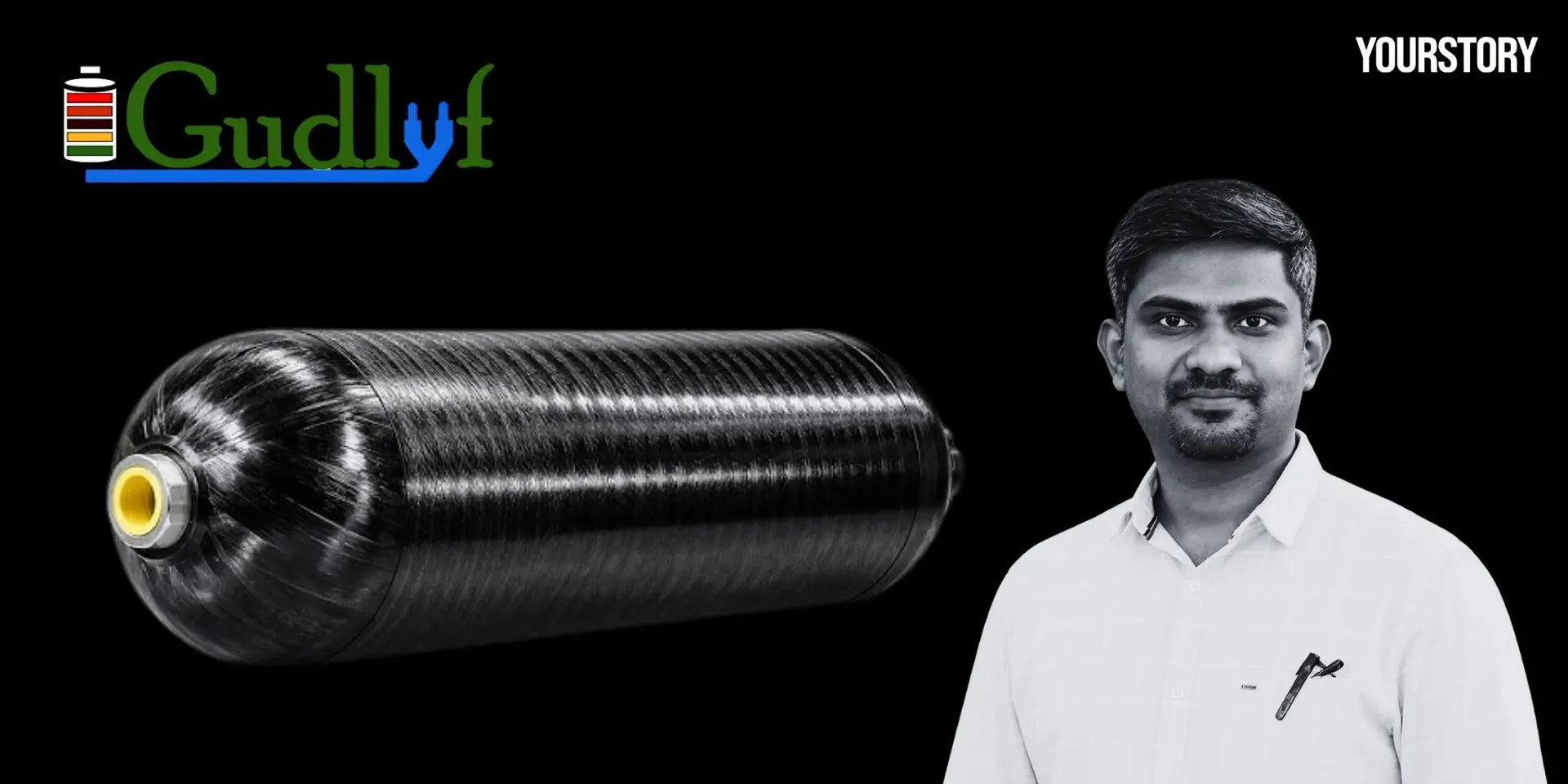

Hydrogen has an awkward physical property. It holds more energy per kilogram than any other fuel and almost none per litre, which means a vehicle running on it has to carry gas compressed to hundreds of times atmospheric pressure. The tank stops being a container and becomes an engineering problem.
That is why cylinder design decides whether hydrogen mobility works. A steel vessel strong enough to hold 700 bar is too heavy to be worth carrying, and the weight eats the range the fuel was supposed to provide.
The industry's answer is the Type IV cylinder: a plastic liner that holds the gas, wrapped in carbon fibre composite that takes the pressure. It is the lightest of the four cylinder classes and the only one really practical for vehicles.
makes them. Incorporated in Madurai in October 2022, the company describes itself as developing Type IV hydrogen cylinders and storage systems for mobility, industrial and energy use, using what it says are proprietary materials and manufacturing processes.
Seven hundred bar, and as light as possible
The specification the company gives is 700 bar working pressure, which is the standard for fuel cell passenger vehicles. Getting there means the composite wrap has to be engineered for the shape of the vessel and the loads it sees, and then proved out through destructive testing: cylinders are burst, cycled and impact-tested until they fail, because a pressure vessel that fails in service fails violently.
Weight is the other half. The company frames its work around weight reduction for improved fuel efficiency and vehicle range, which is the whole commercial argument for Type IV over the heavier classes.
The markets it names run wider than cars. Oil and gas refineries and petrochemical plants need storage. City gas distribution networks need transport. Fuel cell vehicles, trucks, buses and locomotives need onboard tanks. And it lists aviation and aerospace, where hydrogen is being examined seriously and where weight matters more than anywhere else.
Its team is described as PhDs and specialists with a combined 120 years of experience in hydrogen storage, mobility and advanced materials, which for a company of four people means the experience is concentrated rather than distributed.
India has committed to building a hydrogen economy through the National Green Hydrogen Mission, and most of the attention has gone to producing the gas rather than moving and storing it. Storage is the part that decides whether any of it reaches a vehicle.

Awards, a university, and a very small business
The recognition it has collected comes from institutions rather than customers. It was part of the top 6 teams at the Carbon Zero Challenge run by IIT Madras and the JSW MG Motor India startup programme. It has also been an enabler at an SAE hydrogen student engineering event, and collaborates with Kalasalingam University in Tamil Nadu.
Gudlyf Mobility says it has developed and validated its cylinders and built its intellectual property entirely in India, which it presents as evidence that deep technology can be done here. No independent certification, customer or order appears in any public source.
The business behind it is small. Corporate filings record revenue of Rs 9.75 lakh for the year ended March 2024 and paid-up capital of Rs 1 lakh, with about four people. Funding has come across three rounds, none of them disclosed, with Startup India participating in April 2025.
There is also an earlier version of the company still visible. A separate Gudlyf website, last updated in 2024, describes a software business selling lithium-ion cell models built from accelerated lifecycle testing. That is a different product in a different industry, and neither site explains the shift.
(This story has been researched and compiled using publicly available information.)