



How Milkvilla is building a 12-hour supply chain for fresh raw milk
Bengaluru-based dairytech startup Milkvilla says its hyperlocal model takes milk from farmer to customer in 12 hours, while keeping 60-70% of revenue with its network of dairy farmers.

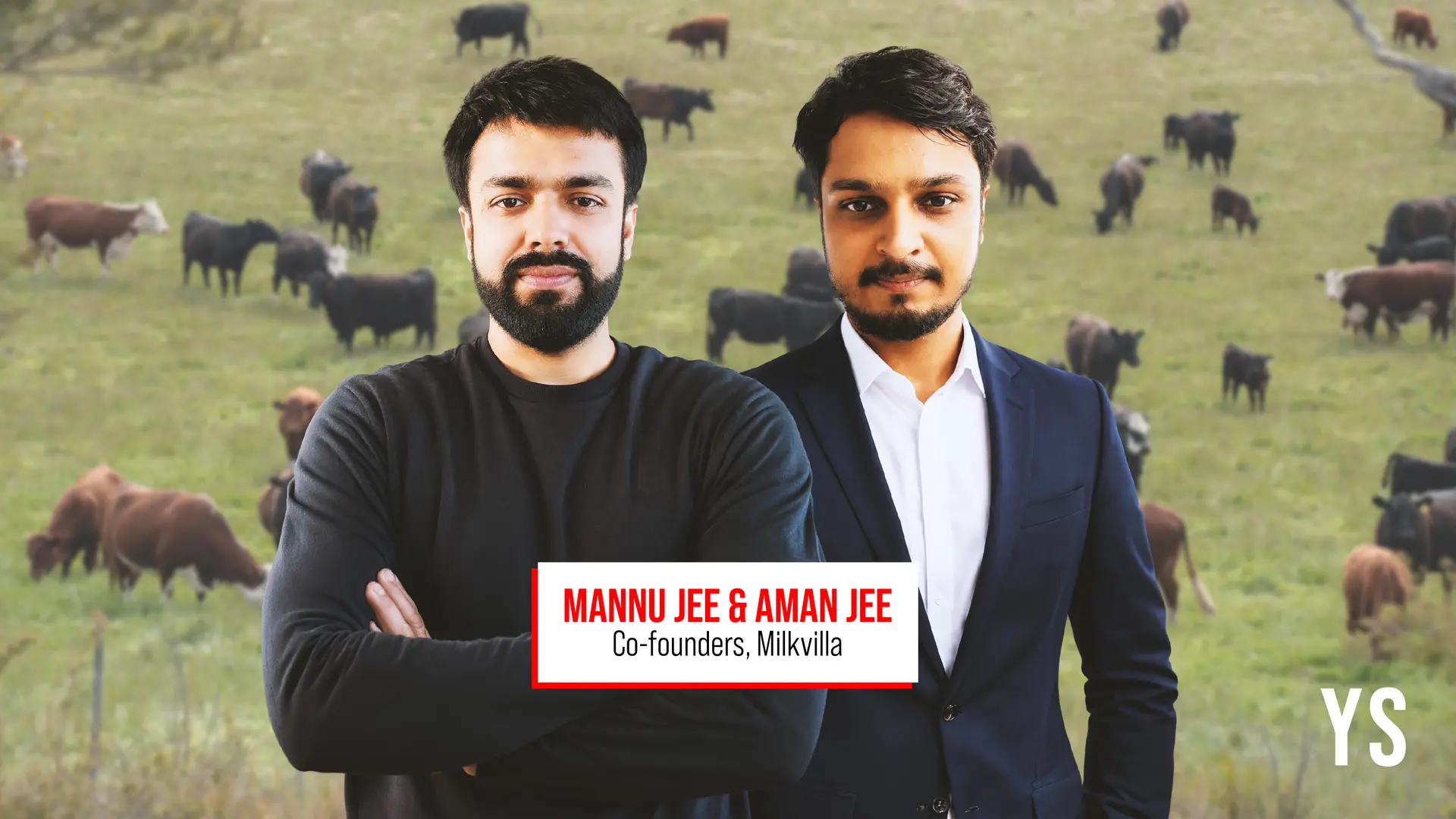

Brothers Mannu Jee and Aman Jee grew up in Rampur village in Bihar’s Muzaffarpur district, watching their father grow crops and rear cattle. Dairy was an important part of the family’s income, but the brothers also saw how difficult the business could be for farmers.
“We saw how much labour was put into the milk business. But the output was often very low mostly because of poor mismanagement. The milk would often get curdled. We saw so many farmers, including our father, go through so many problems,” says Mannu.
He later joined the merchant navy and worked with a Hong Kong-based shipping company. There he saw how meat, fish and fruit were transported across international supply chains while maintaining their freshness.
“I saw how large shipments are procured safely, handled, and then transported worldwide while keeping everything fresh and frozen. Learning from that, I started devising a plan on how to transport milk in India to customers safely without processing and adulterating the milk,” he says.
That idea became Milkvilla, a dairytech startup founded in 2021. The company now has a 100-member team working out of Muzaffarpur and Bengaluru, its headquarters. The founding team comprises CEO Mannu and CTO Aman, along with CFO and Chief Growth Officer Piyush Chachondhia and co-founder Prashant Gyan.

A shorter supply chain
Mannu says when milk reaches consumers through the traditional supply chain, it can be seven to ten days old. The milk goes through processing, packaging, and retailing before reaching the customer. He refers to this as “engineered milk” because of the chemicals, he says, are used to extend its shelf life.
Milkvilla has taken a different approach. Its supply chain runs from the farm to cooling, the delivery hub, and then the customer, with the entire process taking about 12 hours.
“We have a special milk collection vehicle equipped with a cooling and a testing infrastructure. The vehicle goes to the farmer’s doorstep, and then the milk is turbo-cooled down to four degree Celsius, which increases its shelf life to 24 hours without adding any chemicals to it,” he says.
The milk is then taken to a delivery hub, where it undergoes quality assessment tests. Once it passes the required metrics, it is loaded into a refrigerated van for delivery to customers.
Milkvilla currently has more than 10,000 active customers who can track their orders through the company’s app. The app works on a prepaid subscription model, allowing customers to add any amount they choose. The company delivers milk in two batches a day, with each batch taking 12 hours from collection to delivery.

Building a hyperlocal model
Milkvilla follows a hyperlocal procurement model, sourcing milk close to the cities where it operates. In Muzaffarpur, it works with farmers in the neighbouring villages. In Bengaluru, the milk comes from dairy farmers in Ramanagara district, about 50 km southwest of the city.
The company works with around 350 dairy farmers. Mannu says 60-70% of revenue goes to the farmers.
The milk Milkvilla distributes is predominantly A2 milk.
“The protein in milk is available in two forms: alpha-casein and beta-casein. The latter is usually considered to be easily digestible and is found in the milk produced by our desi cattle. Highland cows from Switzerland, for instance, produce alpha-casein protein-rich milk,” shares Mannu.
The company has also expanded beyond milk and now delivers products such as paneer, ghee, and peda. These products follow the same supply chain, which Milkvilla had recently patented.
The brothers have invested Rs 1.5 crore of their own money into the business. Milkvilla has turned profitable over the past four months and currently has a monthly recurring revenue of Rs 1 crore.
The startup is now looking to scale. Over the next six months, it plans to raise a seed round of Rs 15 crore, which it will use to expand to 10 delivery hubs across Bengaluru. It currently has one hub in Muzaffarpur and another on Sarjapur Road in Bengaluru.
Milkvilla competes with dairy companies such as Akshayakalpa Organic and Sid’s Farm. Mannu believes the company’s patented supply chain gives it an edge.
“We continue to innovate and improve our system. After our Bengaluru expansion is complete, we plan to do the same for all the Tier I cities and then expand further through a franchise system. In the next five years, we want to be known as a company that distributes fresh raw milk across the entire country,” says Mannu
Edited by Swetha Kannan