



How Minus Degre is turning plastic waste into eco-friendly materials
Ghaziabad-based Minus Degre recycles plastic waste into Eco-Panel, a material that can be moulded into products ranging from key chains to furniture, and has worked with the Bihar and Uttar Pradesh governments.

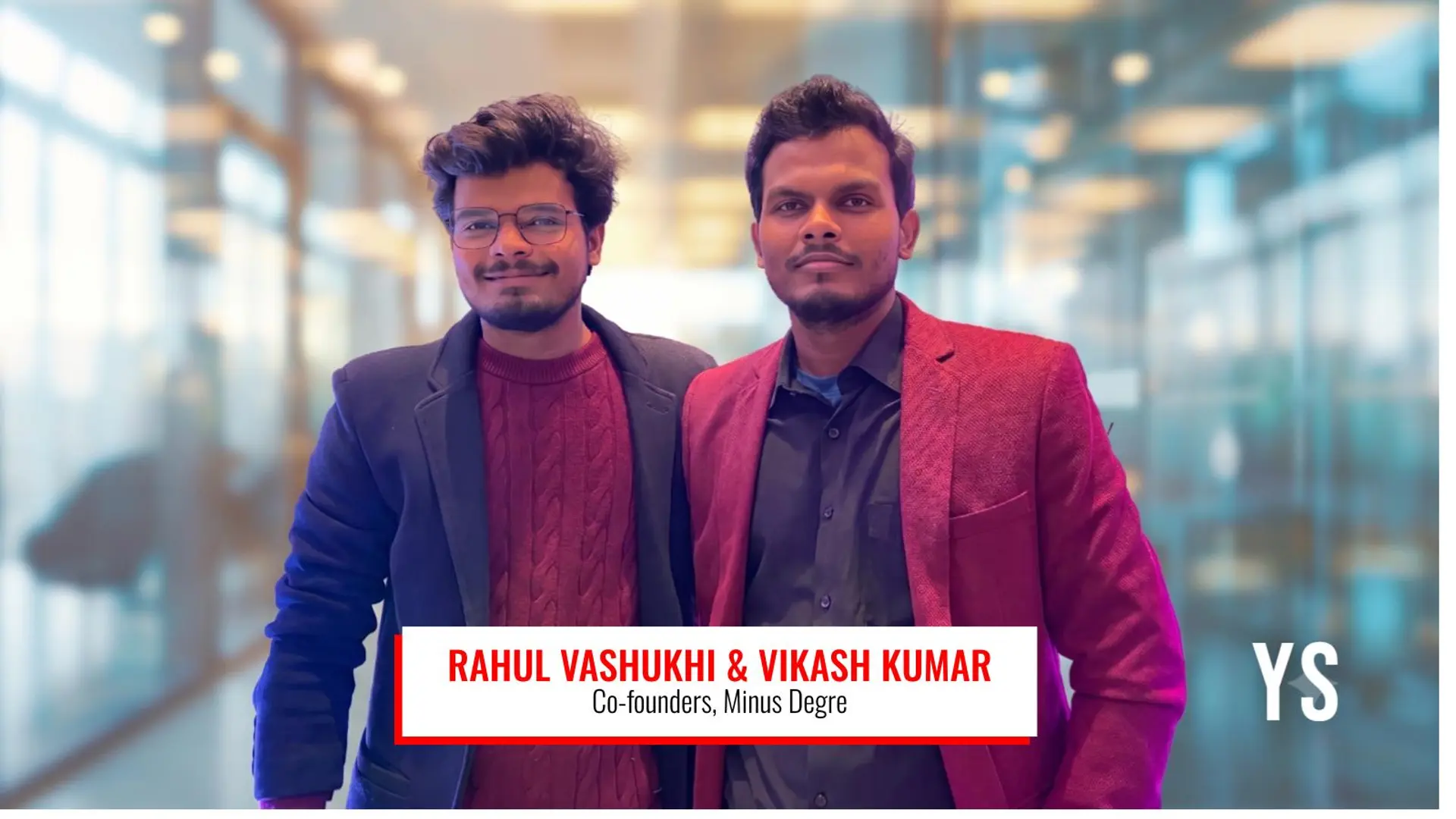

During the COVID-19 lockdown, brothers Rahul Vashukhi and Vikash Kumar decided to leave their corporate careers. They did not have a business idea lined up, but they wanted to find a way to create tangible change around them.
The brothers began looking at their immediate surroundings in Ghaziabad for problems that were being overlooked by people. Plastic waste soon caught their attention.
“At that time, all packaged foods were mostly plastic packages. Most of that plastic would eventually find its way to one giant landfill. We started experimenting with it, hoping to create something useful,” Vashukhi says.
That experiment eventually led the brothers to develop a process to recycle plastic waste into a solid material, which they named Eco-Panel. In 2021, the venture took shape as climatetech startup Minus Degre.
The company collects and processes plastic waste, converts it into Eco-Panel, and then uses the material to manufacture products for businesses and consumers. Its products can be customised for different applications, including furniture, interiors, and everyday utility products.
Based in Ghaziabad, Minus Degre now has a 15-member team and has recently established a 16,000-sq ft factory to manufacture its products.
The name Minus Degre refers to something cold, reflecting the startup’s broader goal of reducing the environmental impact of plastic waste. The startup has recycled 300 tonnes of plastic waste so far.
Converting plastic waste into Eco-Panel
The process begins with the collection and segregation of plastic waste by type. The material is then shredded and washed to remove impurities.
The cleaned material is then compressed through a controlled heating and cooling process.
Depending on the type of plastic and its heating and cooling points, it is converted into Eco Panel, which can then be moulded into different products.
Vashuki says the company has developed both the method and the machinery used to manufacture it. However, Minus Degre does not want to patent the process for now.
“It is actually easy to decode a patent, and we don’t want to reveal anything to our competitors,” Vashukhi tells YourStory. “However, we don’t know how long we can continue with this. At some point, when we approach VCs, they may require us to patent it.”
The company says the resulting Eco-Panel can be used much like other solid materials and moulded into a range of products depending on the customer's requirements. This includes furniture and seating modules as well as smaller consumer products.

Building a market for recycled materials
Over the past five years, the startup claims to have accumulated more than 200 B2B clients, with most of its clientele coming from the retail sector. These include companies like Adidas and Steve Madden. It has also served over 3,000 B2C customers since its inception.
Its website features a range of products, from key chains priced at Rs 149 to curved benches priced at Rs 24,000.
“Many are using our Eco-Panel as an alternative to marble or quartz. There is a dearth of indigenous eco-friendly materials in India. We are trying to fill that gap,” he says.
The startup has also worked with government bodies, including the Bihar and Uttar Pradesh governments.
One of its projects with the Bihar government involved installing Eco-Panel benches in parks. Its latest project with the UP government involved installing more than 90 seating modules at Noida International Airport, also known as Jewar Airport.
According to Vashukhi, such projects can help change the perception of recycled materials.
“People still don’t perceive recycled materials as premium products. We want to change that. We make sure our products look and feel high quality. We want people to realise there is value in these products. If they continue using virgin plastic, it will only contribute to rising waste on the planet,” Vashukhi explains.

Scaling the business
Minus Degre is currently bootstrapped with an undisclosed amount invested by the founders. The startup recorded annual revenue of Rs 1.25 crore in FY26. With its new Ghaziabad factory now operational, it plans to increase its manufacturing capacity several-fold and is targeting revenue of around Rs 2.5 crore in FY27.
Minus Degre is not profitable yet. Its immediate focus is on building demand for Eco-Panel and expanding its manufacturing and distribution capabilities while continuing to target premium customers.
“We are only targeting premium clients. We approach a lot of interior designers and architects for big-budget projects. We have plans to set up an entire distribution model, but are presently only at stage one of that plan,” he says.
The company does not plan to raise a funding round this year.
Minus Degre competes with companies such as CoEarth India. Vashukhi believes the company’s relatively simple, non-technical approach to manufacturing and its focus on creating products from its own recycled material differentiate it from competitors.
“We are neither an application-based company nor are we extremely tech-enabled. We operate from the ground level. Our unique Eco-Panel material and premium products separate us from everyone else,” the founder says.
For now, the company's growth depends on turning more of the plastic waste it collects into commercially viable products. With a larger manufacturing facility in place, the next challenge will be to scale that model beyond its current customer base while maintaining the quality and sustainability proposition that it has built around Eco-Panel.