



How an IIT Delhi startup is putting AI inside drones, sensors and satellites
IIT Delhi’s homegrown startup Cyran AI Solutions is developing neuromorphic edge computing for defence, geospatial and industrial use.

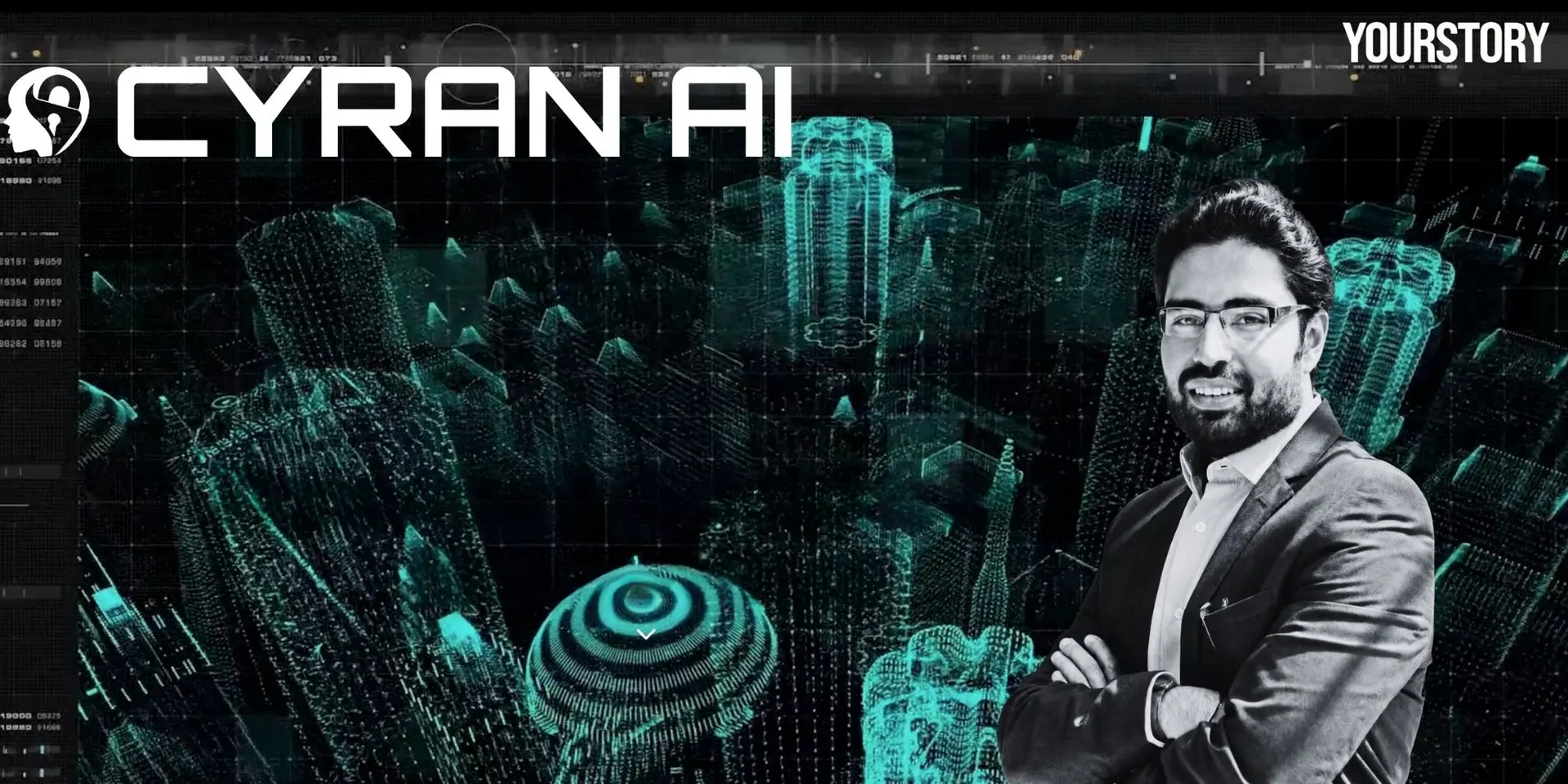

Most AI run somewhere else. A camera or a sensor collects data, sends it to a server, and waits for an answer to come back. That works until the connection is poor, the power budget is small, or the data cannot leave the site at all, which describes a great deal of defence, industrial and remote sensing work in India.
Running the model on the device instead solves those problems but creates a new one, which is that the hardware doing the computing has to be small enough and frugal enough to sit on a drone, a satellite payload or a factory sensor. That is a chip design problem before it is a software problem.
That is where Solutions comes in. The company was founded in 2018 as a spin-off from the non-volatile memory and neuromorphic hardware research group at IIT Delhi, led by Professor Manan Suri, who is its founder. It operates from the institute's Research and Innovation Park in Hauz Khas.
Computing where the data is
The research the company draws on is neuromorphic: hardware designed along principles borrowed from the brain, where memory and computation sit together rather than shuttling data between separate units. The efficiency gain matters most where power and space are constrained.
What Cyran sells is combined hardware and software rather than either alone. Its geospatial work processes imagery from aerial and satellite platforms, fusing data from multiple sensors to produce what it describes as real-time situational awareness. Its industrial line covers automated defect inspection and predictive maintenance. A third line sells AI skilling kits, including one called BUDDHI, into education.
The company describes its platform as carrying pre-trained models across more than 20 sensor types, deployable in cloud, edge or air-gapped environments, on purpose-built hardware with dedicated AI accelerators. It positions the result as a sovereign and interoperable stack, meaning capability that does not depend on foreign export permissions.
Suri is well known in the field independently of the company. He was named to MIT Technology Review's global list of 35 innovators under 35 in 2018, has published more than 85 papers, and worked at NXP Semiconductors in Belgium and CEA-LETI in France before returning to India.

BMC to use AI, drones and satellites to spot illegal buildings in Mumbai
Awards, an Army contract and a Safran agreement
The company's recognition has come largely through defence channels. It won the iDEX challenge in 2021 and the National Startup Technology Award the same year, and in 2022 received the Raksha Mantri's Award for Excellence in Defence and Aerospace in the startup category at DefExpo. It has since exhibited at the Indian DefSpace Symposium and been among the Indian companies shown at INDUS-X in Washington.
Defence trade press has reported that the Indian Army signed a contract with the company, as an iDEX winner, for the development of AI-based satellite imaging. No contract value or timeline has been made public.
The clearest external validation arrived in June 2026, when Safran Aircraft Engines announced an agreement with Cyran to develop AI solutions in aerospace and defence, covering manufacturing, maintenance, predictive analytics and operational efficiency. Safran confirmed it on its own channels. The company also signed an agreement with the Dutch neuromorphic chip firm Innatera at the same event.
What has not been disclosed is the money. Company databases record a single funding round from two investors with the amount undisclosed, and no revenue or customer figure is public yet.
(This story has been researched and compiled using publicly available information.)