



India's handloom doesn't need sympathy. It needs better positioning
Young weavers are not walking away from the craft. They are walking away from an income that cannot be relied on.

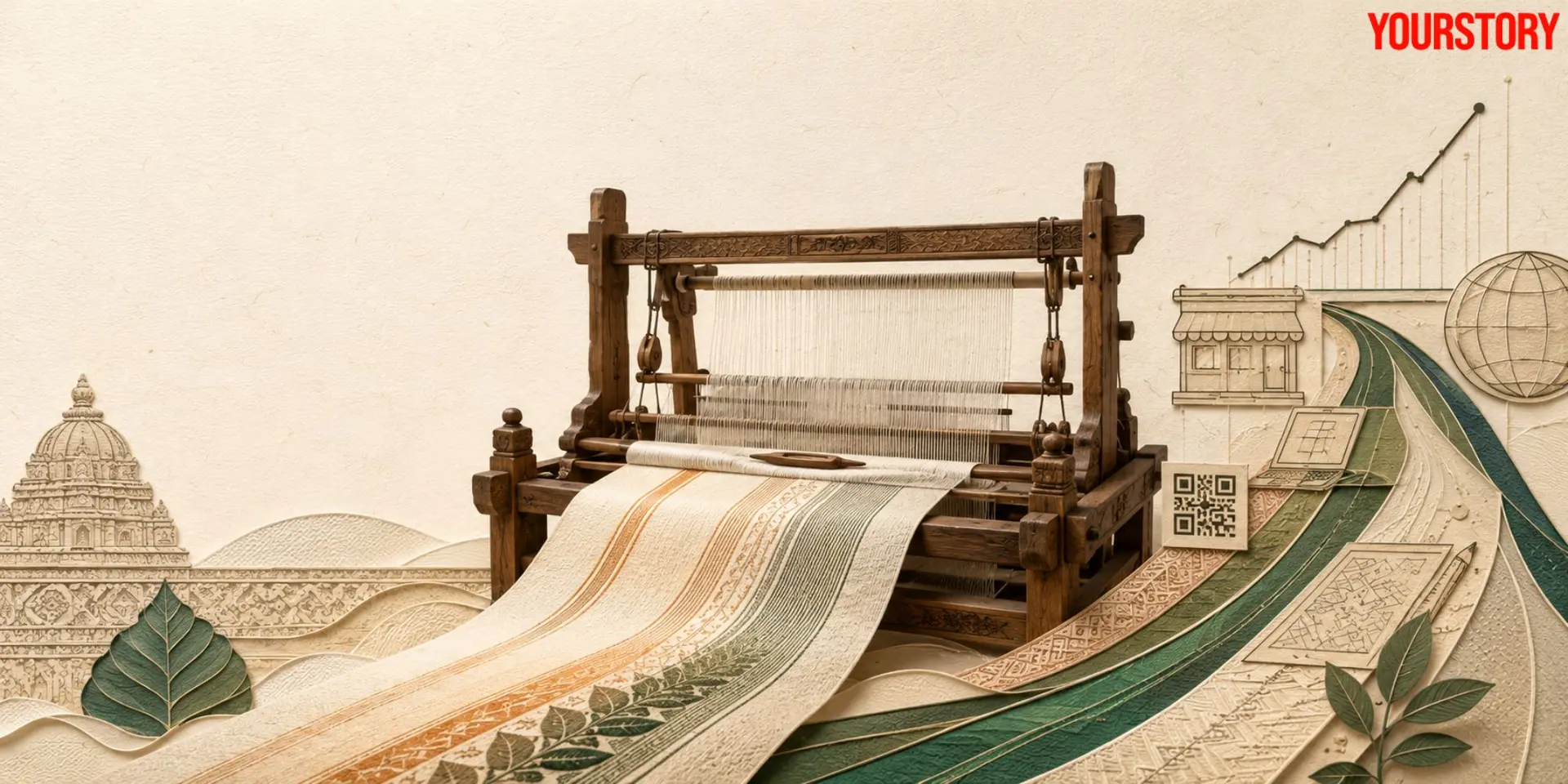

Whenever we discuss the crisis in India's handloom sector, one question comes up repeatedly: why are young weavers leaving their traditional profession?
After speaking with many weaving families in Bhagalpur, I found the answer straightforward. Young people are not rejecting weaving because they dislike the craft. They are leaving because weaving no longer guarantees a stable livelihood.
One weaver told me his son works as a tailor in Mumbai, and at least earns a regular income. I heard versions of the same story from family after family. Parents now actively encourage their children to look for work outside the sector, because they want financial security for them.
This is perhaps the biggest challenge facing Indian handloom today. Many people believe powerlooms are destroying handloom. I take a different view. The biggest challenge is not powerlooms. It is positioning.
Competing on the wrong terms
Powerloom and handloom serve different purposes. Instead of competing with powerloom on price or volume, handloom should compete on what machines cannot replicate: authenticity, craftsmanship, cultural heritage, sustainability and the human story behind the cloth.
Around the world, consumers are increasingly choosing products that are handmade, sustainable and traceable. India already possesses all three strengths in abundance. What it often fails to do is communicate them.
Handloom is not simply fabric. It carries centuries of knowledge, indigenous craftsmanship, local materials, cultural identity and human creativity. The sector should therefore be positioned around four pillars: heritage, sustainability, design and craftsmanship. Told well, that story moves a handwoven product from being just another textile to something carrying emotional, cultural and environmental value.
That said, handloom should not become the preserve of luxury buyers alone. The future lies in three segments working together: affordable everyday handloom, contemporary mid-premium handloom, and luxury and heritage handloom. This allows far wider consumer participation while still ensuring higher incomes for the artisans producing premium collections.
We are counting the wrong things
India is one of the very few countries where millions of people still weave on traditional handlooms. The Fourth All India Handloom Census 2019-20 recorded around 31.45 lakh households engaged in handloom activity and 35.22 lakh weavers and allied workers, making this one of the largest livelihood-providing sectors after agriculture.
But an important question remains: How many of these weavers are actively weaving today?
Counting registered weavers is not enough. We should be measuring how many are weaving full-time, how many young weavers are entering the profession, what a weaver actually earns in a year, how many design-led products reach the market, how exports are growing, and how many weaving enterprises are led by women.
These are the indicators that reveal the true health of the sector. Concern about the declining participation of young weavers has been raised repeatedly in policy discussions across the handloom ecosystem. It is not a challenge that government schemes alone can solve.
The Weaver Service Centres already exist
There is an important point that gets lost in most discussions about design and market linkage. India does not need to build this capability from scratch. We already have Weaver Service Centres across the country, with technical infrastructure and design expertise sitting inside them.
What is needed is a strong will, sustained interest and strict target-based accountability for work on design and product development. A centre that is measured on the products it takes to market, the orders it helps convert and the change in artisan earnings will behave differently from one that is not measured at all. The institution is in place. The mandate needs sharpening.
The next phase must be entrepreneurial
The next phase of India's handloom journey has to be driven by entrepreneurship. Startup India has an opportunity to create a new generation of craft-based startups that adopt weaving clusters, provide design support, improve branding, introduce contemporary product development, build digital sales channels and connect artisans directly with domestic and international markets.
Imagine hundreds of startups working with hundreds of clusters, not replacing traditional knowledge but strengthening it. Every successful startup generates orders. Orders generate income. Income restores dignity. And dignity is what encourages young people to stay at the loom.
Technology should be an enabler here, not a replacement. Artificial intelligence, digital design tools, QR-based traceability and digital product passports can all improve transparency, customer trust and global competitiveness while leaving the handmade nature of production entirely intact.
Most importantly, design must become a continuous process. Design schools, startups, artisans and industry should be working together throughout the year, rather than collaborating only around exhibitions or government projects. Contemporary design that is informed by market trends while respecting tradition is essential if handloom is to stay relevant to the next generation of buyers.
Preserve the heritage. Build the business.
India does not need to choose between preserving heritage and building modern businesses. It can do both. When innovation meets craftsmanship, when design meets tradition, and when entrepreneurship meets artisanship, handloom stops being a welfare sector and becomes a globally competitive creative industry.
The future of Indian handloom will not be secured by subsidies alone. It will be secured by better design, stronger branding, market access, entrepreneurship, technology and fair value for the people whose hands keep this heritage alive.
If we build an ecosystem where weaving is respected, profitable and aspirational, the next generation will not abandon the loom. They will proudly inherit it.
Shashank Kumar Pandey is the co-founder of Bhasha Bharat, a handcrafted saree venture. Views expressed are the author's own.
Edited by Adith Charlie