



Indigotex has made denim from wool that keeps you warm and skips the water
The IIT Delhi spinout blends indigo-dyed merino wool with cotton, lyocell and hemp, and is developing cold-weather fabrics for the Indian Army.


Denim is cotton, and cotton is thirsty. Dyeing a pair of jeans indigo conventionally takes many washes and a great deal of water, and the industry's water use is among the reasons textiles draw environmental scrutiny. Synthetic alternatives solve the water problem and create another, shedding microplastics with every wash.
There is also a seasonal limit. Denim is not a warm fabric, which is why the world's most universal garment is largely a fair-weather one, and why cold-country wardrobes fall back on wool.
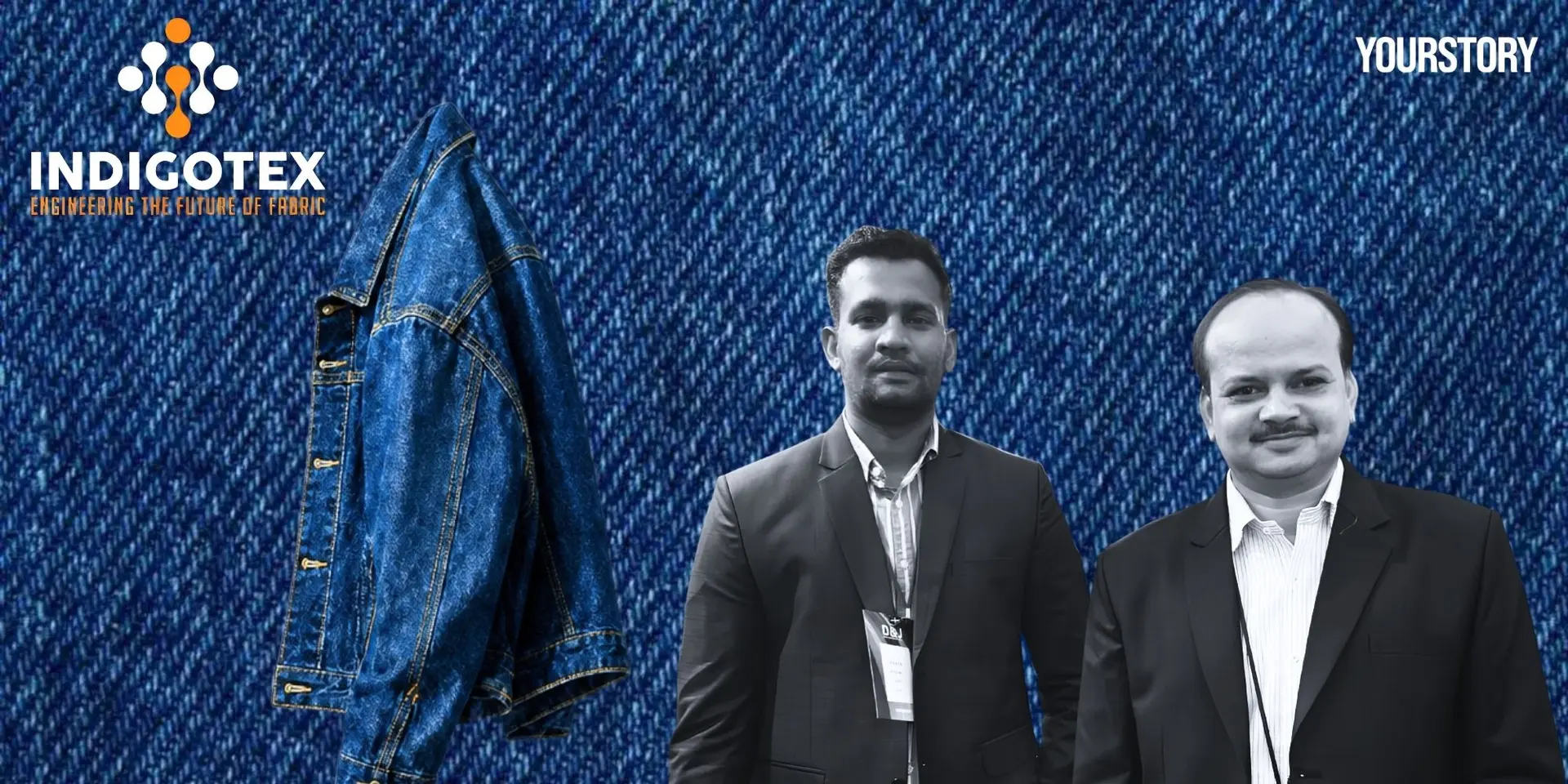
Indigotex was founded in 2024 to put the two together. Emerging from IIT Delhi, where the research began, the company is led by Satendra Singh and its first product is IndiWool Denim, a fabric blending indigo-dyed merino wool with biodegradable fibres including cotton, lyocell and hemp.
Singh's own route into it was not the usual one. He has described starting from farming in a village in Hajipur before the work that led to the company, and Indigotex now presents itself as combining textile research with Indian craft manufacturing.
Wool that takes indigo and survives a wash
The technical difficulty is that wool and indigo do not naturally get along, and wool is not usually washable in the machine. The company describes a patented process for dyeing wool with indigo, and says the resulting fabric can go through a domestic washing machine, which is what makes it usable as everyday denim rather than a specialist textile.
Its water claim is the strongest one it makes. The company says the process delivers complete water savings against conventional indigo dyeing, and describes waterless wool finishing as its core technology. That figure is the company's own, and no independent verification was located.
Singh has said merino yarn costs between Rs 1,500 and Rs 1,800 a kilogram against Rs 120 to Rs 150 for cotton, which puts the fabric firmly at the premium end. The company has said it is not targeting the Indian mass market at this stage and is aiming at colder markets in Europe, with lower-wool blends planned for warmer climates.
Beyond fashion, the company is working on protective and extreme-cold textiles. Singh has described developing lightweight breathable fabrics rated to minus 30 degrees for the Indian Army, which he says currently uses imported fabric in Siachen.

Institutional backing, and a market to build
In March 2026, the Small Industries Development Bank of India and the Foundation for Innovation and Technology Transfer, IIT Delhi's industry interface, jointly invested in the company. The amount was not disclosed. The company has also said it is funded by the Ministry of Textiles.
Recognition has come from the startup ecosystem. Indigotex won at Startup Mahakumbh 2025, has been selected for national deep-technology cohorts, and was among the Indian companies shown at Bharat Innovates in Nice, France, in June 2026, where it exhibited IndiWool Denim.
Its stated plan is a range of nine fabric variants with wool content between 60% and 100%, followed by lower-wool blends, and expansion into automotive textiles and other biodegradable fibres. The company also lists blankets and interior fabrics among the uses for a wool-rich material.
What the company has not disclosed is a customer, an order or a revenue figure. It has shown the fabric at trade exhibitions and at Lakme Fashion Week, and the response it reports is from buyers and textile professionals rather than from signed business.
(This story has been researched and compiled using publicly available information.)