



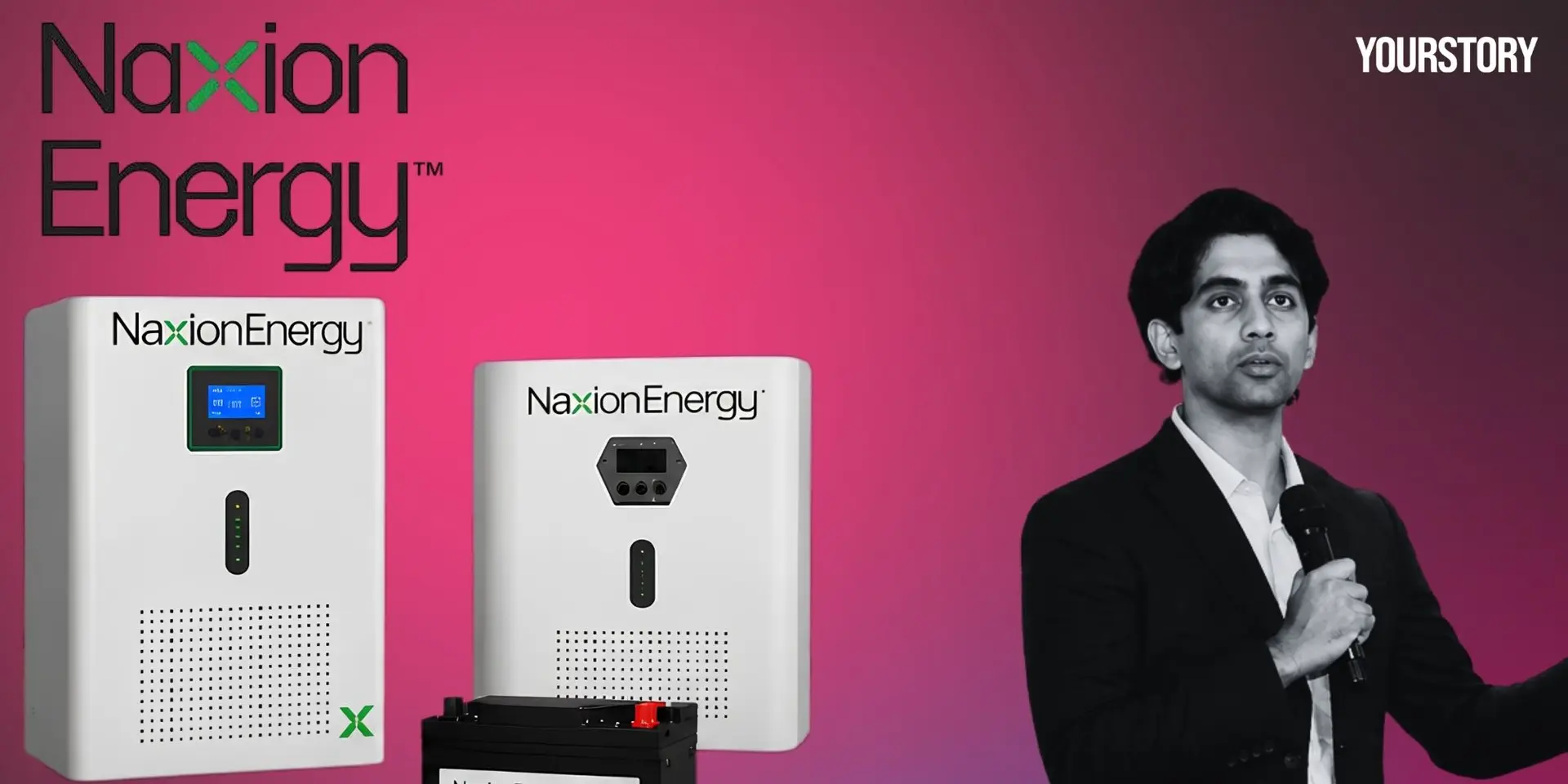
Naxion Energy builds sodium-ion storage systems that aim to replace lead-acid inverters and diesel generators
The Hyderabad-based company makes a battery, inverter and solar control in a single unit at its Coimbatore plant, for homes, businesses and industrial sites.


Most Indian homes and small businesses that need backup power use a lead-acid inverter battery. It is cheap, heavy, needs water topped up, corrodes, and only lasts a few years. Larger sites use a diesel generator, which is expensive to run and noisy enough that nobody wants it nearby.
Lithium is the obvious replacement but brings its own problems: the raw materials are imported, the price is set abroad, and the fire risk means installing a large lithium pack inside a building involves rules that a lead-acid battery does not attract.
is selling sodium as the answer. Formerly Sodion Energy and founded in 2024, the company is headquartered in Hyderabad with a manufacturing plant in Coimbatore, and makes sodium-ion battery packs and storage systems.
Sodium sits directly below lithium in the periodic table and behaves similarly enough to run a battery. It is abundant, it is cheap, and it does not depend on a supply chain concentrated in a handful of countries.
The trade-off is weight. Sodium cells hold less energy for their size, which rules them out of a phone and matters far less in a box bolted to a wall.
Battery, inverter and solar in one box
In December 2025, the company launched what it describes as India's first sodium-ion energy storage systems. The design puts the battery, the inverter and the solar charge controller into a single unit, in three sizes at 3.5 kW, 5 kW and 10 kW, with the battery expandable to double the capacity.
The chemistry is what the pitch rests on. Sodium-ion cells do not catch fire the way lithium can, which matters for something installed in a home or an enclosed commercial space, and they need no maintenance, which is the main irritation of lead-acid.
The company also claims a performance advantage that matters more in practice than energy density. It says the chemistry supports much higher charge and discharge rates than lead-acid or lithium, which allows the systems to run heavy inductive loads: air conditioners, compressors, pumps, and industrial equipment such as welding and cutting machines. Those are exactly the loads that defeat a conventional inverter battery.
Beyond storage, the company makes sodium-ion packs for mobility, industrial equipment, marine use and grid-scale installations, and says it intends to work with equipment manufacturers to build the chemistry into their products.
Rs 200 crore, and a cell plant to build
The company has raised Rs 25 crore. Its Coimbatore plant has an annual sodium-ion pack production capacity of 1.5 gigawatt hours.
The announced expansion is larger than the funding. Abishek Reddy, the CEO of Naxion Energy India, has said the company will invest Rs 200 crore towards a pilot sodium-ion cell manufacturing plant of 500 megawatt-hours by the end of December 2026, and a 1 gigawatt-hour battery pack assembly plant in Hyderabad, alongside a 50% increase in headcount.
That distinction matters. Making battery packs means buying cells and assembling them into a system; making cells is the harder and more capital-intensive step, and is the one India has almost none of. The Rs 200 crore is a stated investment plan rather than simply money raised.
The launch was attended by G Satheesh Reddy, the former chairman of DRDO and scientific adviser to the defence minister, who spoke about sodium-ion in terms of material constraints and energy security. No customer, order or revenue figure has been made public.
(This story has been researched and compiled using publicly available information.)