



Omspace is building a reusable rocket in Ahmedabad for small satellite launches
The Gujarat-based company is developing Infinity-One, a launch vehicle for nano and small satellites, and runs a space education programme alongside the engineering work.

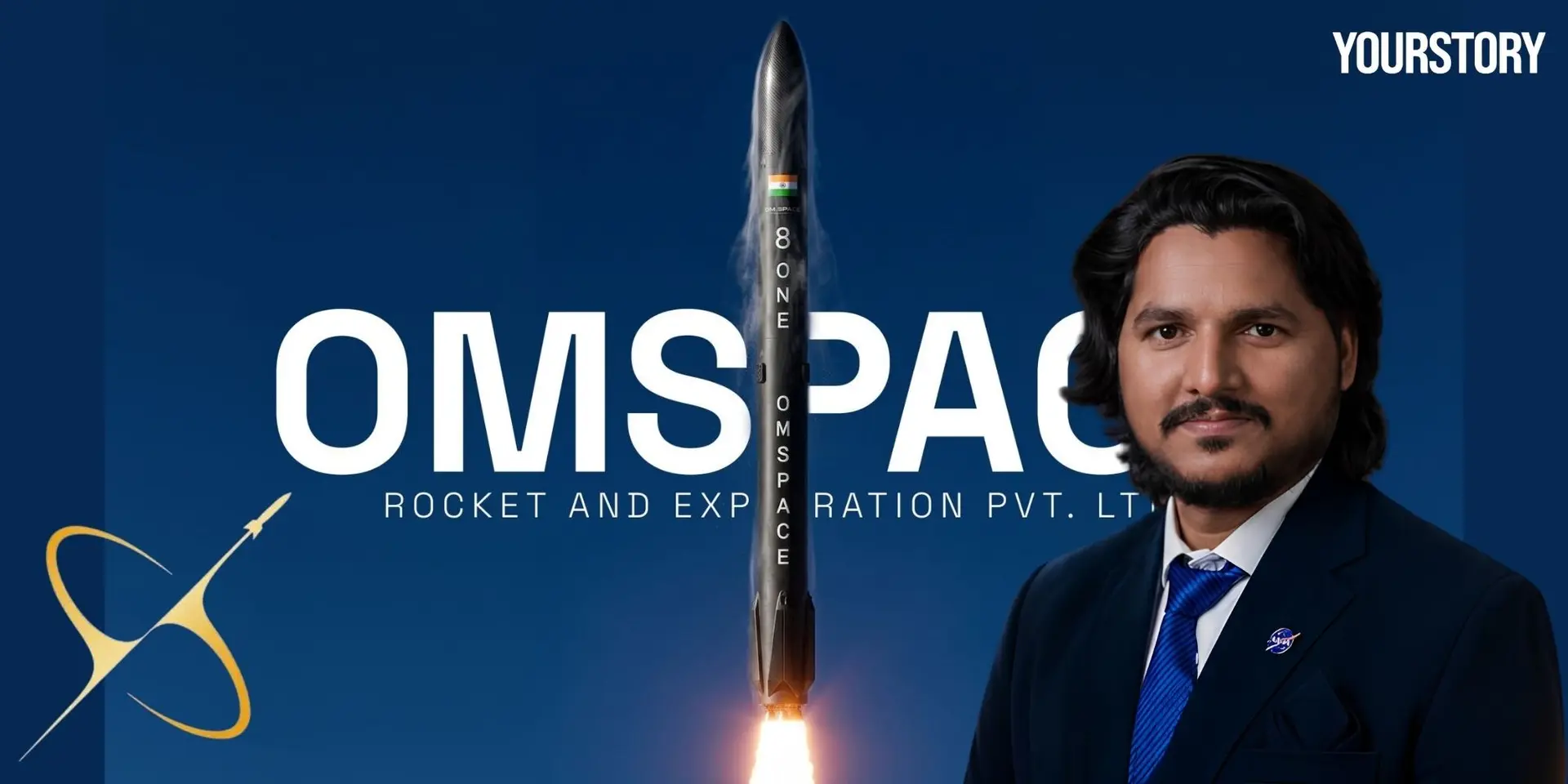

The small satellite market has grown fast. Operators building CubeSats and nanosatellites either wait for a rideshare slot on somebody else's rocket, going where that rocket is going, or pay for a dedicated launch that few companies can supply. India holds a small share of that launch market despite ISRO's record.
was incorporated in Ahmedabad in June 2020 to compete for it. It was founded by Ravindra Raj B M and is recognised by the Department for Promotion of Industry and Internal Trade as a startup in aerospace and defence.
It is one of a small group of Indian private companies targeting the smaller payload sizes ISRO does not prioritise. Its vehicle is called Infinity-One, designed as a reusable rocket for nano and small satellites. The company describes launching within 24 hours from a mobile launch platform, which would suit customers who need a specific orbit at a specific time rather than a scheduled rideshare.
An electric pump and a workshop programme
The engine is the part the company points to. It has said it is developing India's first electric-pump-fed rocket engine, a design that drives the propellant pumps with electric motors and batteries rather than a gas turbine. The approach trades some performance for simplicity, and has been used on small launch vehicles elsewhere.
Manufacturing is largely in-house. The company lists a composites facility, additive manufacturing, five-axis machining and filament winding, the last being how composite pressure vessels and rocket bodies are wound from fibre.
Alongside the engineering, the startup operates an educational programme called Youngspace. The startup reports it has run more than 200 workshops for over 55,000 participants across India and the UAE, and it is building a network of aerospace education franchises. That side generates revenue while the vehicle is in development.
The company also holds membership of the International Astronautical Federation and has exhibited at trade events including a space business expo in Tokyo in May 2026. It has said it supports customers in North America, Australia and Europe, and runs an international arm in the UAE.
Its early collaborations included a tie-up with Prometheus, a UK company, in October 2020, alongside partnerships with Indian institutes. Working with universities is common among small launch companies, which need test facilities they cannot afford to build.

Rs 25 crore, and a vehicle still on the ground
Omspace raised Rs 25 crore, about $3 million, in a pre-seed round announced in July 2025, led by the family office of a Dubai-based investor named in coverage as Surya. The deal was facilitated by Bestvantage Investments, an advisory firm.
Coverage of the round set out the commercial case: rocket costs projected at $3 million to $4 million, launch revenue expected to reach $2 million a year by the fourth year of operations, and a stated goal of lifting India's share of the small satellite launch market from about 2% to 15% by 2035.
Corporate filings record revenue under Rs 10 crore for the year ending March 2025 and a team of about 35, with paid-up capital of Rs 1.35 lakh. The education programme is the likeliest source of that revenue, since the vehicle has not flown.
Five years after incorporation and a year after the round, no orbital flight, formal engine qualification or customer contract has been made public.
(This story has been researched and compiled using publicly available information.)