



Xera Robotics builds modular underwater robots for inspecting dams, ports and pipelines
The Chennai-based company makes remotely operated marine vehicles that can be reconfigured for different jobs and also builds electric propulsion for boats.

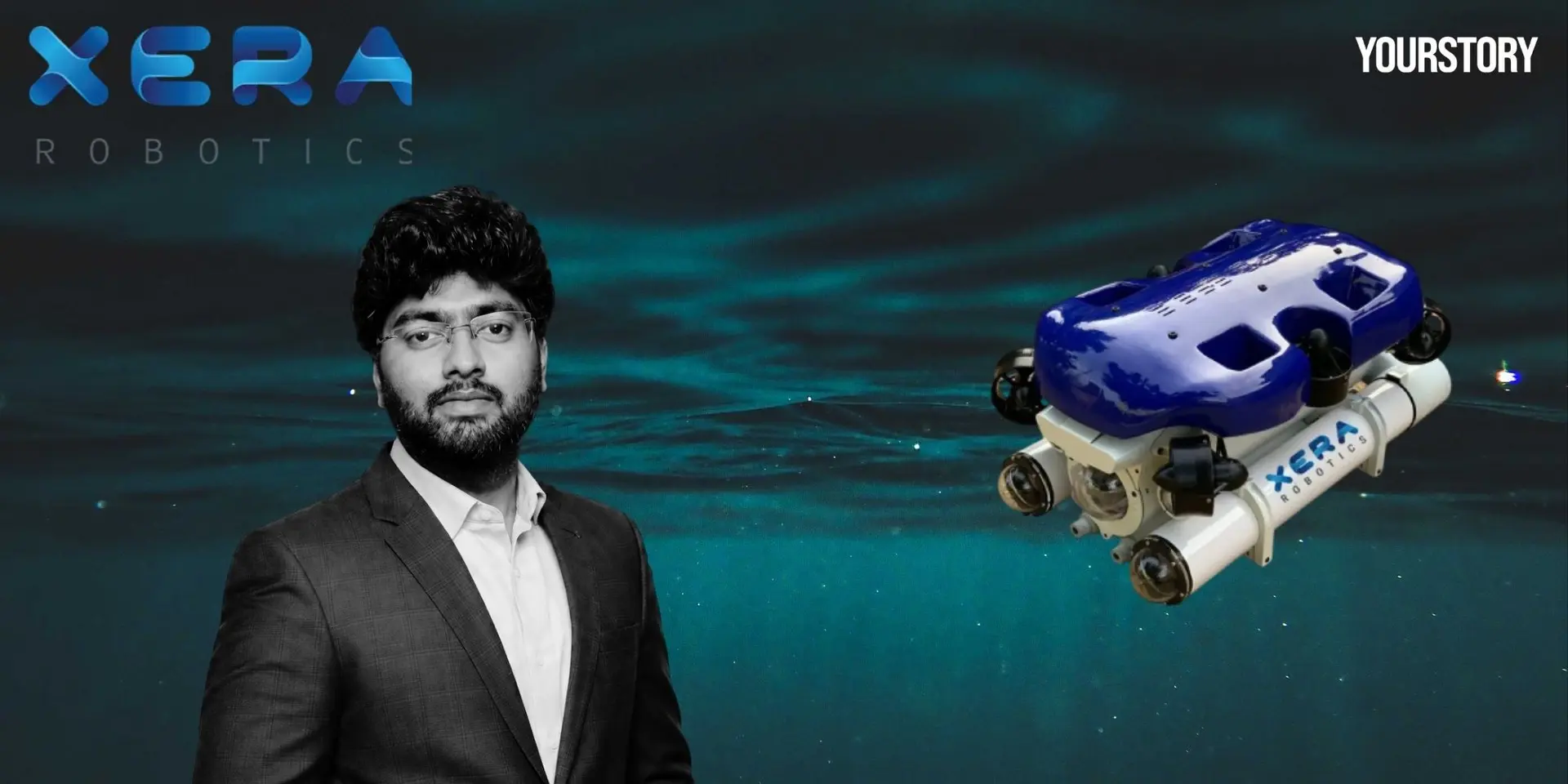

Underwater inspection is a job with many variants and one common problem. Checking a dam wall, a ship's hull, a harbour approach and an oil storage tank are different tasks needing different sensors, and buying a purpose-built robot for each is out of reach for most of the organisations that need the work done.
The alternative is one machine that transforms. A modular robot takes different payloads for different jobs, so the same vehicle inspects a bridge pier one week and monitors a reef the next. The engineering is harder, since a platform that must accept many configurations cannot be optimised for any one of them, but the economics are better for a buyer who inspects occasionally.
Xera Robotics builds to that principle. Founded in Chennai by Mohana Krishnan Ethirajulu and Muni Venkata Krishna Gopinath, the company describes itself as making unmanned systems, with underwater robots as its main line.
Chennai has become an unlikely centre for this work. The city sits on a coast with ports, shipyards and offshore infrastructure within reach, and it now hosts several marine robotics companies competing for the same inspection contracts.
DeepDive and a boat motor
The flagship is the DeepDive series, and specifically ROMAR, which stands for Remotely Operated Marine Robot. The company describes a modular platform with interchangeable modules, position hold to keep the vehicle steady while it inspects, obstacle avoidance, and full 360-degree rotation.
Position hold is the least obvious of those and the most useful. Water moves, and a robot drifting on a current cannot hold a camera steady against a structure long enough to see a crack, so the ability to fix itself in place is what separates an inspection tool from a machine that takes pictures.
The uses, according to the company, run across infrastructure, dams, bridges and pipelines, defence work such as harbour security and surveillance, environmental monitoring including reef and pollution work, and industrial inspection in oil and gas, shipping and power plants. It has also described inspecting storage tanks, which is a confined and hazardous space where sending a person is the option nobody wants.
Alongside the robots, it makes electric propulsion systems for boat owners, which share the underwater motor and control engineering with the vehicles and give the company a second product from the same expertise.
Small money, and public backers
The funding record is modest, and its details are limited. Xera Robotics has raised across two rounds, neither disclosed: a grant from StartupTN, the Tamil Nadu government's startup agency, in November 2022, and a seed round in July 2025. Databases include IIMK LIVE, the incubator at IIM Kozhikode, and Cochin Shipyard among its investors.
Recognition has come from the state. The company received an award from Tamil Nadu's MSME minister at the Global Investors Meet and has exhibited at the state's startup convention in Coimbatore. Tamil Nadu has been among the more active state governments in backing hardware startups directly, through grants and through its own startup agency.
What the public record does not show is scale. Corporate filings record paid-up capital of Rs 1.11 lakh, and no customer, contract or delivery has been announced. The company's main website is a placeholder saying it is coming soon.
(This story has been researched and compiled using publicly available information.)