



Four Indian startups in Google DeepMind Accelerator; What happens when AI makes thinking cheap? An IISc professor weighs in
The four Indian startups selected for the inaugural cohort are applying AI, satellite intelligence, remote sensing and drones to challenges ranging from sustainable agriculture and agroforestry to carbon removal and biodiversity.


Hello,
Festive-season preparations are in full swing across India’s e-commerce space. Amazon said it has expanded its operations network across the country, launching 20 fulfilment centres, six sort centres and 150 last-mile delivery stations. All six new sort centres are situated in Chikkaballapur, Hassan, Meerut, Ramanagar, Raipur and Varanasi, while seven of the 20 new fulfilment centres are coming up in non-metro cities.
As concerns grow over increasingly powerful AI systems, Microsoft has laid down ground rules. On Monday, the tech giant unveiled an internal draft code of conduct for its AI. The code comes on the heels of warnings from Anthropic CEO Dario Amodei urging a slowdown in frontier model development, alongside safety-team resignations over extinction risks.
Microsoft’s proposed rules directly target these alignment fears: its AI must never resist a shutdown order, must communicate transparently, and must treat any policy breach as a total system failure.
Meanwhile, China on Monday pushed back on calls by US AI executives for companies to slow down the development of the technology, CNBC reported.
In today’s newsletter, we will talk about
- Four Indian startups in Google DeepMind Accelerator
- What happens when AI makes thinking cheap? An IISc professor weighs in
Here’s your trivia for today: What tech company developed the first commercially available mouse and early graphical user interface (GUI) at its PARC research facility?
Innovation
Four Indian startups picked for Google DeepMind Accelerator
Four Indian climate-tech startups, Terrastack, Varaha Climate, Farmers for Forests, and Climitra Carbon, have been selected for the inaugural Google DeepMind Accelerator: AI for the Planet (APAC) cohort. They are among 16 regional organizations chosen to receive three months of technical support, access to Google's AI stack, and expert mentorship to tackle pressing environmental challenges using frontier artificial intelligence.
Key takeaways:
- The four Indian startups selected for the inaugural cohort are applying AI, satellite intelligence, remote sensing and drones to challenges ranging from sustainable agriculture and agroforestry to carbon removal and biodiversity.
- Terrastack combines satellite and agronomic data to provide plot-level land intelligence for smallholder farmers while Varaha Climate empowers smallholder farmers to earn carbon credits by verifying regenerative agriculture and carbon removal using remote sensing and AI.
- Farmers for Forests is using AI-powered drones to turn smallholder agroforestry into measurable carbon and biodiversity action at scale, bringing technology to the measurement and monitoring needed to expand nature-based climate solutions.
Technology
What happens when AI makes thinking cheap? An IISc professor weighs in
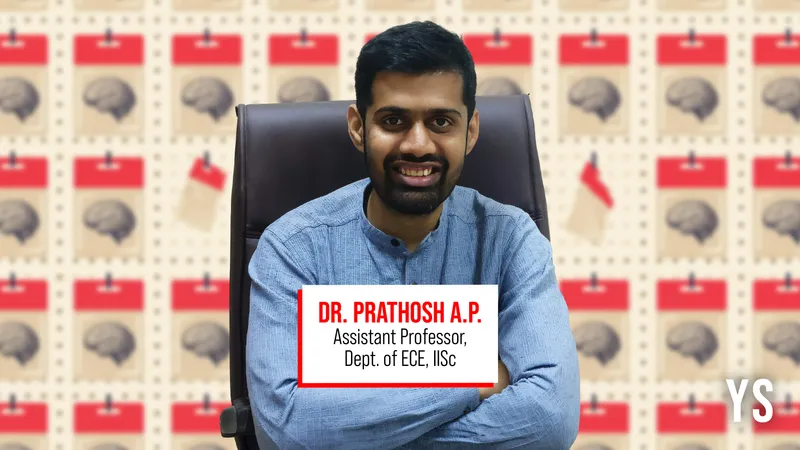
As AI commoditises human intellect, Dr. Pratosh, an IISc faculty member believes society faces a profound shift across employment, education, and human purpose. When raw thinking becomes cheap, fast, and mass-produced, the economic value of routine knowledge work could fall sharply, widening wealth inequality while forcing educational institutions and workers to pivot toward uniquely human, real-world problem-solving.
Thinking ahead:
- Productivity gains from AI risk concentrating wealth exclusively among chip, algorithm, and data centre owners, creating severe economic disruption for economies that rely heavily on knowledge workers.
- With AI offering patient, personalized instruction, traditional universities can no longer survive on mere information delivery; they must shift toward fostering human connection, collaboration, and community.
- Rather than competing with AI on formulaic or repetitive cognitive work, human efforts must pivot toward solving complex physical, scientific, and societal challenges.
News & updates
- BYD’s Europe bet: Chinese electric vehicle maker BYD plans to launch its first truck in Europe next year and ultimately manufacture trucks locally, a senior executive said at the IAA trade fair in Hanover.
- Recruitment: Coforge, the IT services firm, has engaged global executive search firm Egon Zehnder to recruit two additional independent directors, interim Chairperson Vivek Sharma said on an investor call on Monday. The development comes days after its Chairman and Nomination and Remuneration Committee head quit after an internal audit finding.
What tech company developed the first commercially available mouse and early graphical user interface (GUI) at its PARC research facility?
Answer: Xerox