



Reports of our death are greatly exaggerated, Rajendran Dandapani tells audience at DevSparks Chennai
Zoho Corporation Director Rajendran Dandapani said AI may take over more of the work of writing code, but developers will increasingly need to focus on deciding what to build, directing AI systems, and judging what they produce.

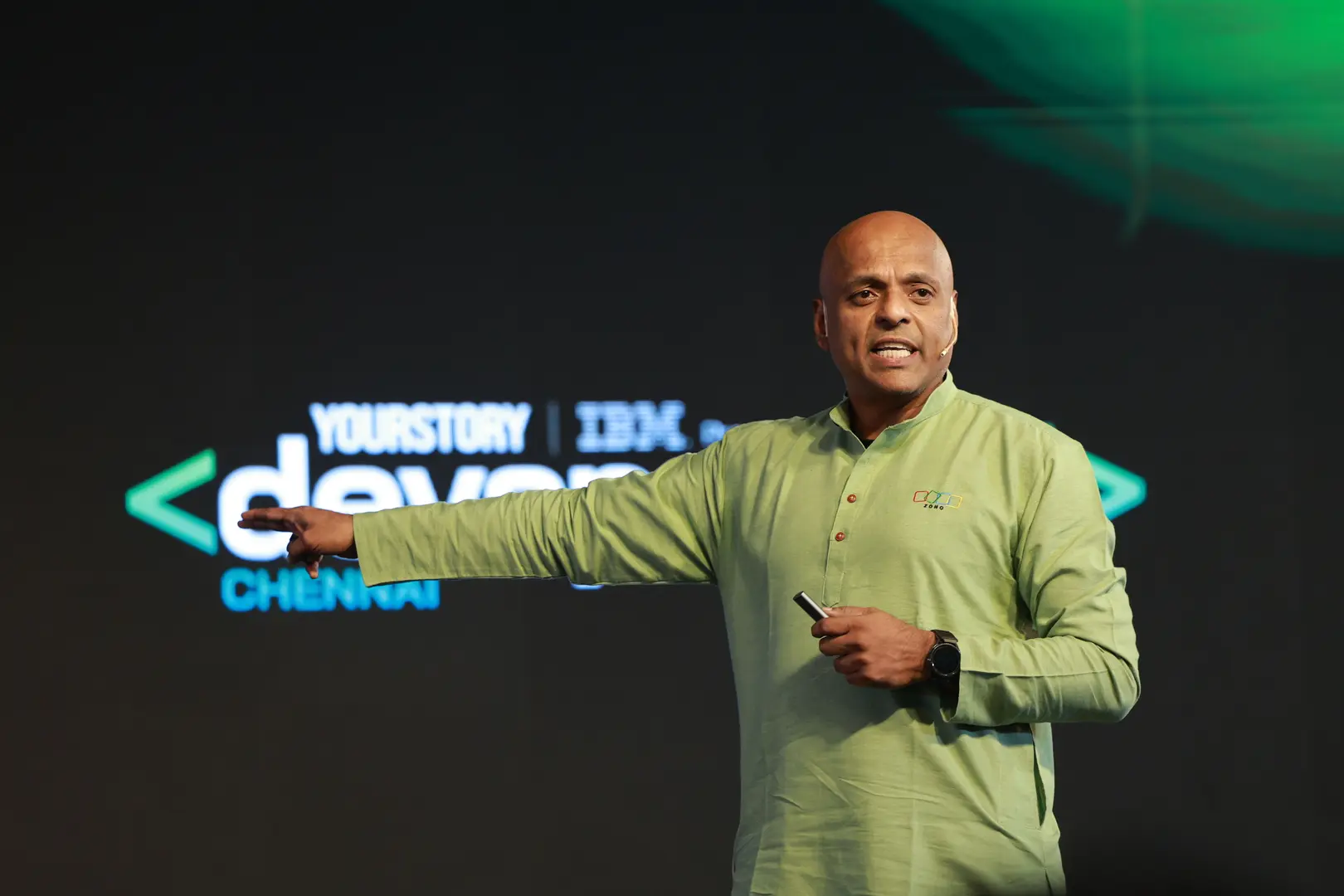

For a developer, there is something unsettling about watching an AI agent write code. It might not be perfect, but it is often good enough to raise an uncomfortable question: if machines can increasingly do the work, what exactly is the developer supposed to do?
That was the question Rajendran Dandapani, Director at Zoho Corporation, posed to the audience at DevSparks Chennai in his opening session, titled ‘The Developer is Dead. Long Live the Developer’. Despite the ominous title, his argument was less about the disappearance of developers and more about the changing nature of their work.
“Reports of our death are greatly exaggerated,” Dandapani said, borrowing Steve Jobs’ famous line, which in turn was an adaptation of Mark Twain’s, to frame the discussion.

Every technology shift changes the job
The anxiety surrounding AI-assisted development, he suggested, is not entirely new. In 1957, when John Backus introduced FORTRAN and the compiler, programmers worried that machines would produce inefficient code and that people who did not understand the underlying hardware would be able to write software.
Dandapani pointed out that similar concerns are being echoed today. Developers argue that AI-generated code may be inefficient, consume costly tokens and allow people without traditional programming expertise to build software, a practice often called “vibecoding”.
“But technological efficiency does not always mean less work. Sometimes it makes a previously expensive activity cheap enough that far more people begin doing it,” he said.
Dandapani referred to the Jevons paradox, which describes how improvements in efficiency can actually increase consumption of a resource. More efficient steam engines, for instance, did not eliminate the use of coal. Similarly, making software easier to build could expand the number of people and organizations building it.
“We are not seeing fewer developers. We are seeing a plethora, a Cambrian explosion. Almost everyone wants to build an app now,” he said.

From writing code to deciding what should be built
Dandapani feels the bigger question is what happens when writing code stops being the main bottleneck.
He described this as another step in the evolution of the developer’s role. As AI becomes capable of producing software, developers may move from being primarily authors of code to becoming editors, directors, and judges of what machines create.
“If everything can be built today, you need not worry about how to build but what to build. That is the question,” he said.
That puts a premium on something AI does not automatically provide: taste. Dandapani used the idea of a “taste gap” to describe the distance between what someone creates and what they know to be good.
Developers traditionally build technical skill and judgement together, learning over years to distinguish good software from bad software. AI can disrupt that process by producing impressive results before the person using it has developed the judgement to properly evaluate them.
“The problem with AI is that it has given us awesomeness without giving us taste,” Dandapani said.
His prescription was to use the time saved by AI differently. If a developer can complete a task 10X faster, the additional time should not simply be spent generating 10X as much code. It should be spent understanding, judging and improving what AI has produced.
“If AI is doing your job 10X faster, spend nine-tenths of the time understanding, judging, editing, discerning, and discovering,” he said.
There is another consequence to this shift that companies will have to contend with. If AI takes over much of the work traditionally given to junior developers, organizations may hire fewer entry-level engineers today. But this could also weaken the pipeline that produces experienced developers tomorrow.
“The senior is the person who has struggled as a junior,” said Dandapani, pointing to the importance of learning through customers, company culture, and the specific problems an organization is trying to solve.
The developer, he assured the audience, may not be disappearing so much as moving up the stack. Less time could be spent translating instructions into code, and more time deciding what deserves to be built, directing AI systems and determining whether what they produce is worth shipping.
“The code may increasingly belong to the machine, but the judgement around it remains human,” Dandapani said before exiting the stage.
Edited by Teja Lele