



DevSparks Chennai returns: Explore AI for the physical world, manufacturing, and deeptech
DevSparks returns to Chennai on September 12, bringing together developers, tech leaders, startups, and enterprises to examine the technologies shaping deeptech, infrastructure, and manufacturing.

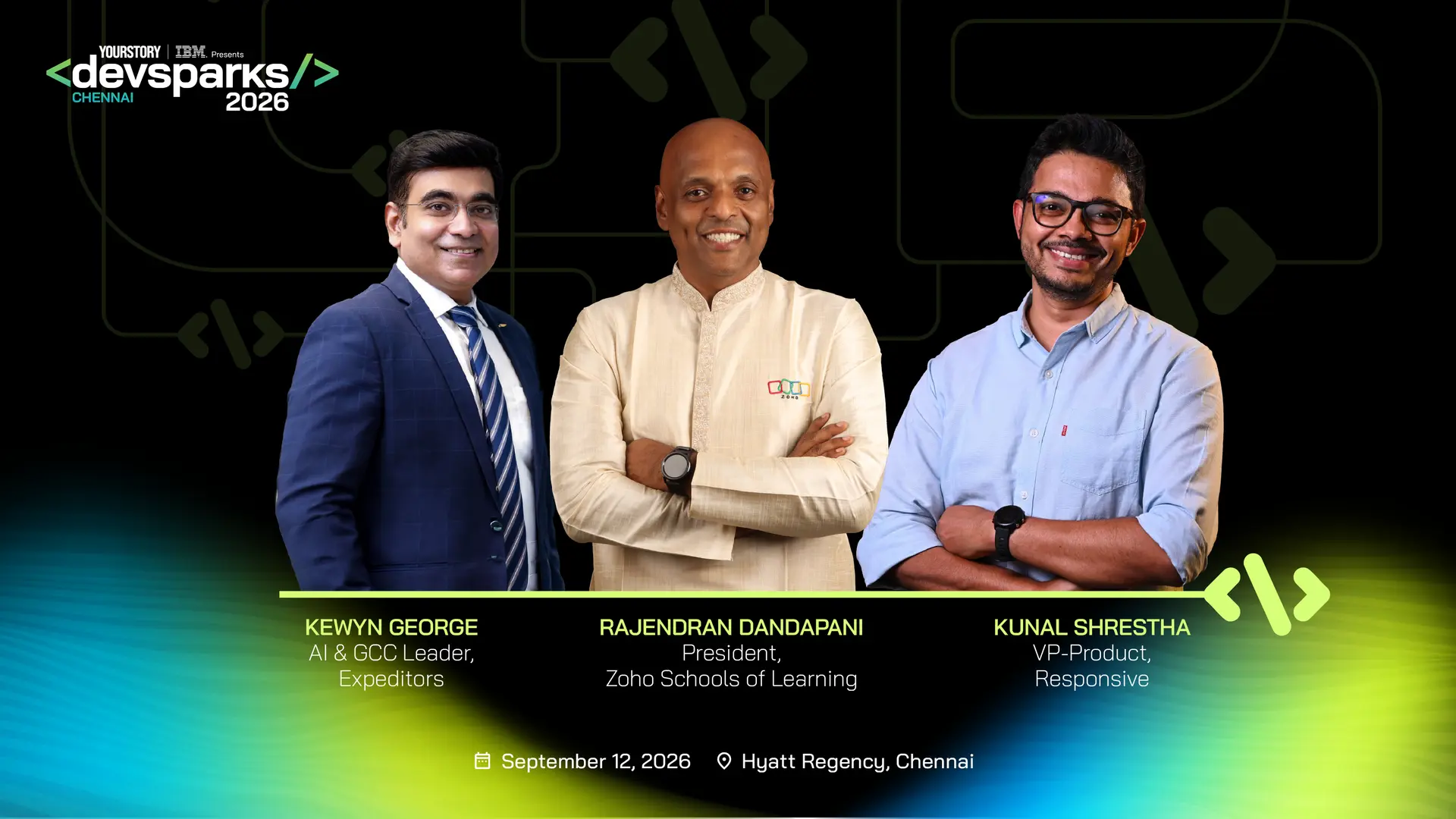

After a successful edition in Hyderabad in August, DevSparks 2026 is heading to Chennai on September 12. The second edition of the summit in the city will bring together developers, technology leaders, startups, and enterprises for a day of technical deep dives and conversations around the technologies shaping the next phase of development.
The event will be held at Hyatt Regency, Chennai, with more than 500 developers expected to attend.
Click here to register for DevSparks Chennai 2026
What to expect from DevSparks Chennai
The Chennai edition will explore how developers trained in AI can apply that knowledge to the city’s growing deeptech ecosystem.
More than 20 speakers will lead technical deep dives and workshops covering AI for the physical world, building AI for manufacturing, Edge AI, AI in automation, semiconductors, AI in robotics, and building India’s indigenous AI stack.
The speakers at the event include Zoho Schools of Learning President Rajendran Dandapani, VP (Product) at Responsive Kunal Shrestha, and AI-GCC Leader at Expeditors Kewyn George.
Dandapani will offer insights into building software at scale and rethinking technology and talent development, while Shrestha will explore practical enterprise-AI product leadership — invaluable to the tech summit's largely developer audience. George will draw on his experience leading enterprise AI and GCC initiatives to teach the young builders of tomorrow how to transform and innovate large technology organisations.
The wider DevSparks Chennai programme will also examine how AI can be integrated into sectoral use cases, including manufacturing, as well as Edge AI and IoT, where intelligence moves closer to devices and networks.
The city where deeptech meets infrastructure
Chennai has emerged as a key centre for taking deeptech startups from ideas to tangible infrastructure. The ecosystem spans sectors including spacetech, electric vehicles, and quantum cybersecurity, rather than being concentrated around a single industry.
One of the key enablers is the IIT Madras Incubation Cell. As of April 2026, the incubation cell had crossed an important landmark of more than 500 deeptech startups. Some of the biggest names include Agnikul Cosmos, The ePlane Company, Ather Energy, and QNu Labs, among others.
It’s not just IIT Madras. The Tamil Nadu government is also pushing for deeptech scaling. Former Chief Minister MK Stalin had unveiled India’s first state-level Deep Tech Startup Policy (2025–26). The five-year initiative aims to mobilise Rs 100 crore to support 100 science- and IP-intensive startups, bridging the lab-to-market gap in areas such as AI, semiconductors, and spacetech.

A legacy of technological innovation
The city has a long history of technological innovation. It was a centre for some of the bigger enterprise software and SaaS companies, including Zoho, Freshworks, Chargebee, and Kissflow. The city’s technology base has also developed alongside a powerful industrial economy.
Widely known as the ‘Detroit of India’, Chennai has a deep concentration of automotive, electronics, and engineering companies. Global manufacturers including Hyundai, Daimler, and Foxconn have established significant operations across the Chennai region, creating a large talent pool in embedded systems, industrial automation, electronics, and advanced manufacturing.
The city is also developing a substantial enterprise technology and GCC presence, bringing together engineers working on global products and platforms across automotive, financial services, healthcare, and enterprise software. Its growing GCC ecosystem is bringing global AI teams into the region, strengthening Chennai’s role in India’s AI/ML ecosystem.
The result is a distinctive technology identity: an engineering-led ecosystem where software meets the physical economy. Its strengths in SaaS and enterprise technology are now being complemented by advances in AI, hardware, mobility, manufacturing, and deeptech.
As AI moves from the cloud into factories, vehicles, devices, and everyday businesses, Chennai’s mix of software and industrial expertise becomes increasingly relevant. DevSparks Chennai will bring these strands together, offering developers a closer look at the technologies shaping how India builds, deploys, and scales the next generation of software.
Edited by Teja Lele