


Anthropic hits $965B valuation, overtaking OpenAI after $65B funding round
Anthropic’s latest round comes a month after OpenAI closed its latest funding round with $122 billion in committed capital at a post-money valuation of $852 billion.

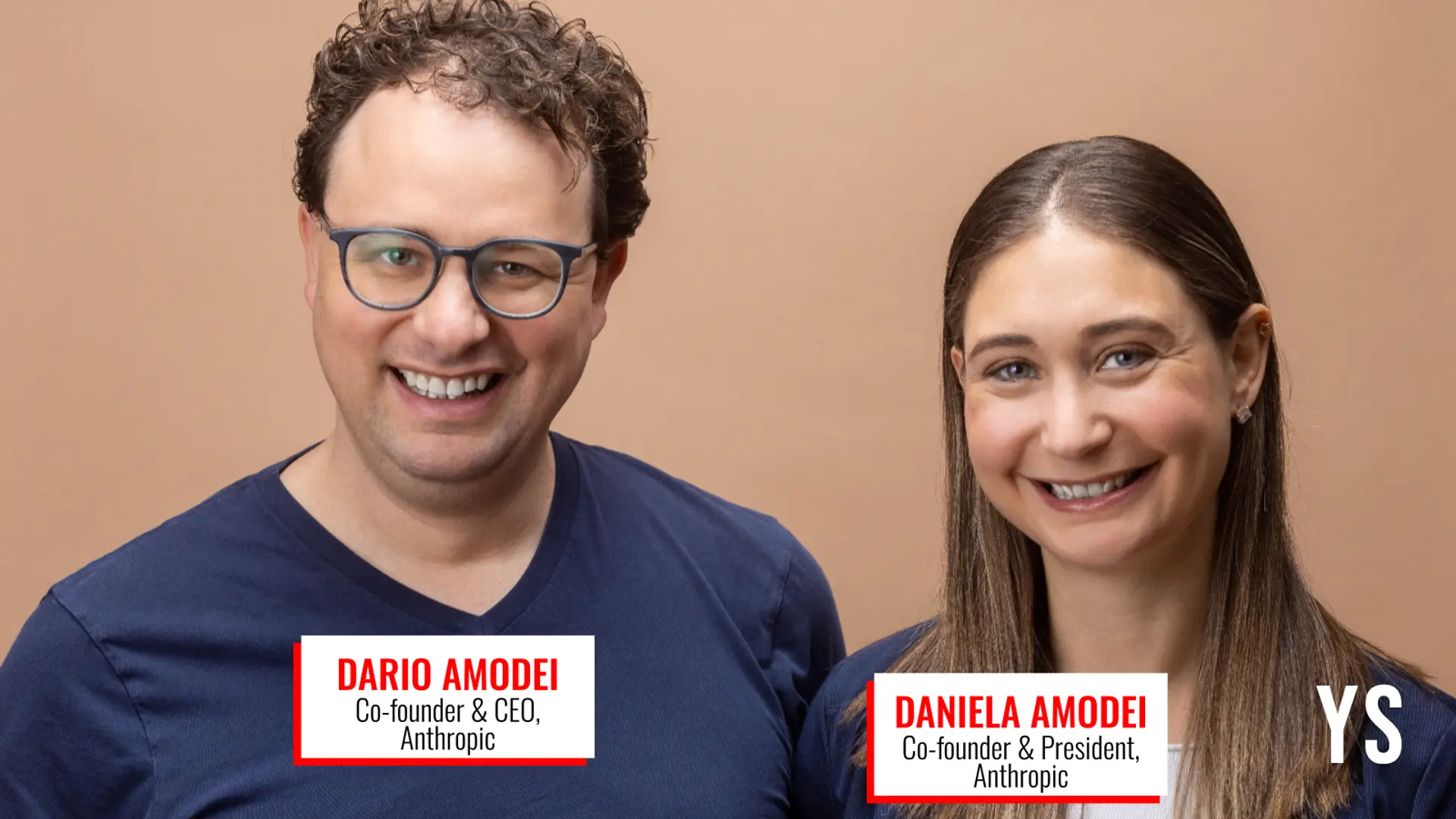

Anthropic has leapfrogged OpenAI in valuation for the first time after securing $65 billion in Series H funding at a post-money valuation of $965 billion, as the two rivals engage in a high-stakes, head-to-head battle for dominance in the frontier model market.
The Claude AI maker’s latest round comes a month after the ChatGPT maker closed its latest funding round with $122 billion in committed capital at a post-money valuation of $852 billion.
Anthropic’s Series H funding was led by Altimeter Capital, Dragoneer, Greenoaks, and Sequoia Capital.
Capital Group, Coatue, D1 Capital Partners, GIC, ICONIQ, and XN co-led the round alongside a vast roster of investors. This group included Blackstone, D.E. Shaw Ventures, DST Global, Fidelity Management and Research Company, General Catalyst, Jane Street, Lightspeed Venture Partners, MGX, and Temasek.
This funding includes the $15 billion in previously-committed capital from hyperscalers, including $5 billion from Amazon.
Only a few months ago, Anthropic raised $30 billion in a Series G funding round, at a post-money valuation of $380 billion. At that time, OpenAI was worth more than double its rival. The near $1 trillion valuation of Anthropic shows a breathtaking pace of growth and investor confidence.

The drive for compute
The sheer scale of this funding is intended to fuel Anthropic’s most ambitious phase of growth yet. The company has said that this latest funding is expected to advance its safety and interpretability research, expand compute to meet growing demand for Claude, and scale the products and partnerships that customers rely on.
To support this need, Anthropic has expanded its compute capacity by signing agreements with major infrastructure providers. These include deals with Amazon for up to five gigawatts of new capacity, alongside Google and Broadcom for five gigawatts of next-generation TPU capacity.
TPUs, or Tensor Processing Units, are custom chips designed specifically to accelerate machine learning tasks. Furthermore, Anthropic has secured access to GPU capacity from SpaceX in its Colossus 1 and Colossus 2 facilities.
“Claude is increasingly indispensable to our growing global community of customers…,” said Krishna Rao, chief financial officer of Anthropic. “This funding will help us serve the historic demand we are experiencing, stay at the research frontier, and bring Claude to more of the places where work happens.”
This momentum is supported by strong financial performance. Earlier this month, the company’s run-rate revenue crossed $47 billion. This rapid scaling is largely driven by global enterprises deploying Claude in their core operations.
AI rivalry
The competition between Anthropic and OpenAI is not merely a battle of balance sheets but is deeply rooted in the history of the industry.
Anthropic was founded in 2021 by a sibling duo, Dario and Daniela Amodei, who were formerly high-ranking researchers and executives at OpenAI. They were joined by several other core safety researchers who left OpenAI following its historic multi-billion dollar pivot and partnership with Microsoft in 2019.
The two companies continue to compete with distinct strategies.
Anthropic has positioned itself as a cloud-agnostic alternative. Claude is available natively across all three of the world’s largest cloud platforms, Amazon Web Services, Google Cloud, and Microsoft Azure, giving customers more flexibility. This approach has helped Anthropic win over highly regulated enterprise sectors such as finance, healthcare, and legal services, where safety and steer-alignment are paramount.
Meanwhile, OpenAI became cloud-agnostic recently following a major restructuring of its partnership with Microsoft, officially expanding its services to run across competing cloud ecosystems, including Amazon Web Services.
As the AI race continues, Anthropic is focusing heavily on agentic workflows, which are autonomous AI systems that can perform complex tasks without constant human intervention. A prime example is Claude Code, which has already seen significant adoption. It is now used by many businesses and brings in billions of dollars in estimated yearly earnings by writing a large portion of the world's computer code updates.
Recently, Jensen Huang, founder and chief executive officer of NVIDIA, said, “The world has a billion human users. My sense is that the world is gonna have billions of agents.”
Anthropic also released Claude Opus 4.8, an upgrade to its flagship AI model designed for superior professional collaboration. This new iteration introduces enhanced agentic reasoning and improved honesty, meaning the model is significantly better at identifying its own errors and flagging uncertainties. Other additions include effort control for customising response depth and dynamic workflows that enable the model to manage massive, parallelised coding tasks autonomously.
Edited by Megha Reddy