



Microsoft and OpenAI are no longer exclusive as they move towards an open relationship
The new arrangement gives OpenAI freedom to be on multiple cloud platforms and also simplifies the financial ties between the two companies.

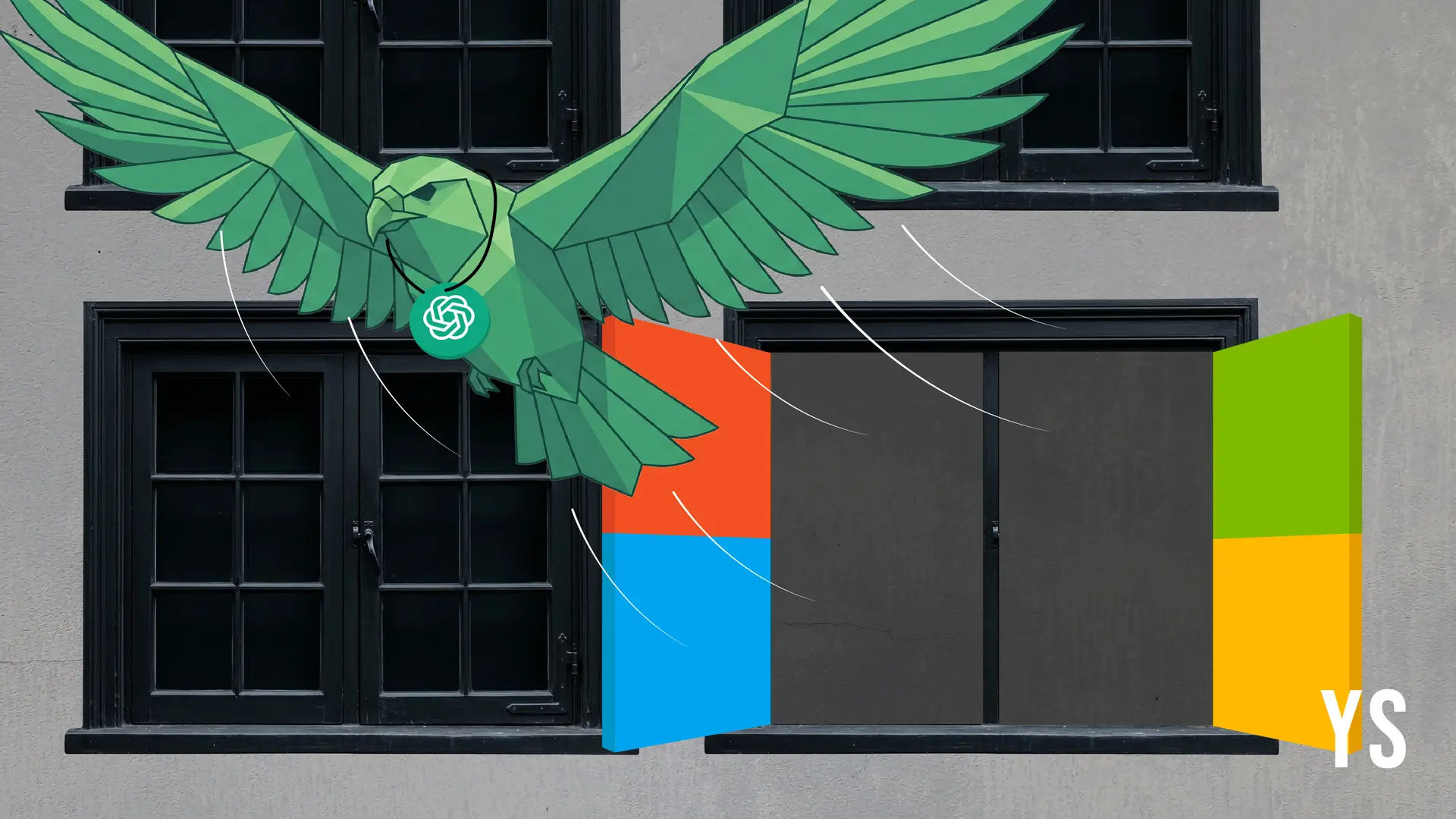

For years, the partnership between Microsoft and OpenAI was seen as a major engine driving the AI revolution globally. But that alliance is being rewritten now, amid intense competition, regulatory pressure, and OpenAI’s transition towards an initial public offering (IPO).
The two companies have announced a significant amendment to their partnership, with the duo moving from being an exclusive couple towards a more open relationship.
This allows OpenAI to offer its products on Microsoft’s rival platforms, even as the Windows maker diversifies its own AI efforts.
Latest amendment
The core of the latest announcement is the end of exclusivity.
Under the previous terms, Microsoft was the sole gateway for many of OpenAI’s most advanced tools. Now the partnership has been simplified to provide what the companies call “long-term clarity”.
The most striking change is this. Microsoft’s licence to OpenAI’s intellectual property, which includes the underlying code and models that power tools like ChatGPT, is now non-exclusive.
While the licence is valid until 2032, Microsoft is no longer the only company allowed to use and distribute OpenAI’s technology in certain ways.
Furthermore, OpenAI has gained ‘multi-cloud freedom’. Previously, OpenAI was largely bound to Microsoft Azure, the company’s cloud platform. Under the new agreement, OpenAI can now serve its full suite of products to customers across any cloud provider, including rivals Amazon Web Services (AWS) and Google Cloud.
However, Microsoft does retain a primary partner status. This means that new OpenAI products will still be largely launched first on Azure, provided Microsoft has the technical capacity to support them.
Financials of the new deal
The financial mechanics of the partnership have also been simplified. In the past, the flow of money between the two companies was complex and often tied to various technical milestones.
Under the new terms, Microsoft will no longer pay a revenue share to OpenAI for customers who access OpenAI models through Azure.
Conversely, OpenAI will continue to pay Microsoft a revenue share on its own earnings, such as subscriptions to ChatGPT Plus or fees from developers using its programming interfaces. This payment is reportedly set at 20%. The revenue share is now subject to a total cap and is scheduled to expire in 2030.
Perhaps for the long-term stability of the companies, these payments have been decoupled from the achievement of artificial general intelligence (AGI), which is a theoretical level of AI where a machine can perform any intellectual task as well as a human can.
By removing AGI milestones from the financial agreement, both companies avoid any sudden and unpredictable changes to their deal that might have occurred if a breakthrough on AGI was reached.
Change drivers
Several powerful factors are likely to have triggered these amendments.
One of the most significant forces is regulatory pressure. Antitrust regulators in the United States, the European Union, and the United Kingdom had been closely looking at the partnership. They were concerned that the exclusive nature of the deal looked too much like a merger between two giants, which could stifle competition in the AI industry.
By making the agreement non-exclusive, Microsoft and OpenAI are probably hoping to avoid long and expensive legal battles with government authorities.
Another major factor was the massive influx of new investment into OpenAI.
In February, Amazon committed a staggering $50 billion to OpenAI as part of a massive $122 billion funding round. This investment made it practically impossible for OpenAI to remain exclusive to Microsoft.
Amazon is the parent company of AWS, the largest competitor to Microsoft’s Azure cloud. Following the announcement, Amazon’s President and CEO Andy Jassy expressed excitement about making OpenAI models available directly to customers on the company’s Bedrock platform.
Bedrock is a service that allows developers to build and scale AI applications using models from various companies.
“Very interesting announcement from OpenAI,” Jassy wrote in a LinkedIn post, adding, “With this, builders will have even more choice to pick the right model for the right job.”
Internal friction may have also played a role in the decision to loosen the ties. Reports suggest that OpenAI felt constrained being locked into the Microsoft ecosystem. Many large enterprise customers were already deeply integrated into other cloud systems like AWS and Google Cloud, and OpenAI wanted the freedom to reach these customers directly.
Role of competition
Growing competition, particularly from Anthropic, provided a clear blueprint for OpenAI to tweak its strategy.
Anthropic is another leading AI research laboratory founded by former OpenAI executives.
Amazon recently said it would invest $5 billion immediately in Anthropic, with the option to invest up to an additional $20 billion based on performance milestones. And Anthropic’s models have been available across multiple cloud platforms for some time.
As Anthropic is not tied to a single provider, it could reach a wider range of customers. OpenAI risked losing market share if it remained in a walled garden. To stay competitive, OpenAI had to be where the customers were, regardless of which cloud company they preferred to use.
History of evolution
The Microsoft-OpenAI partnership has traversed a long road to reach this point.
The inception phase was between 2016 and 2019. During this time, OpenAI was primarily a non-profit research lab that began using Microsoft’s Azure for its computing needs.
In 2019, Microsoft invested $1 billion in OpenAI, around the time the latter created a capped-profit entity under its nonprofit parent. This structure allowed investors to earn returns up to a predetermined cap, while the nonprofit retained overall governance, and any excess value was intended to support the organisation’s broader mission.
The expansion phase took place between 2021 and 2023. Following the massive public success of ChatGPT, Microsoft invested about $13 billion to $14 billion and gained exclusive commercial rights to models like GPT-4. During this period, Microsoft integrated OpenAI technology into its Copilot suite, which adds AI assistants to software like Word, Excel, and Windows.
The turning point was in October last year when OpenAI restructured its business again. It converted its for-profit arm into a public benefit corporation, which is a type of company that is legally required to balance the interests of shareholders with a specific mission to benefit society or the environment.
As part of this 2025 restructuring, Microsoft’s previous investments were converted into a minority equity stake of approximately 27%, which was valued at the time at about $135 billion on an as-converted diluted basis.
Together, yet independent
The new agreement provides more impetus for Microsoft, which is already focusing on its own, in-house models, even as it works alongside OpenAI. At the same time, it also allows Microsoft to continue as a major shareholder in one of the most valuable private companies in the world.
The two companies still plan to work together on ambitious projects, such as building massive data centres, developing next-generation silicon chips specifically for AI, and using AI to improve cybersecurity.
The shift provides OpenAI the freedom to scale its technology across the entire internet infrastructure rather than being limited to a single provider. It also clears the way for a potential IPO. By diversifying its partnerships, the Sam Atlman-led firm becomes a more independent entity.
(Cover image by Nihar Apte)
Edited by Swetha Kannan