



Can humanoid robots safely work with humans? Here's the challenge
As humanoid robots move from labs to workplaces, safety is becoming the biggest challenge. Here's how firms are working to make robots safer.

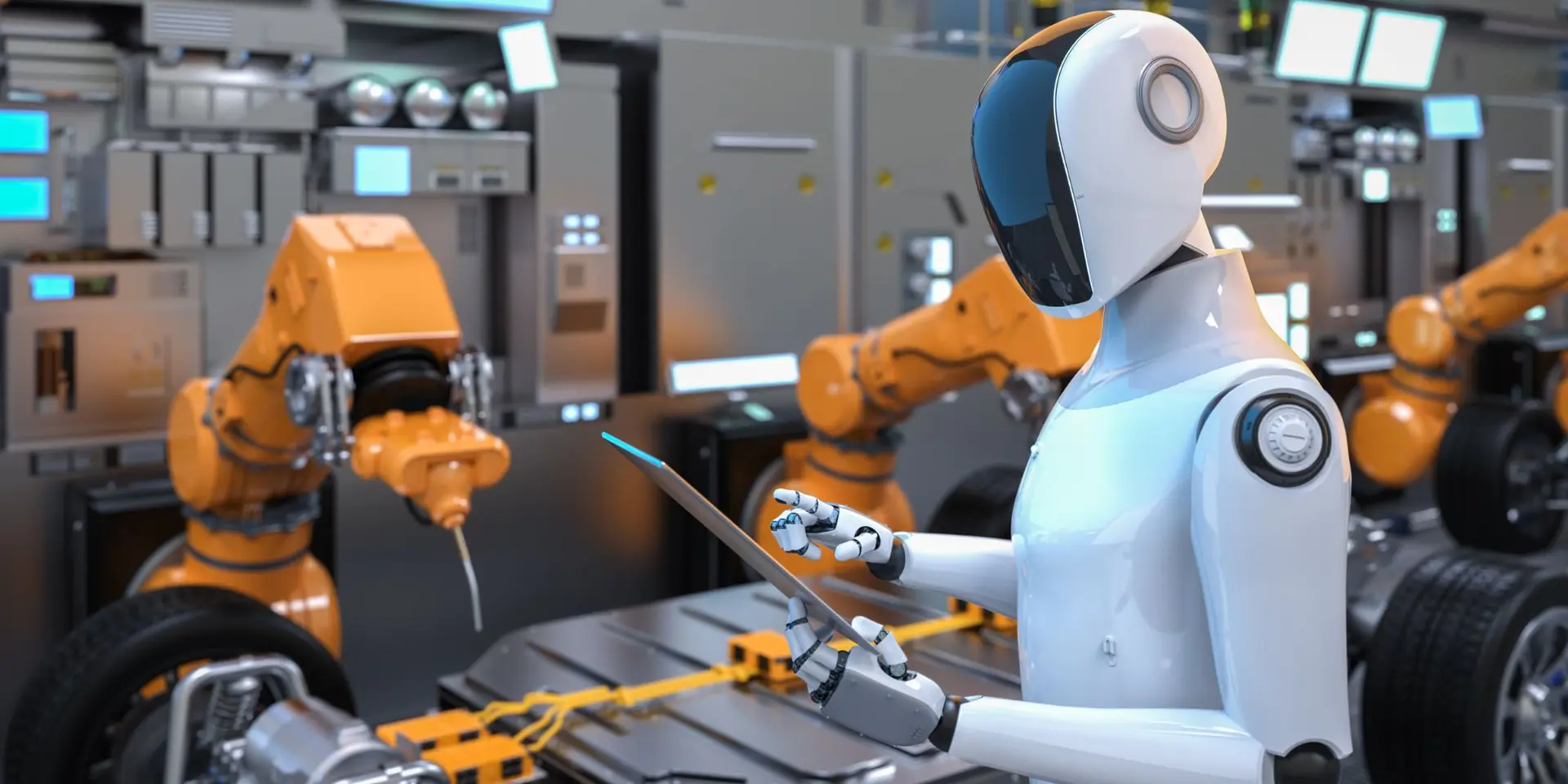

Humanoid robots are moving closer to the real world. From factories and warehouses to retail spaces and service environments, companies are increasingly testing robots designed to work alongside people.
While the technology is advancing rapidly, one question continues to dominate the conversation: can humanoid robots be trusted to operate safely around humans at all times?
As these machines leave controlled laboratory environments and enter unpredictable workplaces, safety is becoming one of the most important challenges facing the robotics industry.
Why humanoid robots are different
Traditional industrial robots typically operate inside fenced-off areas where human interaction is limited. Humanoid robots are different because they are designed to move through the same spaces as people. This creates a much more complex safety challenge.
A humanoid robot must constantly identify people nearby, understand where they are moving and adjust its actions in real time. Even small errors in perception can create risks. Recent incidents involving robots unexpectedly colliding with people have highlighted how difficult it is to guarantee safe behaviour in dynamic environments.
The challenge becomes even greater when robots encounter crowded spaces, poor visibility or sudden human movements.
How companies are improving robot safety
To reduce these risks, robotics companies are combining traditional safety mechanisms with modern AI technologies. Many humanoids now use multiple layers of sensors, including cameras, depth sensors and motion detectors, to monitor their surroundings.
These systems help robots slow down, change direction or stop when people enter their operating area. Manufacturers are also implementing speed limits, force restrictions and collision-avoidance systems that minimise the risk of injury if contact occurs.
Artificial intelligence plays an important role by helping robots better understand complex environments and make safer decisions in real time.
The importance of safe stopping
One of the most overlooked challenges is how a humanoid robot should stop safely. For a wheeled machine, shutting down may be relatively simple. For a two-legged robot, an emergency stop can cause it to lose balance and fall, potentially creating new hazards.
Researchers are therefore developing systems that allow robots to transition into a safe state rather than simply cutting power. These systems help maintain balance, reduce risk and ensure the robot remains stable during unexpected situations.

Why standards are still catching up
The rapid development of humanoid robotics has exposed a gap in existing safety regulations. Current standards for industrial and collaborative robots guide factors such as speed, force and separation distances. However, dedicated frameworks for humanoid robots are still evolving.
Industry groups and regulators are working on new standards that address challenges unique to humanoids, including bipedal movement, AI-driven decision-making and direct interaction with people.
The road to human-robot collaboration
Humanoid robots are likely to enter workplaces gradually rather than all at once. Early deployments will probably focus on controlled environments where robots operate under strict speed and force limits while continuously monitoring nearby humans.
Extensive simulation training, incident tracking and independent safety audits will also play an important role in building trust. The future of humanoid robotics depends on more than intelligence or mobility.
Success will ultimately be measured by how safely these machines can work alongside people. As the industry moves forward, safety must remain a core design principle rather than an afterthought.