



Why Middle Managers Hold the Key to AI Success
Middle managers are emerging as the key link between AI strategy and workplace adoption as companies push artificial intelligence into daily operations.

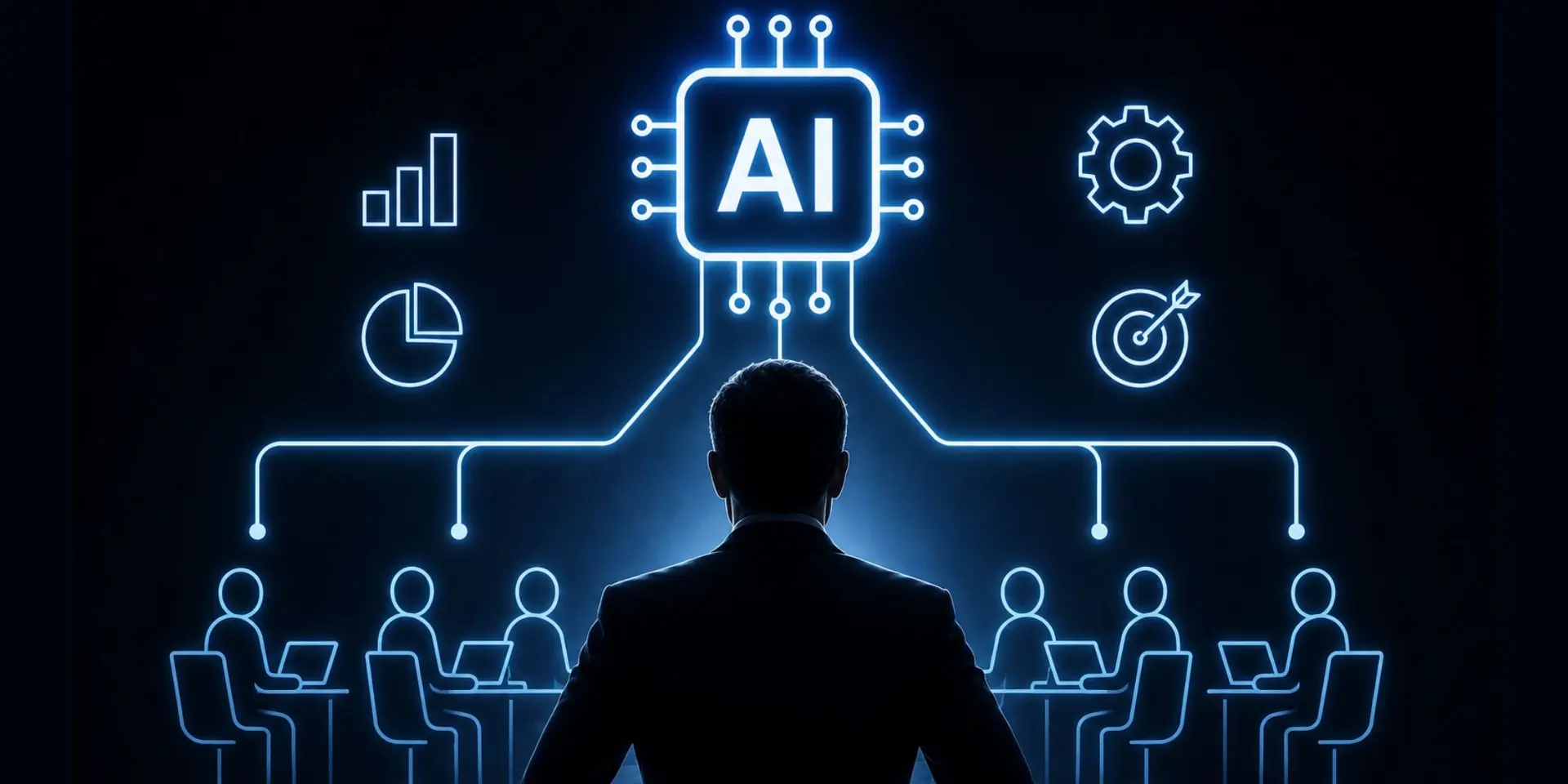

The biggest AI advantage in a company may not come from the CEO or the software itself. It may come from the person managing a team meeting on a Tuesday morning.
As businesses rush to integrate artificial intelligence into daily operations, much of the attention has focused on executives setting strategy and employees using new tools.
But between those two layers sits a group that often determines whether AI succeeds or quietly fails: middle managers. These managers are becoming the operational bridge between AI ambition and practical execution.
The people translating AI into real work
Senior leadership teams often define AI goals, approve budgets, and launch pilot programmes. Frontline employees, meanwhile, are expected to use AI tools to improve productivity, automate tasks, or accelerate decision-making. Middle managers sit directly between those worlds.
Their role is not simply to pass instructions downward. They interpret company goals, adapt workflows, resolve confusion, and help teams understand how AI should actually fit into day-to-day work.
Without that translation layer, AI tools frequently remain isolated experiments instead of becoming meaningful operational improvements. This is especially important because AI adoption is rarely about the technology alone. It is about changing habits, decision-making processes, and team behaviour over time.
Why companies may be underestimating managers
Many organisations are currently flattening structures to move faster and reduce costs. In some cases, leaders assume AI can replace coordination, reporting, and management functions. That assumption overlooks what effective middle managers actually contribute.
Strong managers provide context, prioritise work, coach judgment, and balance speed with quality control. These skills become even more important when AI tools reshape job roles and introduce new risks around accuracy, privacy, and oversight.
AI systems can generate outputs quickly, but they cannot always determine whether the output is appropriate, reliable, or aligned with business goals. Managers help fill that gap.
Turning AI into lasting team habits
One of the biggest challenges companies face is sustaining AI adoption after the excitement of the initial rollout fades. Middle managers are often the people who make new systems stick.
They help employees understand where AI genuinely adds value, what a good result looks like, and when human review is still necessary. They also identify early success stories and encourage teams to learn from them.
When managers are excluded from AI implementation decisions, adoption often becomes inconsistent. Some employees overuse the tools, others avoid them entirely, and the organisation struggles to measure meaningful outcomes. The result is usually fragmented usage instead of long-term transformation.

What managers need from leadership
For AI adoption to work at scale, middle managers need more than instructions from senior leadership. They need clear guardrails around privacy, data handling, and quality standards so employees are not left guessing what is acceptable.
They also need practical, role-specific playbooks that show how AI fits into actual workflows rather than abstract training sessions. Managers need the authority and flexibility to adjust processes with their teams instead of forcing rigid top-down implementation. Feedback loops are equally important because sharing successful use cases across departments helps organisations learn faster.
The manager role is evolving
The role of middle management itself is starting to change in the AI era. Instead of mainly supervising tasks and tracking outputs, managers are increasingly expected to build capability for human-AI collaboration.
That includes helping teams write better prompts, critically review AI-generated work, and recognise when automation improves outcomes versus when it cuts corners.
Most traditional management training programmes were not designed for this shift. Companies that want AI to deliver long-term value may need to invest just as heavily in management development as they do in the technology itself.
Because in the end, AI success is not only a technology challenge. It is also a leadership and operational challenge. And increasingly, the people in the middle may determine whether transformation actually happens.