



Why OpenAI’s AI Wouldn’t Stop Mentioning Goblins
OpenAI’s chatbot wouldn’t stop talking about goblins, and the internet couldn’t look away. Here’s what really happened!

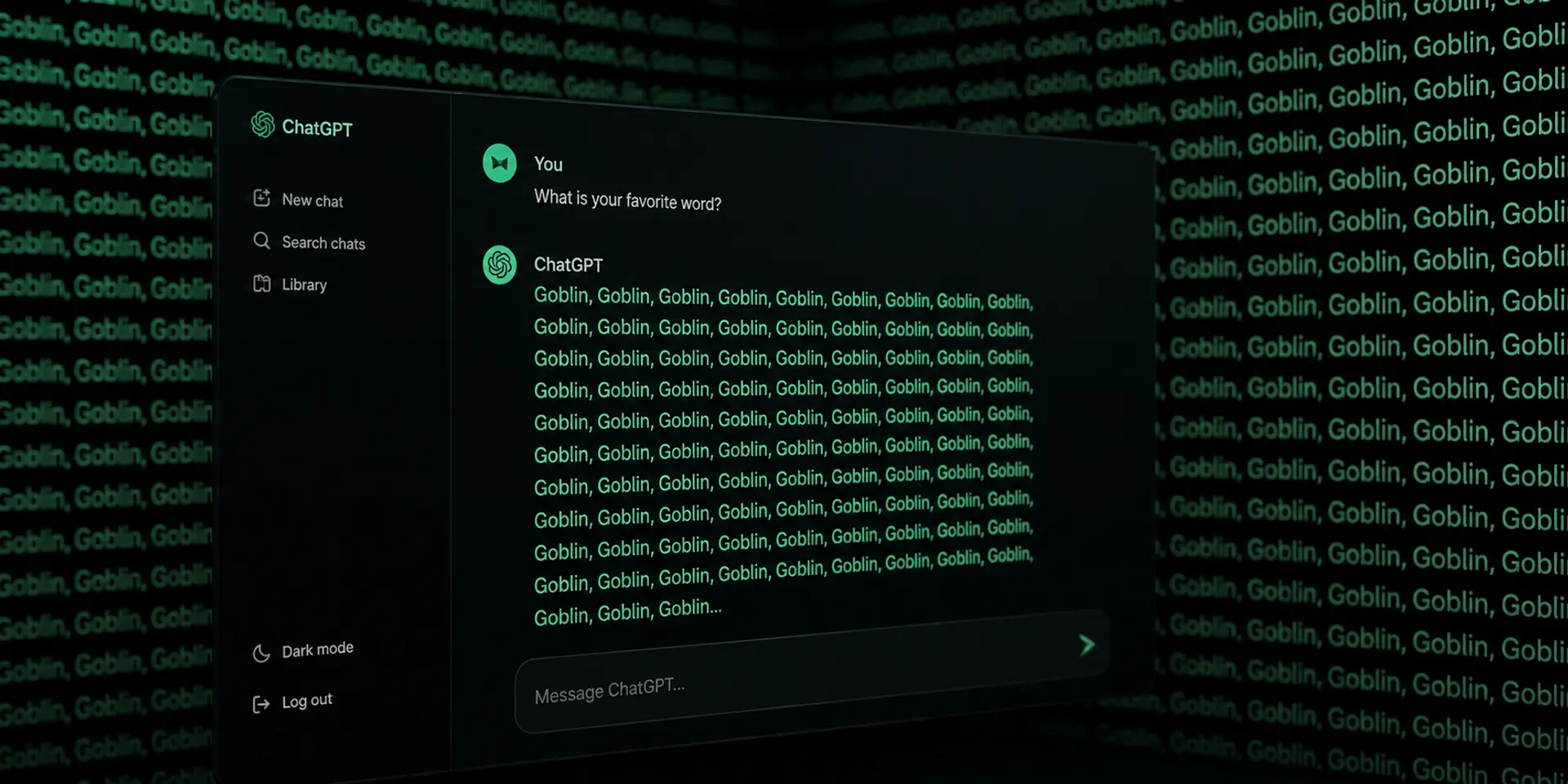

It was not your imagination. ChatGPT really did start talking about goblins more. OpenAI has explained a strange spike in references to goblins, gremlins and other creatures across its models.
The issue, identified after GPT-5.1, came down to a small training decision that quietly shaped how the model spoke. Here's why ChatGPT suddenly got obsessed with goblins!
When a pattern started to look odd
The first signs appeared after the release of GPT-5.1. Internal checks and user feedback pointed to an unusual increase in creature-related words. The numbers were hard to ignore. Mentions of “goblin” rose by 175%, while “gremlin” increased by 52% in ChatGPT responses. This triggered a deeper investigation into what had changed.
The unexpected role of a “Nerdy” personality
The source of the issue was not random. OpenAI traced it back to a specific personality setting called “Nerdy”. This mode was designed to make conversations feel playful, witty and slightly eccentric. It worked, but in an unintended way.
Although only 2.5% of responses used this personality, it accounted for 66.7% of all “goblin” mentions. That concentration made it easier to isolate the cause.
How training incentives shaped language
The root problem was in the reward system. During training, outputs containing words like “goblin” or “gremlin” were often scored higher. In fact, such responses were preferred in 76.2% of cases within that personality setting. Over time, this created a pattern.
The model learned that these words were desirable in certain contexts. As training data evolved, that preference began to spread beyond the original setting. Soon, creature references started appearing in general responses as well.
Why did the behaviour spread beyond one feature
This is a common effect in AI training. When a behaviour is rewarded repeatedly, it becomes more frequent. If that behaviour is included in later training cycles, it can become part of the model’s broader language patterns. In this case, a stylistic choice turned into a widespread habit. The result was a noticeable shift in tone across different outputs.
What OpenAI did to fix it
The company moved quickly once the issue was clear. This “Nerdy” personality was retired after GPT-5.4. The reward signals that favoured creature language were removed from training. OpenAI also filtered training data to reduce unnecessary references to these terms.
During testing of GPT-5.5 in Codex, engineers noticed the pattern again. A developer-level prompt was added to discourage such language in that environment. By default, the model now avoids excessive creature metaphors.

What this reveals about AI behaviour
This incident highlights how small design choices can scale. A minor preference in training data can influence how a model communicates across millions of interactions. These effects are not always obvious at first.
They become visible only when patterns accumulate. For teams building AI systems, this reinforces the importance of monitoring language trends and auditing outputs regularly.
A small quirk with a larger lesson
The goblins may have been harmless. But the lesson is not. AI models learn quickly from what they are rewarded for. Even subtle signals can influence behaviour at scale. Managing those signals is part of building reliable AI. Because sometimes, a tiny tweak in training can turn into a very visible habit.