



OpenAI's GPT Live now offers natural voice conversations
OpenAI wants AI conversations to feel more human. Here's how its latest voice system reduces delays and responds more naturally with GPT Live!

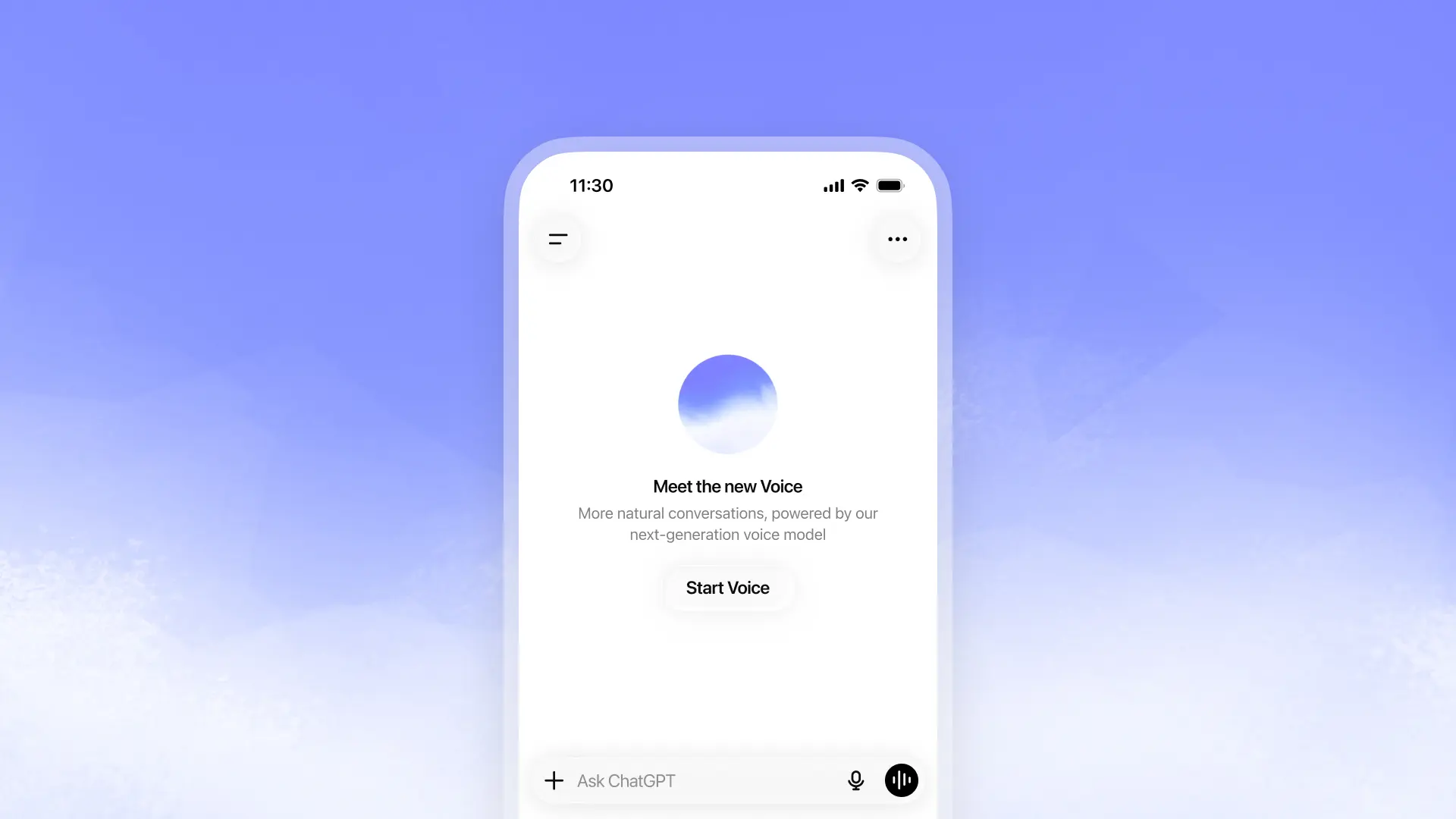

The awkward pauses between you and AI may soon disappear. Instead of waiting for you to finish speaking before responding, OpenAI's latest voice technology can listen, reason, and speak at the same time, making interactions feel faster, smoother and more natural.
In an engineering post published on 3 August 2026, OpenAI unveiled GPT Live, the new voice system powering ChatGPT Voice. Unlike traditional voice assistants that take turns listening and replying, GPT Live uses a full-duplex architecture that enables real-time, two-way conversations.
The result is fewer interruptions, lower latency and a voice experience that feels much more like talking to another person.
Moving beyond traditional voice assistants
Most voice assistants today rely on a turn detector, a system that decides when a user has finished speaking before generating a response. While this approach works, it can often lead to awkward pauses or accidental interruptions if the AI responds too early or waits too long.
GPT Live removes this dependency from the main audio process. Instead, it uses a full-duplex voice model, meaning it can process incoming speech while speaking at the same time. This mirrors how people naturally communicate, where brief interruptions, acknowledgements and overlapping speech are common.
According to OpenAI, this approach creates a more fluid and engaging conversation without making users feel they are waiting for the AI to catch up.
Streaming audio keeps conversations flowing
A key part of GPT Live is its streaming architecture. Rather than treating every spoken sentence as a separate audio recording, the system continuously streams audio into the model while generating spoken responses at the same time. This significantly reduces latency, the delay between a user's speech and the AI's reply.
OpenAI also redesigned the system so that live audio processing runs on a dedicated fast path, while more demanding tasks such as reasoning, tool use or external requests happen separately in the background.
This means that even if the AI needs additional time to complete a complex task, the voice conversation itself can continue naturally without freezing or becoming unresponsive. For more advanced reasoning, GPT Live can also call more powerful models, including GPT-5.5, without interrupting the ongoing conversation.
Built to support longer conversations
OpenAI says GPT Live has also been designed for extended voice interactions. The system keeps track of conversational context over longer sessions, allowing users to switch topics naturally without constantly repeating information. It can also move conversations between different model instances and compress older context while maintaining a smooth live audio experience.

The company has also improved connection speeds using technologies such as WebRTC, a communication standard widely used for low-latency audio and video streaming. Combined with its WARP networking approach and Instant Connect, GPT Live reduces the time needed to start a voice session, allowing users to begin speaking almost immediately.
A glimpse into the future of voice AI
GPT Live represents another step towards making AI voice assistants feel less like software and more like conversation partners. Faster responses, continuous listening and smoother interactions could make voice AI more useful for customer service, productivity, accessibility and hands-free applications.
As AI continues to evolve, technologies like GPT Live could redefine how people communicate with digital assistants across smartphones, computers and connected devices.